
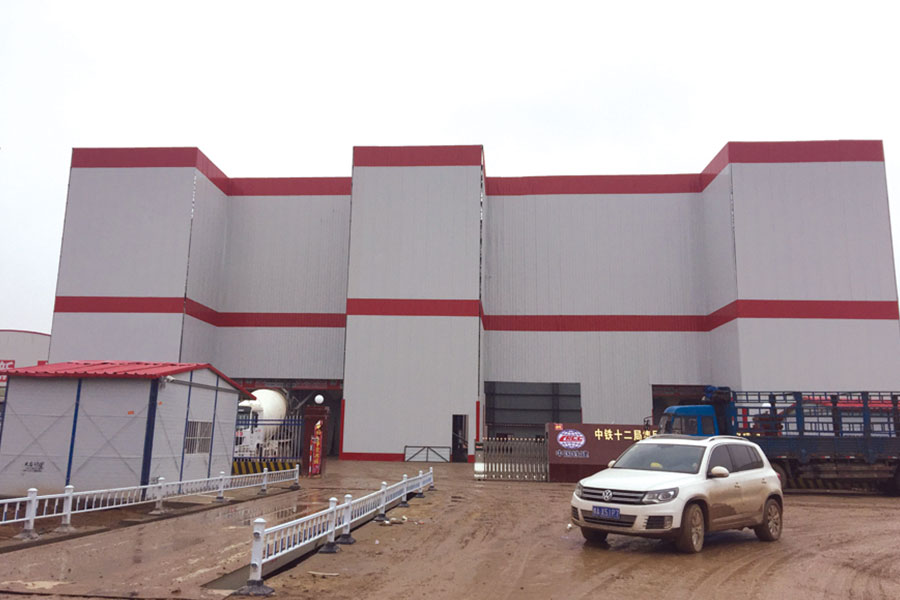
Evolution of concrete batching plants
Concrete batching plants have changed from simple manual mixing sites into automated production systems that support road construction, commercial ready-mix supply, precast yards, bridges, industrial parks, and remote infrastructure projects. Their evolution reflects the construction industry’s need for higher productivity, more stable concrete quality, safer operation, and better control over material costs.
From manual batching to mechanized production
Early concrete production depended heavily on manual measuring and single-machine mixing. Workers loaded aggregates, cement, and water by experience, which often caused inconsistent proportions and unstable strength. As project scale increased, contractors needed equipment that could measure materials more accurately and produce larger volumes within shorter construction schedules.
Mechanized batching introduced aggregate bins, weighing hoppers, belt conveyors, cement silos, screw conveyors, and dedicated mixers. This structure allowed each material to be measured before entering the mixer, improving concrete uniformity and reducing dependence on manual judgment.
Fixed plants, mobile plants, and modular layouts
Stationary batching plants became the main choice for long-term ready-mix and infrastructure projects because they offer stable output, large storage capacity, and flexible configuration. Later, mobile concrete batching plants grew in popularity for projects that require relocation, quick installation, or on-site concrete supply. Modular and containerized plant designs further improved transport efficiency and simplified export delivery.
This development gives buyers more practical choices. A permanent commercial concrete station may prefer a large stationary plant, while a road or bridge contractor may choose a mobile or modular unit that can follow the project schedule.
Automation and digital control
Modern batching plants use automatic control systems to manage recipes, weighing, mixing time, discharge, production records, alarms, and material consumption. Automation reduces human error, improves repeatability, and helps operators switch between concrete grades more efficiently. For quality management, production data also makes it easier to trace batch performance and respond to customer requirements.
Environmental and export requirements
Another important change is the focus on cleaner production. Dust collectors, enclosed conveyors, water recycling, noise control, and compact layout planning are now common concerns. Export buyers also pay more attention to voltage matching, packing, installation guidance, local spare parts, and control language.
Henan Hengyuan designs concrete batching plant solutions for fixed, mobile, compact, and containerized applications. When selecting equipment, buyers should compare not only the model name but also capacity, mixer type, plant structure, automation level, transport plan, and future maintenance support.
Buyer checklist for modern batching plant selection
When evaluating a modern plant, buyers should connect the history of batching plant development with practical purchasing decisions. Older production ideas focus mainly on the mixer, while modern selection should review the whole production chain. The aggregate batching system, weighing accuracy, cement silo capacity, water and admixture metering, discharge height, control system, and spare parts support all affect real performance.
A good supplier should provide layout drawings, foundation guidance, equipment list, electrical requirements, wearing parts list, and installation support. For overseas projects, packing and shipping design are also part of the equipment value. A plant that is easy to transport, install, operate, and maintain will usually deliver better long-term returns than a plant selected only by initial price.
The next stage of batching plant development will continue toward smarter control, cleaner production, modular construction, and stronger data management. Contractors who plan for these trends can build concrete production systems that remain useful as project requirements become stricter.
Modern plant trends for buyers
For today's buyers, the evolution of batching plants means selection should go beyond nominal capacity. Modern projects increasingly require automatic records, cleaner production, modular shipment, faster installation, and easier maintenance. A plant that supports these needs can remain useful across more projects and stricter operating requirements.
When comparing old-style and modern configurations, pay attention to control system functions, environmental protection, mixer quality, spare parts availability, and whether the plant can be upgraded later. These factors often matter more over the equipment life cycle than a small difference in initial price.