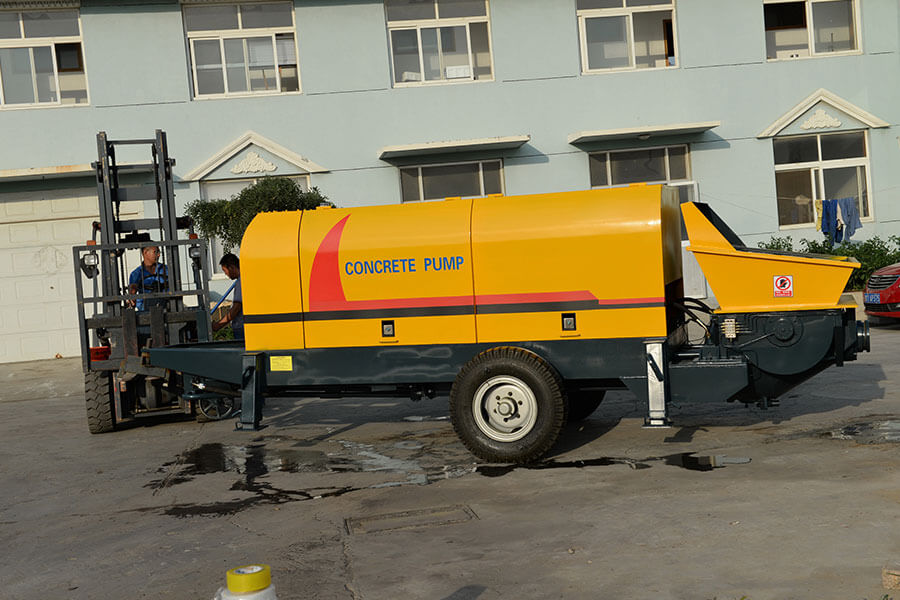
motor driven concrete pump
The motor driven concrete pump uses an electric motor as its power source to deliver concrete to construction sites through an efficient pumping system. As a result, it is widely applied in buildings, bridges, roads, tunnels, and other engineering projects, making it an essential piece of equipment in modern construction. Moreover, compared with diesel- or gasoline-powered pumps, the motor-driven design consumes less energy while providing more stable operation. In addition, motor driven concrete pump generates lower noise and emissions, which makes it a more environmentally friendly solution for concrete pumping.
Capacity:40-90m³/h
Warranty: 18 months
Motor power: 45-110kw
Voltage: 220v/380v/415v/440v/480v(50Hz/60Hz)
More Motor driven concrete pump Details
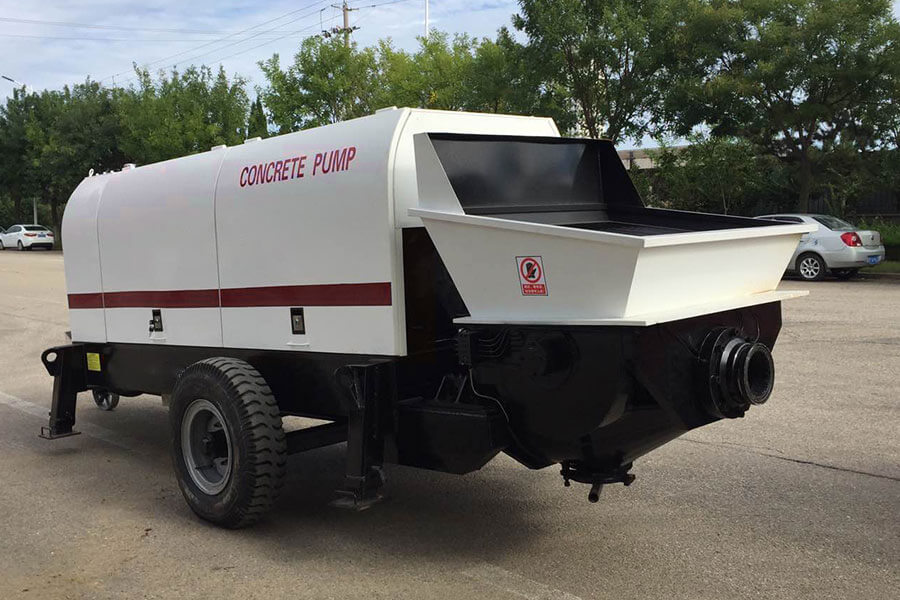
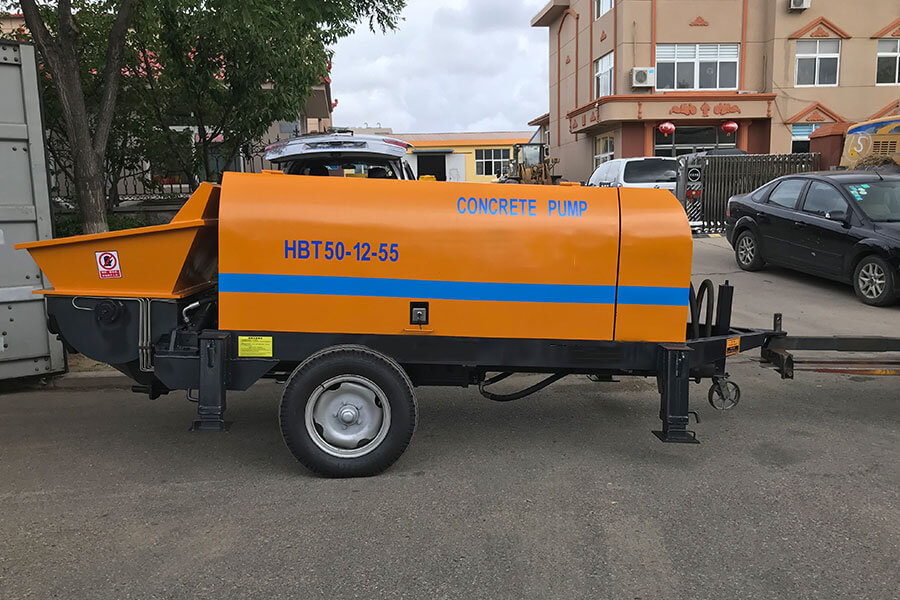
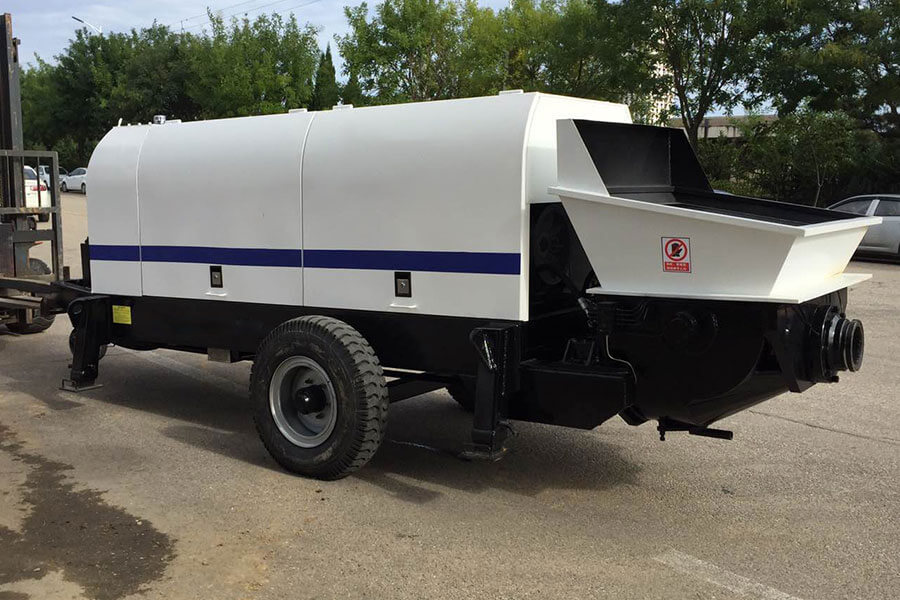
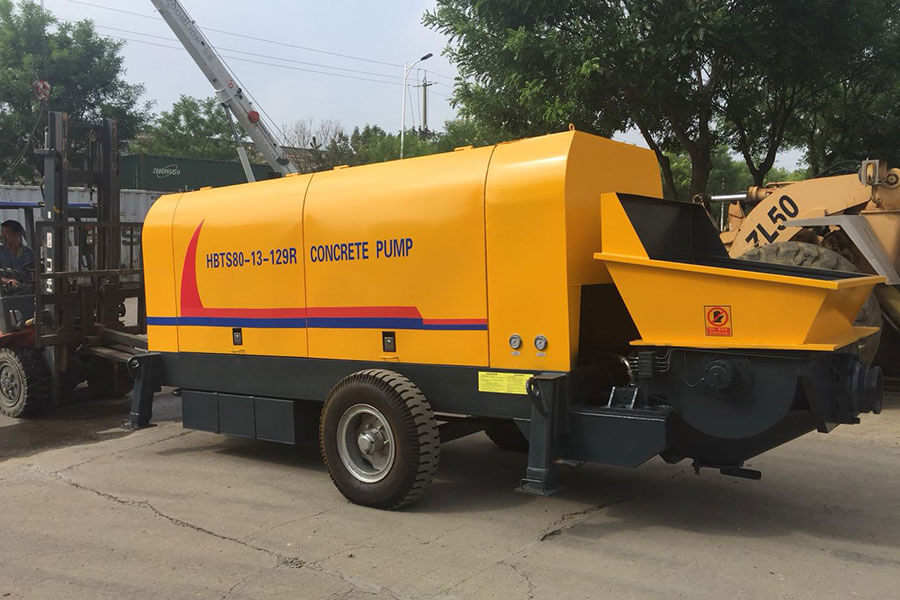
Structure of motor driven concrete pump
The motor driven concrete pump is mainly composed of the following components:
Motor
As the primary power source, the pump is typically equipped with a three-phase AC motor or a DC motor, which provides stable and reliable power to drive the entire pumping system.
Pumping system
Hopper: Used to receive and temporarily store the mixed concrete before pumping.
Piston pump or screw pump: Depending on the model, the concrete pump adopts either a piston-type or screw-type pumping mechanism. The piston pump delivers concrete through the reciprocating motion of pistons, while the screw pump transports concrete by continuous rotation of the screw, ensuring smooth and uniform conveying.
Piping system: Consists of wear-resistant delivery pipes that transport concrete from the pumping unit to the construction site efficiently and reliably.
Control system
The control system manages the operation of both the motor and pumping system, enabling functions such as start-up, shutdown, flow regulation, and operational monitoring, ensuring safe and stable performance.
Cooling and lubrication system
This system provides effective heat dissipation and lubrication for key components, especially the motor and transmission parts, ensuring reliable operation under high-load and continuous working conditions.
Working principle of motor driven concrete pump
The mixed concrete enters the pumping system through the hopper. After the motor is started, it transmits power to the piston or screw through a reducer, driving the pumping mechanism to operate.
For piston-type concrete pumps, when the piston moves backward, negative pressure is formed in the pump cylinder, allowing concrete to be drawn into the pumping chamber. When the piston moves forward, the concrete is compressed and discharged into the delivery pipeline under pressure.
For screw-type concrete pumps, the continuous rotation of the screw generates a stable pushing force, conveying the concrete forward smoothly and continuously.
The concrete is transported through the pipeline system to the designated construction location. By adjusting the control valves, the delivery flow rate and pumping pressure can be precisely regulated to meet different construction requirements.
Motor driven concrete pump Advantages
High efficiency: The electric motor delivers stable and continuous output power, ensuring smooth pumping performance, fast operation, and high concrete delivery efficiency.
Low noise: Compared with diesel- or gasoline-driven concrete pumps, motor-driven models operate with significantly lower noise levels, making them ideal for urban construction sites and noise-sensitive environments.
Environmentally friendly: Electric drive systems produce no exhaust emissions, fully complying with modern environmental protection standards and reducing pollution to the surrounding environment.
Easy maintenance: With a simpler structure and fewer mechanical components than fuel-powered systems, motor-driven concrete pumps are easier to maintain and have lower maintenance costs.
High operational safety: Equipped with multiple safety protection systems such as overload protection, short-circuit protection, and motor overheating protection, ensuring safe and reliable operation.
Strong adaptability: Electric concrete pumps are suitable for a wide range of construction applications, including buildings, bridges, roads, and tunnels, and can adapt well to various working conditions and construction requirements.
Motor driven concrete pump Parameters
| Model | HBT40 | HBT50 | HBT60 | HBT80 | HBT90 |
| Max. Theoretic capacity(m³/h) | 40 | 50 | 60/46 | 85/50 | 90/55 |
| Max, Theoretic pressure(Mpa) | 10 | 12 | 13/6.3 | 15.7/8.6 | 18/9.3 |
| Motor engine power(kw) | 45 | 55 | 90 | 110 | 110 |
| Maximum vertical distance(mm) | 120 | 150 | 200 | 250 | 300 |
| Maximum horizontal distance(mm) | 250 | 300 | 500 | 800 | 1000 |
| Disribution valve type | S valve | ||||
| Hydraulic oil circuit type | Open Circuit | ||||
| Specification of concrete cylinder(mm) | Ø160×1000 | Ø180×1200 | Ø200×1800 | Ø200×1800 | Ø200×1800 |
| Specification of main oil cylinder(mm) | Ø100×1000 | Ø125×1200 | Ø140×1800 | Ø140×1800 | Ø140×1800 |
| Oil tank capacity(L) | 300 | 300 | 420 | 420 | 580 |
| Hopper capacity(L) | 600 | 600 | 600 | 600 | 800 |
| Max. Aggregate diameter(mm) | Slick scree: 40 | Slick scree: 50 | |||
| Scree: 30 | Scree: 40 | ||||
| Dimension (LxWxH)(mm) | 4500×1750×1600 | 4800×1800×1650 | 5800×2000×1750 | 5800×2000×1800 | 6000×2000×1800 |
| Overall weight(kg) | 3200 | 3500 | 5500 | 5800 | 6500 |
| Pulling speed(km/h) | ≤8 | ||||