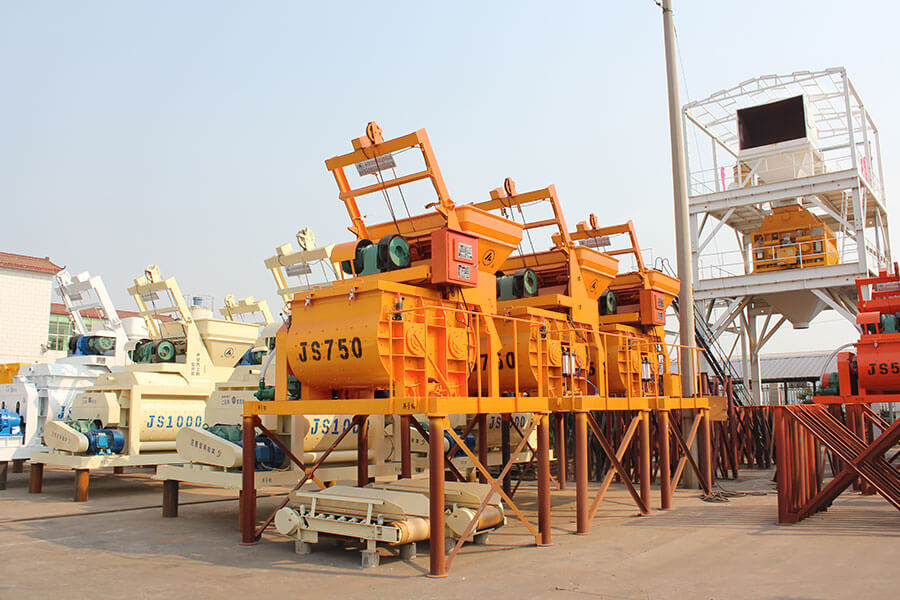
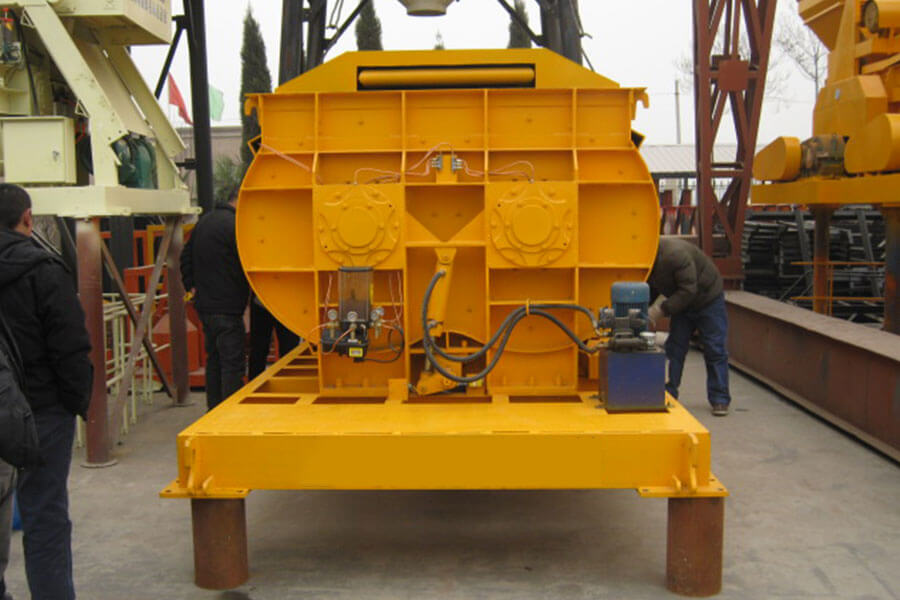
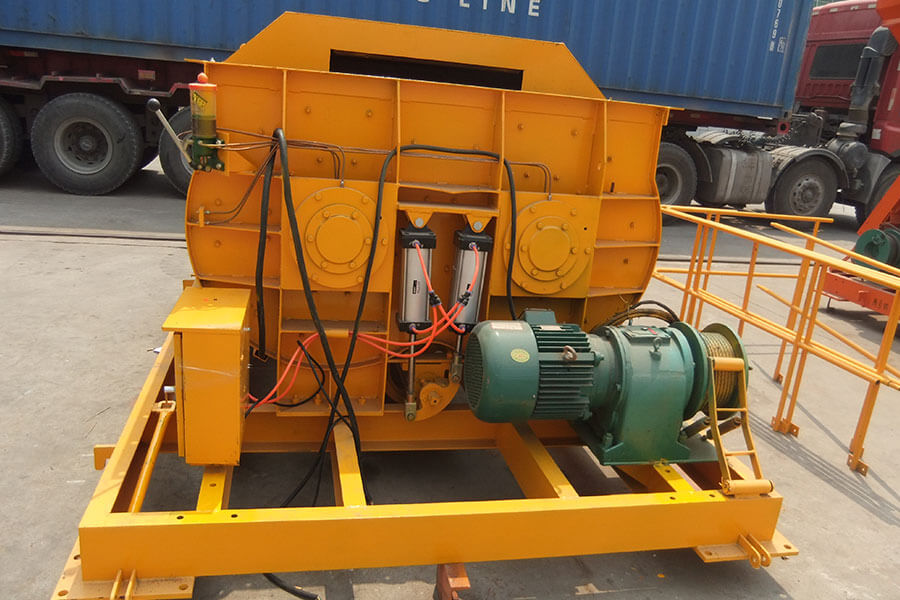
Motor Powered Twin Shaft Concrete Mixer
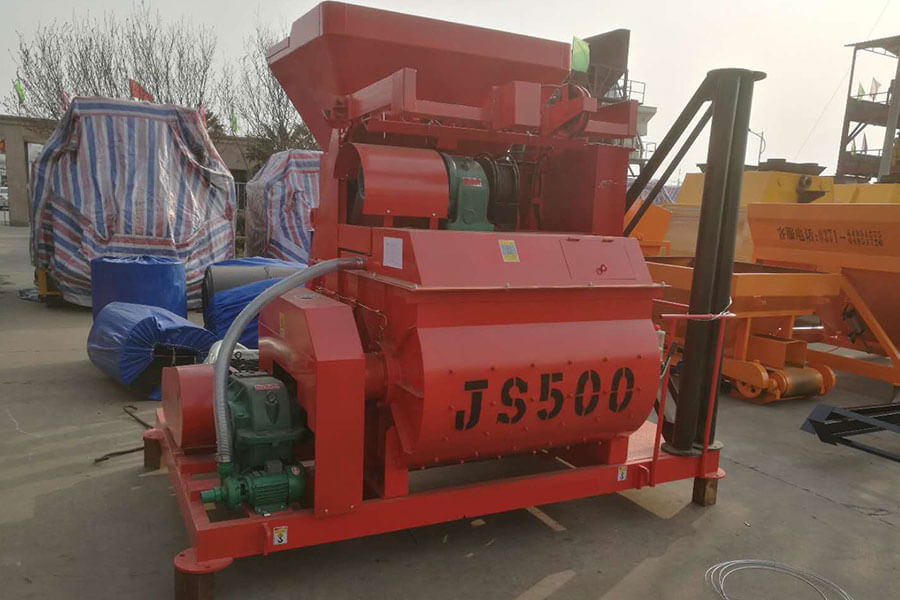
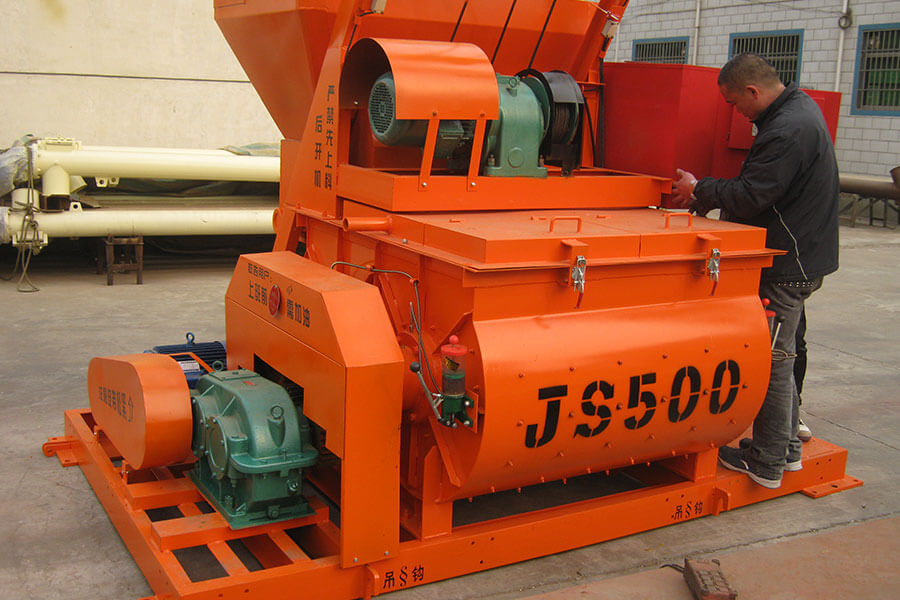
The motor-powered twin-shaft concrete mixer serves as an efficient and reliable solution for concrete production and is widely used in construction, road, and bridge engineering projects.
First, the mixer uses two parallel horizontal mixing shafts to blend materials, enabling fast and uniform mixing of various concrete components.
Next, an electric motor directly drives the mixing system, ensuring stable operation and consistent performance.
As a result, the mixer features a compact structure, simple operation, and high production efficiency, making it well suited for demanding construction applications.
Capacity:25-150m³/h
Warranty: 18 months
Feed capacity: 800-4200L
Voltage: 220v/380v/415v/440v/480v(50Hz/60Hz)
Structure
Mixing device:
Twin shafts: two parallel mixing shafts with mixing blades on them. The blades are arranged in a spiral shape, which can fully mix the concrete materials.
Mixing blades: installed on the mixing shaft, usually made of wear-resistant materials to ensure that the mixing effect can be maintained after long-term use.
Drive system:
Motor: provides power, usually a three-phase asynchronous motor, with the characteristics of high efficiency and energy saving.
Reducer: Reduces the speed of the motor to a speed suitable for mixing, usually using a gear reducer or a planetary reducer.
Frame and shell:
Frame: The structure that supports the entire mixer, usually welded from high-strength steel, with good rigidity and stability.
Shell: Wraps the mixing device and drive system, usually made of wear-resistant steel plates, with lining plates inside to prevent wear.
Feed and discharge system:
Feed port: used to add concrete materials into the mixer, usually with a feed hopper and a feed gate.
Discharge port: used to discharge the mixed concrete, usually with a discharge gate and a conveying device.
Control system:
Control panel: used to control the start, stop, speed adjustment and other operations of the mixer, usually with various indicator lights and buttons.
Sensor: monitors the operating status of the mixer, such as temperature, pressure, speed, etc., to ensure the safe operation of the equipment.
Working principle
The motor-powered twin-shaft concrete mixer operates based on two parallel horizontal mixing shafts.
First, concrete materials enter the mixer through the feed port.
Next, the electric motor drives the mixing shafts to rotate continuously. As the shafts rotate, the mixing blades actively push the materials toward the center of the mixer. At the same time, the blades apply strong shearing, extrusion, and flipping actions, ensuring thorough and uniform mixing of all materials.
Finally, the mixer discharges the finished concrete through the discharge port and delivers it directly to the construction site for use.
Product Advantages
1. First, in terms of mixing efficiency, the twin-shaft design delivers more uniform mixing within a short time, significantly improving production efficiency. The spiral arrangement of mixing blades actively prevents material buildup and ensures consistent mixing quality.
2. Next, regarding structural design, the mixer features a compact structure that occupies minimal space, making it suitable for confined working areas. At the same time, the lightweight design allows operators to move and install the equipment easily.
3. Moreover, in terms of operation, the control panel adopts a simple and intuitive layout, enabling operators to learn and operate the equipment quickly. In addition, multiple safety protection devices ensure safe and reliable operation.
4. Furthermore, concerning durability, manufacturers use wear-resistant materials for the mixing blades and liners, extending service life. Meanwhile, the robust overall structure allows the equipment to withstand heavy workloads.
5. In addition, regarding energy efficiency and environmental protection, the mixer uses high-efficiency motors and reducers to reduce energy consumption while maintaining strong performance. At the same time, an integrated dust collection system minimizes dust emissions and supports environmental protection.
6. Finally, in terms of maintenance, the mixer adopts a rational structural design that simplifies disassembly and repair. Moreover, the modular design of key components enables quick replacement and reduces maintenance time.
Product Parameters
| Model | JS500 | JS750 | JS1000 | JS1500 | JS2000 | JS3000 |
| Discharge capacity (L) | 500 | 750 | 1000 | 1500 | 2000 | 3000 |
| Feed capacity (L) | 800 | 1200 | 1600 | 2400 | 3200 | 4200 |
| Productivity (m³/h) | ≥25 | ≥37.5 | ≥50 | ≥75 | ≥120 | ≥150 |
| Maximum aggregate size (mm) | 80/60 | 80/60 | 80/60 | 80/60 | 80/60 | 80/60 |
| Blade speed (r/min) | 35 | 31 | 25.5 | 25.5 | 23 | 28 |
| Number of blending blades (pcs) | 2×7 | 2×7 | 2×8 | 2×10 | 2×10 | 2×10 |
| Blade motor model | Y180M-4 | Y200M-4 | Y225M-4 | Y225M-4 | Y280S-4 | Y280M-4 |
| Blade motor power (kw) | 18.5 | 30 | 37 | 18.5 | 22 | 30 |
| Winch motor model | YEZ1325-4-B5 | YEZ1325-4-B5 | YEZ160S-4 | YEZ180L-4 | YEJ180L-4 | YEJ200L-4 |
| Winch motor power (kw) | 5.5 | 7.5 | 15 | 45 | 75 | 90 |
| Water pump motor model | 500WB20-BA | 650WB35-5 | KQW65-100I | KQW65-100I | KQW65-100I | KQW65-100I |
| Water pump motor power (kw) | 0.75 | 1.1 | 3 | 3 | 4 | 5.5 |
| Hopper lifting speed (m/min) | 18 | 18 | 21.9 | 23 | 23 | 23 |
| Dimensions (mm) | 4461x3050x5225 | 4951x3650x6225 | 8765x3436x9540 | 9645x3436x9700 | 10560x3876x10710 | 12580x4620x12890 |
| Machine weight (kg) | 4000 | 5500 | 8700 | 11130 | 15000 | 20000 |