JN1000 Planetary Concrete Mixer
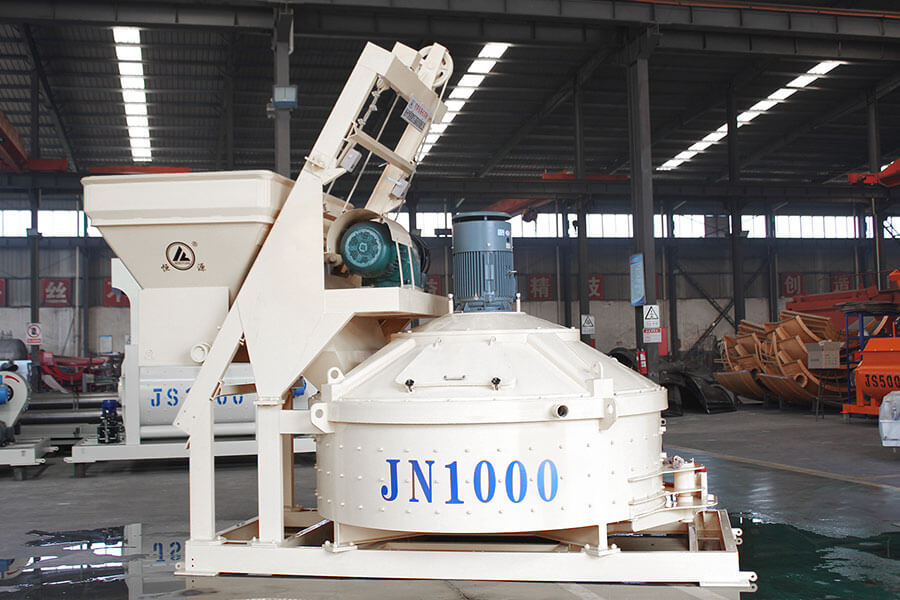
This JN1000 planetary concrete mixer overview helps buyers review a 1000 L discharge-capacity planetary pan mixer for precast concrete, concrete products, pavers, blocks and batching-plant production. The existing parameter table lists 1500 L feed capacity, 1000 L discharge capacity, ?60 mm aggregate-size reference, 33.9 r/min autorotation speed, 11.3 r/min revolution speed, 2?2 mixing blades, 2?1 side scraper blades, 45 kW motor power and about 6000 kg machine weight. Use these values for model comparison, then confirm the current technical sheet, voltage, reducer configuration, discharge gate, control scope and installation drawing before ordering. For nearby models, compare this page with the vertical-shaft planetary concrete mixer category.
Feed capacity reference: 1500 L
Discharge capacity reference: 1000 L
Motor power reference: 45 kW
Supply options to confirm: 220/380/415/440/480 V; 50/60 Hz
JN1000 Planetary Mixer Configuration Checks
Review the JN1000 as a complete mixing package before comparing quotations.
Planetary mixing system: confirm mixing-arm layout, blade arrangement and side-scraper coverage. The table references 2?2 mixing blades and 2?1 side scraper blades; verify the current drawing for the quoted JN1000 version.
Mixing pan and wear parts: check liner material, liner thickness, blade material, scraper material and replacement access. Wear-part planning is important for abrasive aggregates and daily concrete-product production.
Drive system: the table lists 45 kW motor power. Confirm motor standard, reducer model, coupling, lubrication points, overload protection and whether inverter or soft-start control is included.
Discharge system: confirm discharge-gate type, opening method, sealing design, discharge height, downstream hopper or conveyor interface and expected discharge time.
Feeding interface: review aggregate inlet, cement inlet, water and additive dosing points, feeding height, batching accuracy and whether upstream weighing equipment is included.
Control system: confirm control cabinet scope, operation screen, safety interlocks, emergency stops, sensors, electrical standard and communication interface if the mixer connects to a batching plant.
Installation structure: compare machine weight, foundation load, service clearance, maintenance access, lifting conditions and site layout before confirming shipment.
How to Review the JN1000 Mixing Workflow
Use the workflow below to check whether the JN1000 fits the production process:
Feeding stage: confirm aggregate grading, cement supply method, water dosing, additive dosing and weighing accuracy. Stable batching before mixing is essential for consistent output.
Mixing stage: review recommended mixing time, filling ratio, blade coverage, scraper action and whether the target material is wet concrete, dry-cast concrete, precast mix or specialty concrete.
Discharge stage: check gate opening speed, residual material control, discharge route, downstream equipment and cleaning access. Discharge time affects the real cycle time of each batch.
Monitoring and maintenance stage: confirm motor load monitoring, lubrication routine, inspection points, safe lockout procedure and spare-parts availability for daily operation.
JN1000 Planetary Mixer Buyer Checklist
Use this checklist before selecting the JN1000 planetary mixer:
Capacity match: confirm whether 1000 L discharge capacity fits the required batch size, downstream rhythm and daily production target.
Application fit: define whether the mixer will serve precast components, blocks, pavers, concrete products, ready-mix support or specialty material production.
Mix quality: request recommended mixing time, uniformity expectations, filling-rate limits and moisture-control assumptions for the planned mix design.
Wear and durability: check liner, blade, scraper, seal and lubrication parts information, especially when aggregates are abrasive or production is frequent.
Controls and safety: confirm operation panel, interlocks, emergency stops, sensor scope, automation interface and electrical protection level.
Operation support: confirm manuals, wiring diagram, spare-parts list, installation guidance, commissioning support and operator training scope.
Material limits: verify aggregate-size reference, material density, moisture range, additive method and whether the selected lining and blades suit the material.
Automation scope: clarify which feeding, dosing, discharge and plant-communication functions are included as standard and which are optional.
Layout planning: check foundation drawing, feeding height, discharge direction, maintenance clearance and lifting access before finalizing the order.
JN1000 Planetary Concrete Mixer Reference Specifications
| Model | JN1000 |
| Feed capacity reference (L) | 1500 |
| Discharge capacity reference (L) | 1000 |
| Aggregate size reference (mm) | ≤60 |
| Autorotation speed reference (r/min) | 33.9 |
| Revolution speed reference (r/min) | 11.3 |
| Mixing blade arrangement reference | 2×2 |
| Side scraper blade arrangement reference | 2×1 |
| Motor power reference (kW; configuration to confirm) | 45 |
| Machine weight reference (kg) | 6000 |
Parameter note: the existing table keeps the original JN1000 model values for feed capacity, discharge capacity, aggregate-size limit, autorotation speed, revolution speed, blade arrangement, scraper arrangement, motor power and machine weight. Use these entries for model comparison only. Confirm the current technical sheet, voltage, discharge-gate design, control-system scope, foundation drawing and spare-parts list before ordering.
JN1000 Planetary Concrete Mixer: Buyer Questions
When is the JN1000 planetary concrete mixer a practical choice?
JN1000 is commonly reviewed when buyers need a 1000 L discharge-capacity planetary mixer for precast concrete, concrete products, pavers, blocks or batching lines that require stronger mixing uniformity and a larger batch than JN500 or JN750.
Which capacity values matter most for JN1000 comparison?
Use both values together: the table lists 1500 L feed capacity and 1000 L discharge capacity. Real output also depends on feeding speed, mixing time, discharge time, moisture control and the downstream production line.
Is the 45 kW motor reference enough for selection?
No. Motor power is only one reference point. Buyers should also confirm reducer configuration, blade and scraper layout, liner material, control cabinet, voltage, frequency, safety interlocks and recommended mixing time.
What should be confirmed before ordering a JN1000 mixer?
Confirm the technical sheet, voltage and frequency, discharge-gate type, control-system scope, foundation drawing, installation space, wearing parts, spare-parts list, packing method and after-sales support.