
Mixer Truck Queue Planning Gains Focus in Concrete Batching Plant Layouts
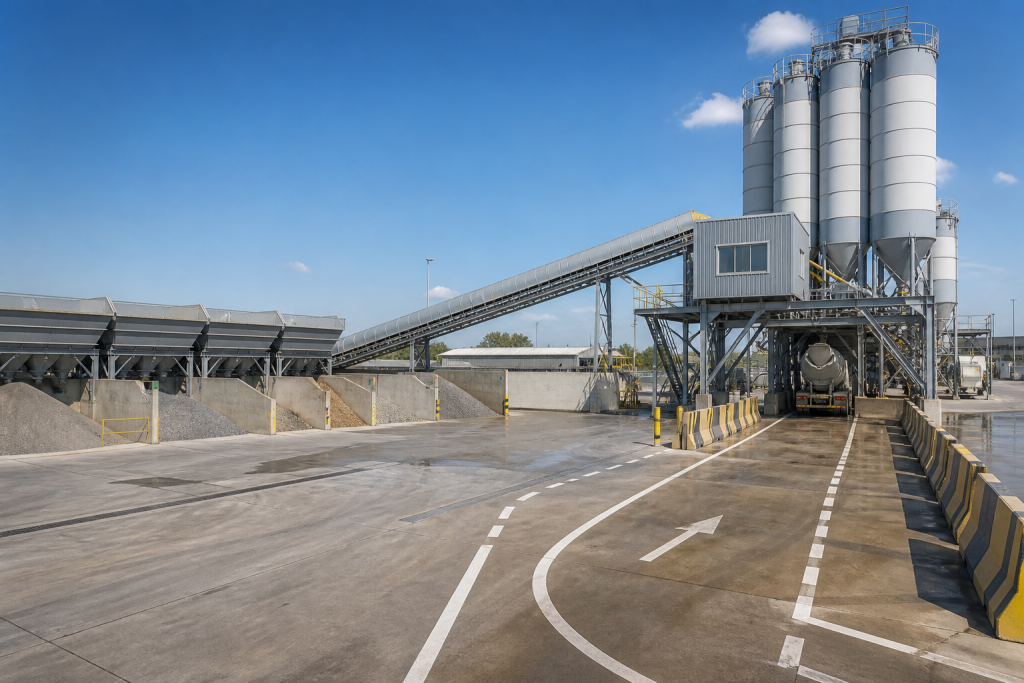
September 2, 2026 – Contractors, ready-mix producers, and concrete equipment buyers are giving more attention to concrete batching plant truck loading layouts as project teams look for smoother mixer truck movement, clearer dispatch rhythm, and safer service access around the plant. The issue is not only the size of the mixer, aggregate bins, or cement silos. A plant also needs enough room for trucks to enter, queue, load, exit, wash out, and return to the delivery route without slowing production.
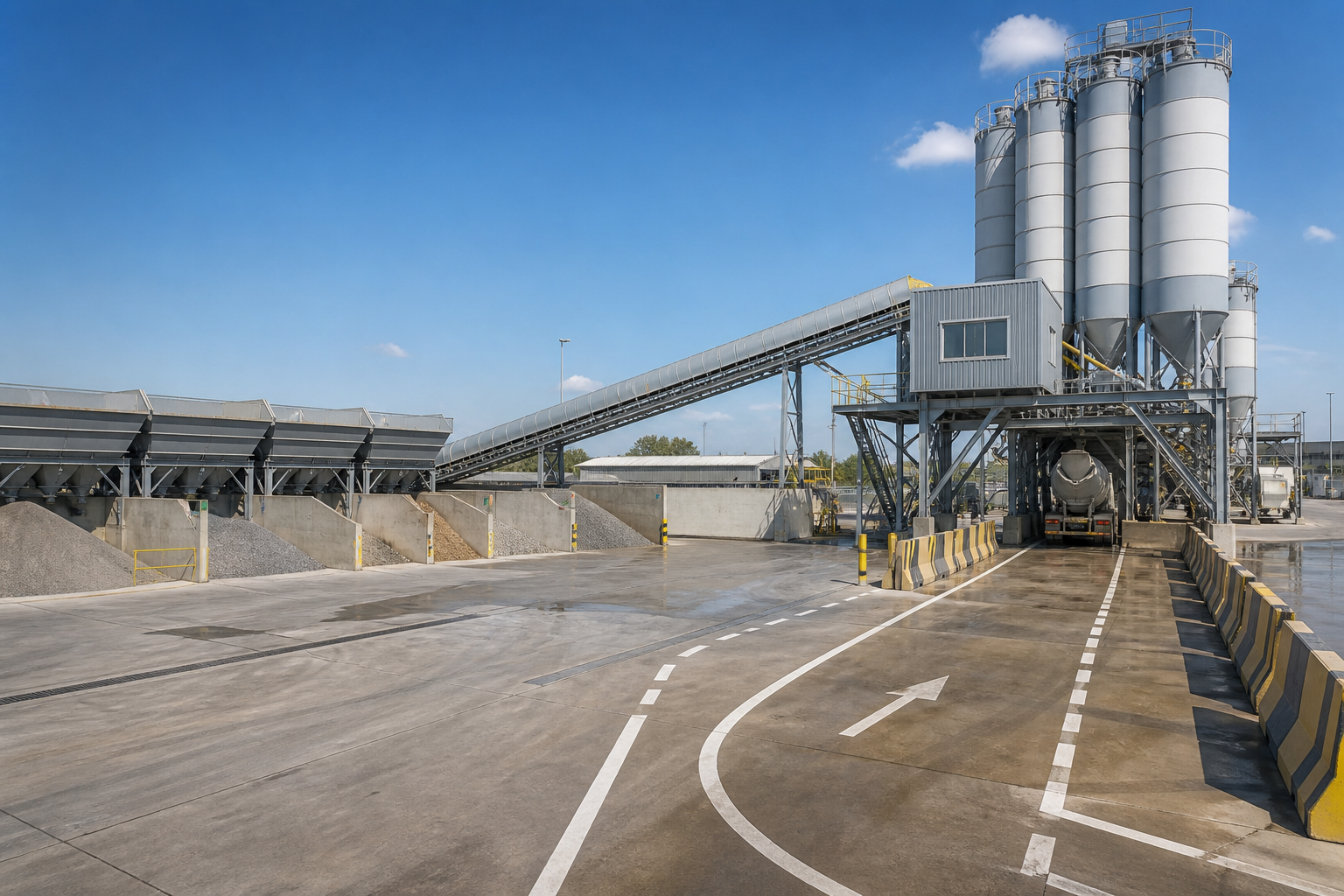
This article is an original industry analysis for construction contractors, ready-mix producers, plant managers, and concrete equipment buyers. It does not rely on specific third-party company announcements, customer cases, regulations, price data, or project claims. The focus is practical planning for concrete batching plant traffic flow, mixer truck loading lanes, aggregate feed routes, control room visibility, washout access, and service routines.
Why truck movement is becoming part of plant selection
A stationary concrete batching plant or mobile system is often selected by rated output, aggregate bin layout, mixer model, cement silo capacity, weighing accuracy, and automation level. Those specifications still matter, but they do not describe how trucks move through the site. A plant that can batch quickly may still lose operating time if trucks queue in the wrong place, block loader movement, interfere with service access, or wait too long at the discharge point.
Early review does not mean every plant needs a larger site. It means the truck path should be reviewed with the same care as aggregate storage, conveyor angle, silo placement, mixer discharge height, and electrical access. A compact project plant, a mobile concrete batching plant, and a permanent ready-mix yard may all need different queue strategies, but each needs a clear loading rhythm.
Queue planning should follow the production workflow
Mixer truck queue planning is most useful when it follows the way the plant actually works. Plant teams can review the entrance, staging area, aggregate feed route, weighing system, inclined conveyor, mixer platform, loading bay, washout area, exit lane, and return route as one operating sequence. This helps managers understand whether delays are tied to batching, truck access, traffic conflicts, cleaning, or jobsite dispatch timing.
The control room may show batch count, recipe selection, aggregate weights, cement dosage, water correction, and mixer timing. Dispatch review adds another operating layer. If trucks are consistently waiting before loading, crossing loader routes, or leaving the plant slowly, the team can investigate traffic flow before assuming that a major equipment upgrade is required.
The loading bay needs enough working space
The loading bay is the most visible point in the workflow, but it is also where many planning problems appear. The truck should reach the discharge point without difficult turning, long reversing, blocked sight lines, or interference with conveyor supports, stairways, control room access, and service platforms. A loading lane should also allow enough clearance for inspection, cleaning, and emergency access.
Truck queue lanes should be planned before the plant is installed where possible. Even a simple painted lane or physical barrier can help separate trucks from loader routes, aggregate stockpiles, maintenance zones, and pedestrian service points. For temporary sites, the review may focus on short turning movements and fast relocation. For permanent ready-mix yards, it may include multiple truck positions, return loops, and separate access for aggregate delivery.
Aggregate feed routes affect truck timing
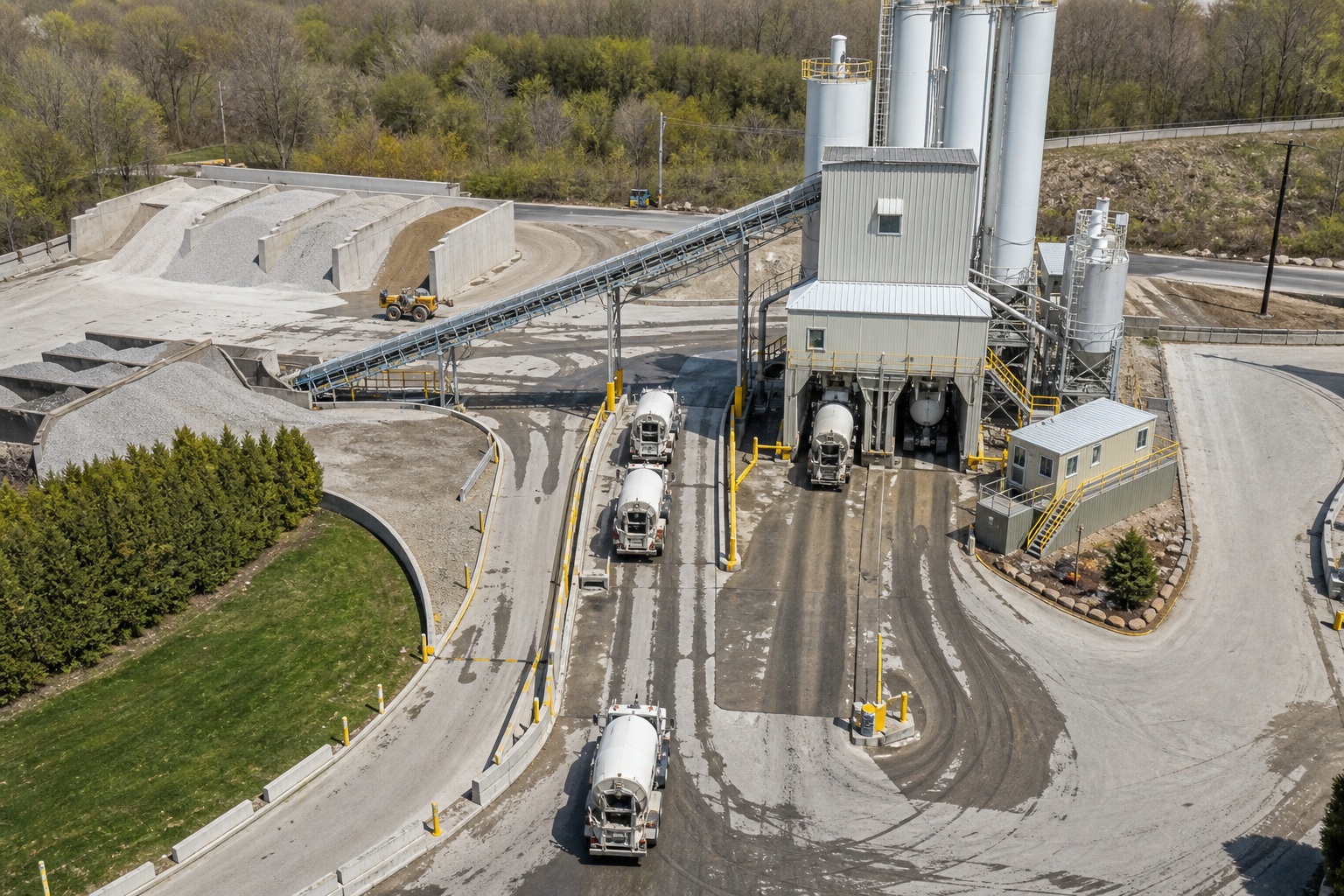
Aggregate handling often drives a large part of plant rhythm. Bin gates, stockpiles, loader access, belt conveyors, covered conveyors, transfer chutes, idlers, scrapers, and weighing hoppers should be reviewed together with the truck loading path. If aggregate feeding is interrupted by truck movement or loader conflict, the mixer may wait even when the loading bay appears available.
The concrete mixer should be reviewed with the loading bay and truck approach. Mixer discharge behavior, chute alignment, truck drum position, cleaning access, and batch timing all influence how long a truck remains under the plant. A well-planned route helps the mixer complete each cycle without turning the loading area into a bottleneck.
Washout access should not block production
Washout planning is part of truck queue planning. If the washout area sits too close to the loading bay or exit lane, cleaning activity can slow the next truck. If it is too far away or poorly drained, trucks may spend extra time moving through the yard. The useful approach is to review washout access, drainage, reclaim water handling, and cleaning routine as part of the plant traffic plan.
Service access should remain visible in the same review. Motors, gearboxes, bearings, belts, discharge gates, lubrication points, sensors, air compressors, dust collectors, and electrical cabinets all need room for inspection. A route that works for trucks but blocks daily maintenance can create a different production problem later.
Dispatch, pumping, and site access should be coordinated
Truck loading rhythm should be coordinated with dispatch planning and the receiving jobsite. If concrete is supplied to a concrete pump, the plant team should consider pump receiving access, waiting space, pipeline cleaning, and the time between batching and placement. A smooth plant yard cannot solve every jobsite delay, but it can reduce avoidable waiting at the production side.
This is why truck queue planning should be treated as an operating workflow rather than a single lane drawing. The batching plant, mixer truck, concrete pump, washout area, site traffic route, control room, and service team all need compatible timing and access. Early review helps managers identify small conflicts that may become larger production delays over repeated delivery cycles.
Practical checklist for plant teams
- Map truck entrance, queue lane, loading bay, washout area, exit lane, and return route before finalizing the plant position.
- Review mixer truck turning space, sight lines, reversing distance, and clearance around conveyor supports and service platforms.
- Separate truck loading movement from loader routes, aggregate delivery paths, stockpile access, and maintenance zones where possible.
- Check whether washout access, drainage, reclaim water handling, and cleaning routine interfere with the next truck in line.
- Compare batching time, mixer discharge time, truck waiting time, and dispatch communication notes by shift.
- Keep motors, belts, bearings, discharge gates, sensors, electrical cabinets, and spare parts reachable during normal operations.
- Coordinate plant loading rhythm with mixer truck availability, concrete pump receiving, jobsite access, and delivery timing.
FAQ
What does concrete batching plant truck loading planning include?
It can include entrance routes, queue lanes, loading bay clearance, mixer truck turning space, washout access, exit routing, aggregate feed routes, control room visibility, and dispatch coordination.
Does every plant need the same queue layout?
No. A mobile plant, compact project plant, and permanent ready-mix plant may need different queue lane length, turning radius, washout position, loading bay clearance, and traffic separation.
Why should aggregate handling be reviewed during truck flow planning?
Aggregate flow affects conveyor operation, loader movement, weighing consistency, mixer charging, and daily production rhythm. Poor material access can delay batching even when trucks are ready to load.
What information should buyers prepare before discussing plant configuration?
Useful details include production capacity, plant type, truck size, expected delivery rhythm, aggregate storage layout, mixer model, silo arrangement, entrance and exit limits, pump use, washout plan, and service support needs.
Conclusion-Mixer Truck Queue Planning Gains
Concrete batching plant truck loading planning is becoming an earlier discussion because reliable production depends on more than rated output. A useful review connects mixer truck queue lanes, aggregate feeding, conveyor placement, mixer discharge, washout access, service space, dispatch rhythm, concrete pump coordination, and jobsite communication. Buyers can review the product center or contact hengyuan Concrete Machines with project details to discuss concrete batching plant configuration and support needs.
Our Whatsapp: +86 199 3949 4756