
Foundation Readiness Moves Earlier in Mobile Concrete Batching Plant Planning
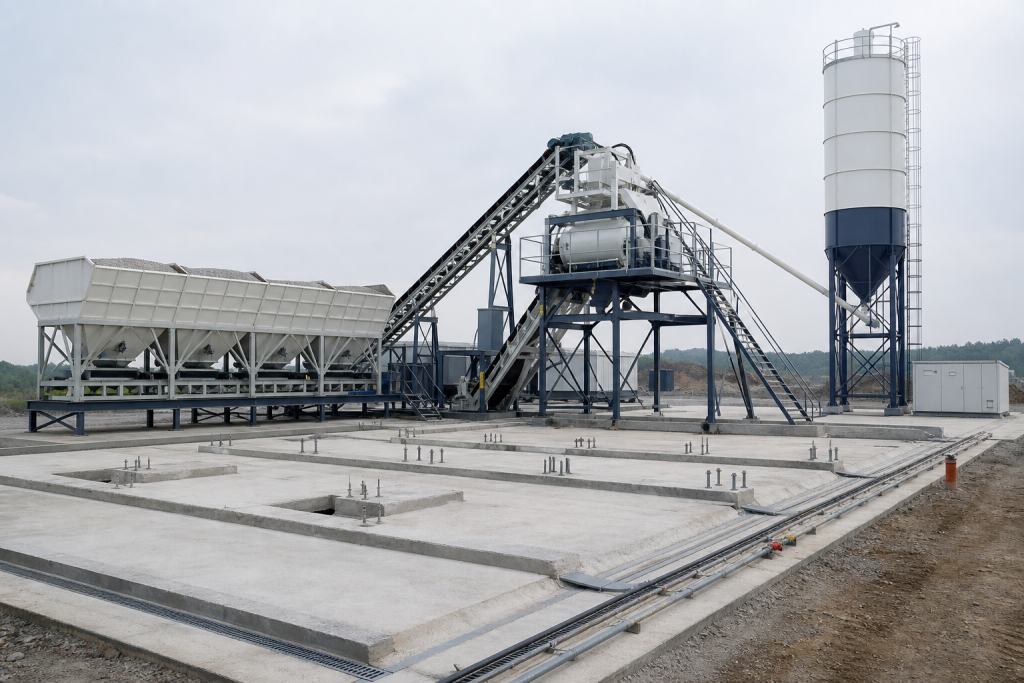
August 25, 2026 – Concrete producers, contractors, and equipment buyers are moving foundation readiness discussions earlier when planning mobile and modular concrete batching plant projects. The shift is practical rather than cosmetic: foundation pads, anchor bolts, drainage, conduit, water supply, electrical routing, and access space can all affect how quickly a plant is installed, commissioned, cleaned, and maintained.
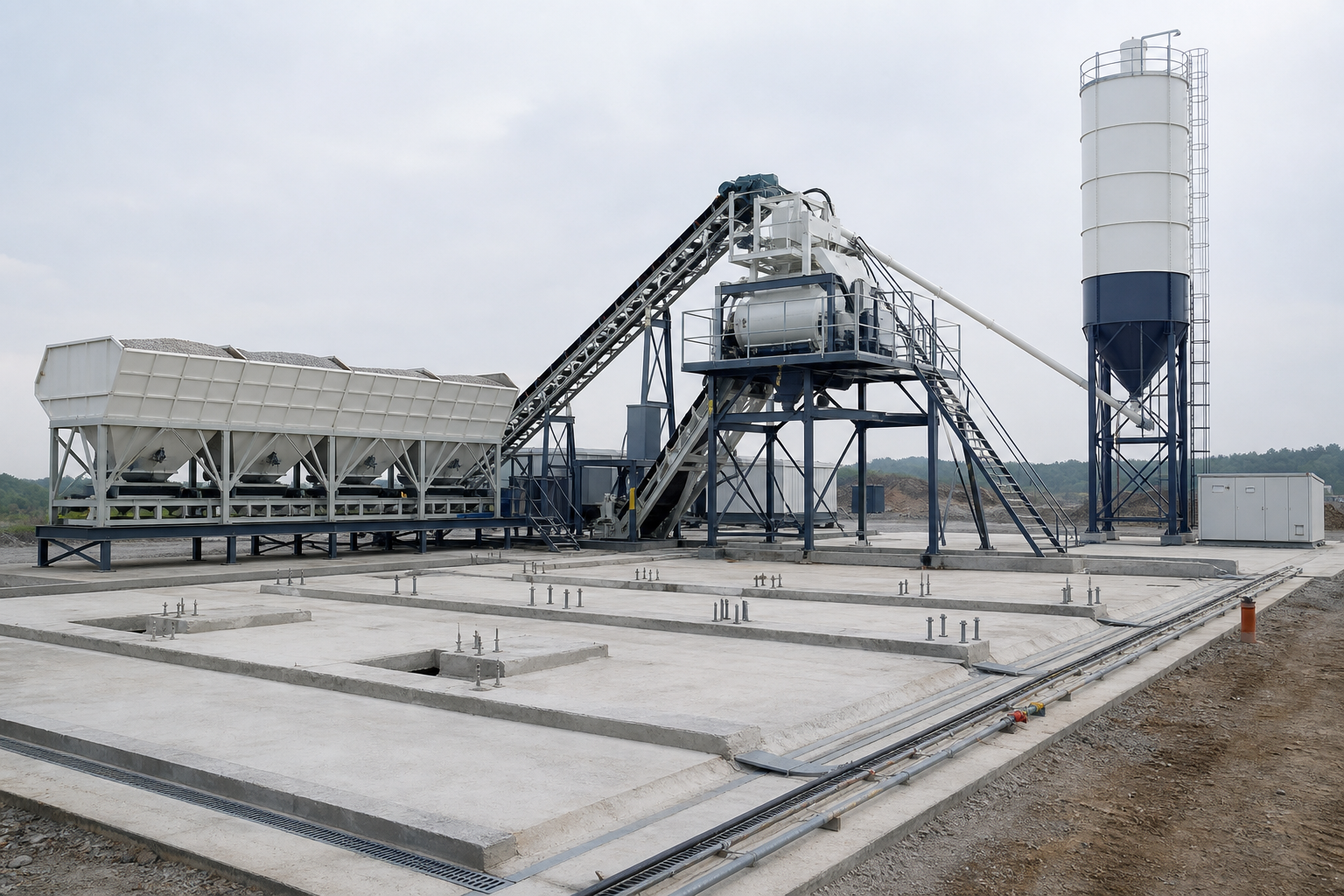
This article is an original industry analysis for ready-mix producers, contractors, site planners, and equipment buyers. It does not rely on specific third-party company announcements, customer cases, regulations, price data, or project claims. The focus is practical preparation for aggregate bins, cement silos, conveyors, mixers, control cabinets, truck loading areas, and downstream concrete delivery equipment.
Why foundation readiness is moving up the checklist
A mobile concrete batching plant is often selected because it can support phased construction sites, temporary production needs, or projects where equipment must be moved after the job is complete. That mobility does not remove the need for a disciplined site plan. The plant still needs a level base, stable support points, safe access, clear truck movement, utility connections, and enough space around mechanical components.
Equipment specifications such as mixer size, aggregate bin volume, belt width, cement silo capacity, and control system functions remain important. But those specifications only work as intended when the site is ready to receive the equipment. If anchor positions, pad elevation, drainage slope, conduit routes, and service clearances are not reviewed early, installation teams may lose time solving basic layout issues on site.
Foundation details affect installation speed
For many batching plant projects, the foundation is discussed only after the main configuration is chosen. A better sequence is to review foundation assumptions while the plant layout is still flexible. Anchor bolt groups, base plate positions, cement silo legs, mixer frame supports, aggregate bin supports, control room location, and truck loading routes should be checked against the actual site footprint.
Small differences in elevation can influence belt alignment, aggregate feeding, water drainage, and access platform installation. Poorly placed anchor points can also make final positioning harder than necessary. A clear foundation drawing, installation checklist, and site readiness review can help the project team reduce avoidable adjustment work during commissioning.
Drainage and utility routes should be planned together
Drainage is closely linked to foundation planning. Water from washing, rainfall, aggregate handling, and general cleaning should not collect around electrical cabinets, conveyor supports, mixer access points, or truck movement areas. Drainage channels, slopes, sumps, and cleaning routes need to be positioned before concrete pads are poured or temporary bases are finalized.
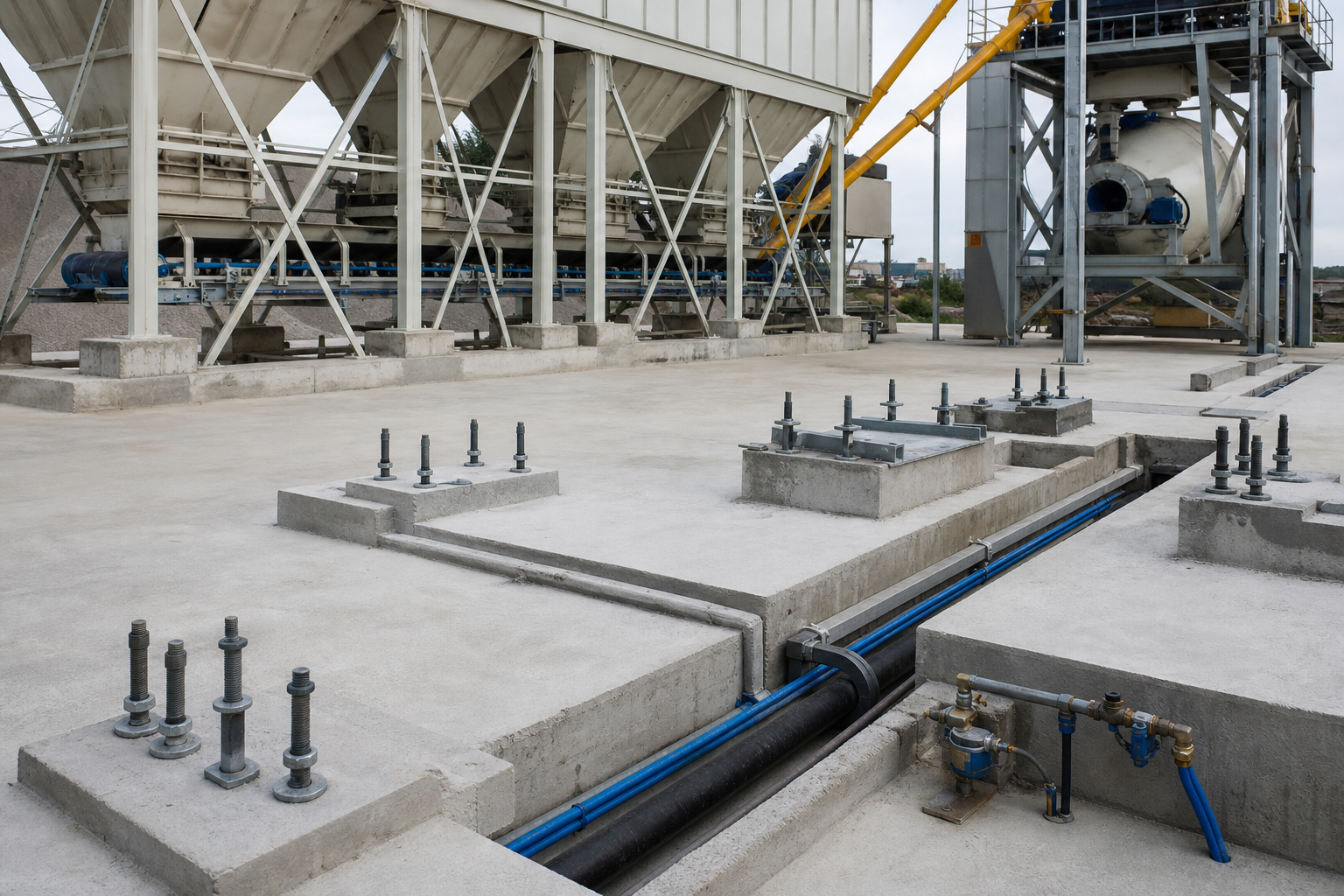
Utility routes deserve the same early attention. Water lines, electrical cable trays, sensor cables, compressed air lines, grounding points, and control wiring should be routed so they are protected from truck traffic, loader movement, standing water, and routine cleaning work. A mobile plant may be easier to move than a large permanent plant, but it still needs tidy and serviceable connections during operation.
Service access is part of the foundation plan
Foundation readiness is not only about concrete thickness or anchor bolts. It also includes the working space around the plant. Maintenance teams need practical routes to reach the concrete mixer, belt conveyor, weighing system, aggregate bins, cement screw conveyor, water system, admixture system, and control cabinet. If the pad layout leaves no space for service doors, tools, spare parts, or safe inspection, the plant may be harder to operate than expected.
For a stationary concrete batching plant, service platforms and walkways may be part of a more permanent structure. For a mobile plant, the design may rely more on compact access points, removable panels, foldable structures, and short setup routines. In both cases, access should be reviewed before the site team commits to pad edges, drainage trenches, and utility routes.
Truck and loader movement shape the site
The foundation plan should also reflect how materials and finished concrete will move through the site. Loader access to aggregate bins, cement tanker access to silos, mixer truck positioning, discharge clearance, and safe routes for a concrete pump supply workflow can all influence the practical layout. A pad that looks acceptable on a drawing may still cause congestion if vehicle turning paths are not considered.
Batching plant buyers should ask how aggregate delivery, cement delivery, truck loading, washdown, wastewater movement, maintenance access, and operator visibility will work together. These discussions help the plant layout support production instead of forcing operators to work around the site every day.
Temporary sites still need disciplined preparation
Some project teams treat temporary plant sites as lower-risk because the installation period is shorter. In practice, temporary does not mean casual. If foundation pads, support blocks, drainage, utility protection, and access areas are incomplete, a temporary setup can still face delays, messy operation, or difficult maintenance. A well-prepared temporary site can make relocation easier because equipment, cables, pipes, and anchors are organized from the beginning.
Buyers can use the product center to review concrete batching plant and equipment options, then discuss foundation dimensions, utility needs, aggregate routing, silo placement, mixer access, discharge height, and commissioning requirements with hengyuan Concrete Machines before finalizing a project plan.
Practical checklist for foundation readiness
- Confirm plant footprint, support points, cement silo legs, aggregate bin supports, mixer frame position, and control room location.
- Review anchor bolt layout, base plate positions, pad elevation, concrete pad edges, and installation tolerances before pouring pads.
- Plan drainage channels, slopes, cleaning routes, and wastewater movement around mixer access, aggregate bins, and truck loading areas.
- Route water, power, control wiring, grounding, conduit, compressed air, and sensor lines away from heavy traffic and standing water.
- Leave enough space for service doors, removable panels, tools, spare parts, walkways, and routine inspection points.
- Check loader movement, cement tanker access, mixer truck turning, pump supply workflow, and safe pedestrian access.
- Prepare a commissioning checklist that connects foundation, utilities, mechanical setup, control testing, and operator handover.
FAQ
Why should foundation readiness be reviewed before mobile batching plant delivery?
Foundation readiness affects equipment positioning, anchoring, leveling, drainage, utility connection, truck access, and commissioning. Reviewing it early helps the installation team avoid basic site delays.
Does a mobile concrete batching plant always need a permanent foundation?
Not always. The required base depends on plant model, project duration, site conditions, output target, local engineering requirements, and support design. Even temporary setups still need stable, level, and serviceable support.
Which utilities should be checked during batching plant site preparation?
Common items include power, water, control wiring, grounding, compressed air, admixture lines, sensor cables, drainage, lighting, and safe cable or pipe protection around vehicle routes.
What information should buyers prepare before discussing foundation layout?
Useful details include site dimensions, expected capacity, plant model, aggregate storage plan, cement silo quantity, truck movement route, utility access points, drainage expectations, and project timeline.
Conclusion-Mobile Concrete Batching Plant Planning
Foundation readiness is becoming a more important part of mobile and modular concrete batching plant planning because installation quality affects daily production, maintenance, cleaning, and relocation. A useful plan connects support pads, anchor bolts, drainage, utilities, mixer access, aggregate handling, truck movement, and commissioning checks. Buyers can contact hengyuan Concrete Machines with project details to discuss concrete batching plant configuration, foundation preparation, and site setup planning.
Our Whatsapp: +86 199 3949 4756