
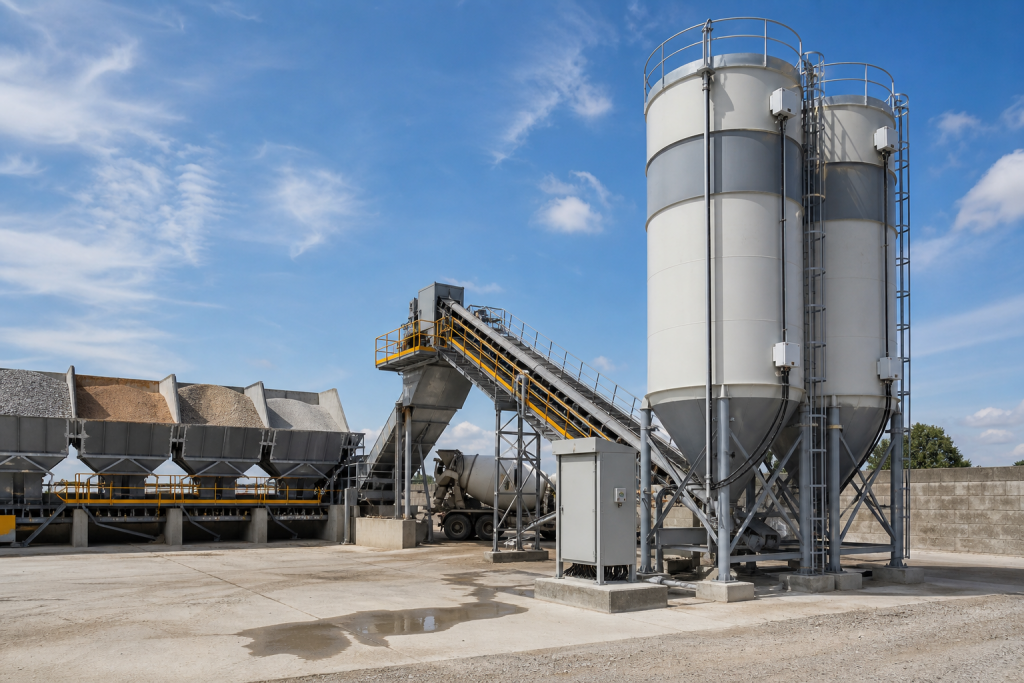
August 26, 2026 – Concrete producers and equipment buyers are giving more attention to cement silo level monitoring when planning concrete batching plant operations. The reason is practical: silo visibility affects cement inventory checks, screw conveyor feeding, mixer scheduling, tanker unloading, alarm response, and routine maintenance around the plant.
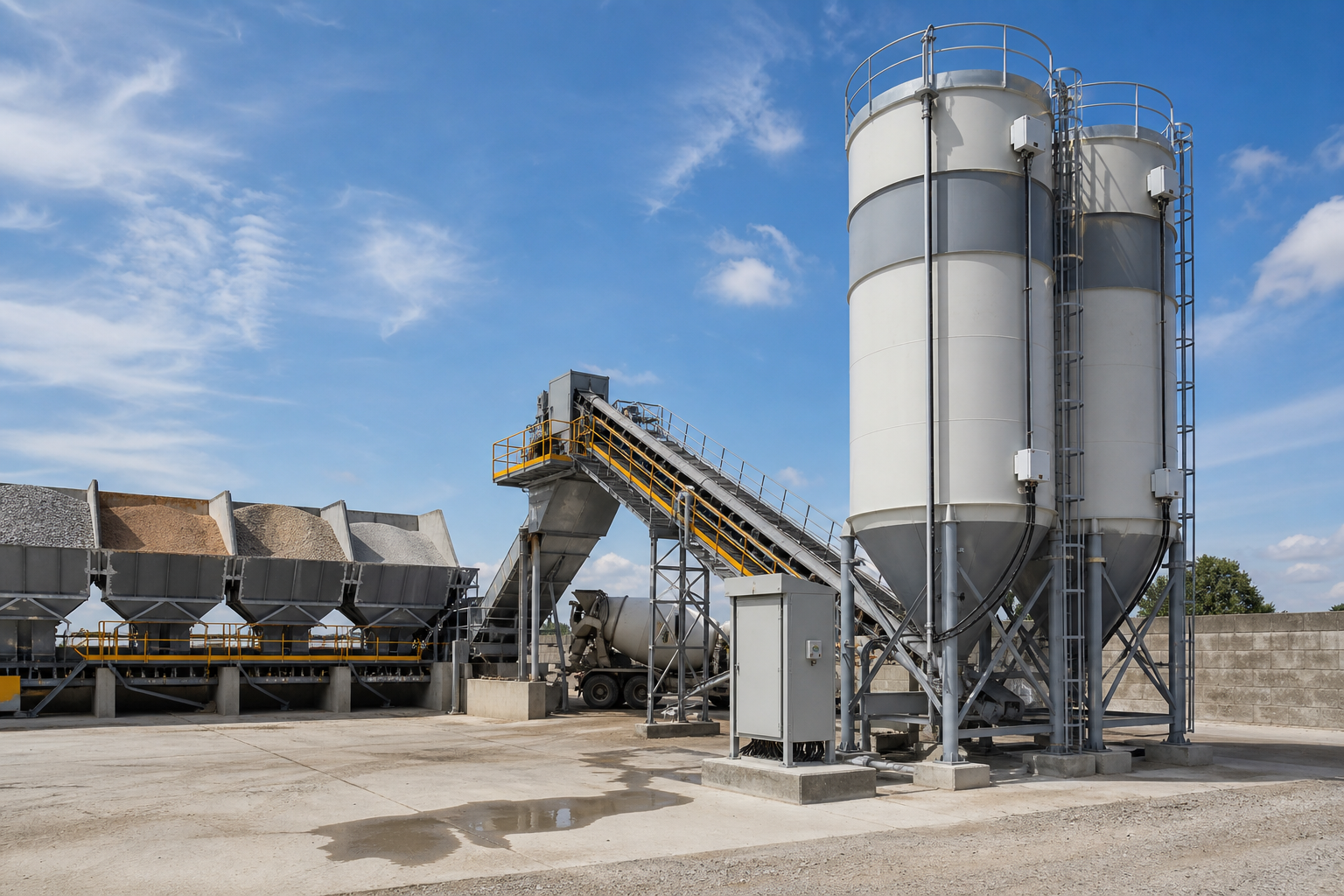
This article is an original industry analysis for ready-mix producers, contractors, plant managers, and equipment buyers. It does not rely on specific third-party company announcements, customer cases, regulations, price data, or project claims. The focus is practical planning for cement silos, screw conveyors, mixers, aggregate bins, control systems, dust collectors, and downstream concrete delivery equipment.
Why silo visibility is moving up the checklist
Cement silos are sometimes treated as simple storage vessels, but their condition and material level can influence the entire concrete batching plant workflow. When the operator cannot clearly judge the available cement volume, the plant may face rushed tanker scheduling, unnecessary stoppages, difficult discharge checks, or inconsistent coordination between storage, weighing, and mixing.
Level monitoring does not replace disciplined plant management. It supports it by giving the team clearer information at the point where material storage meets production planning. A useful monitoring setup helps operators compare silo level, cement demand, truck delivery timing, screw conveyor performance, and control-room alarms before a shortage or blockage interrupts batching.
Material flow starts above the mixer
The concrete mixer receives weighed cement after storage, conveying, and weighing systems have already done their jobs. If the silo cone, aeration arrangement, screw conveyor inlet, dust collector, and weighing route are not reviewed together, a plant can develop material-flow issues that are harder to diagnose from the mixer end of the process.
For this reason, equipment buyers are looking more closely at how level sensors, low-level warnings, high-level checks, cone discharge geometry, inspection points, and screw conveyor access fit into the overall plant layout. These details can help the operations team understand whether the issue is storage level, discharge behavior, conveyor performance, or weighing sequence.
Sensor placement should support maintenance
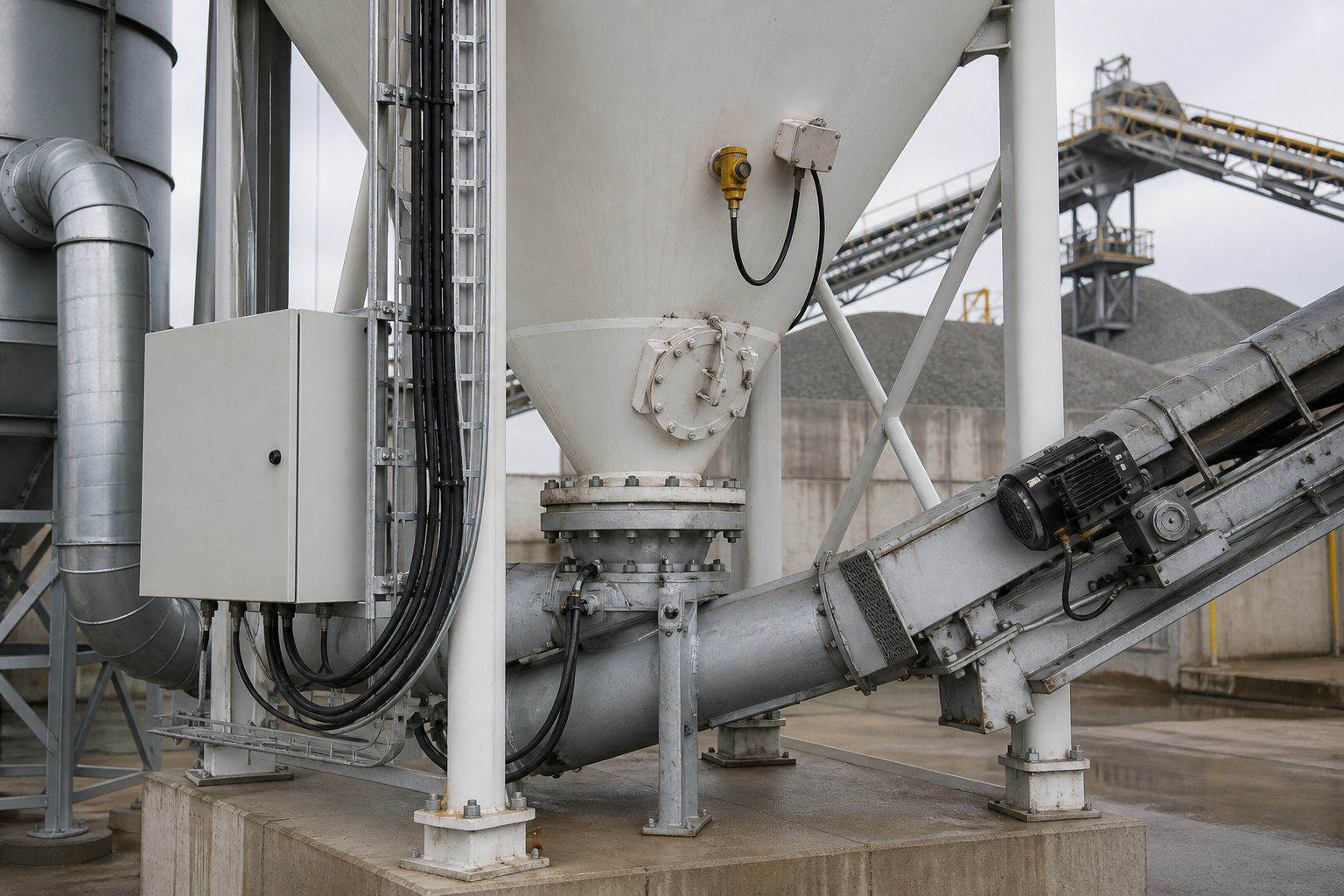
A level sensor is only useful if it can be installed, inspected, protected, and serviced safely. Cable routes, conduit, control boxes, access ladders, inspection hatches, dust collector positions, and silo top walkways should be considered before the plant is finalized. Poor sensor access may not stop the first day of production, but it can make later troubleshooting slower and less orderly.
The same principle applies to cable protection. Signal cables and power lines should be routed away from moving vehicles, wet cleaning areas, sharp edges, high-vibration points, and crowded service paths. A tidy cable route makes the monitoring system easier to trace when an alarm, false reading, or communication issue needs attention.
Control-room data needs operating context
Modern batching plant control rooms often receive more signals than earlier manual operations, but a signal still needs operating context. A low-level warning is more useful when the operator can connect it to the production schedule, cement recipe demand, tanker delivery timing, and current screw conveyor behavior. Without that context, the team may still rely on reactive checks.
Plant owners should define who responds to level alarms, how cement deliveries are recorded, how manual checks are handled, and how sensor readings are compared with actual material use. This is especially important when a stationary concrete batching plant runs multiple mix designs or when a mobile plant supports a fast-moving project schedule.
Dust control and unloading should be reviewed together
Silo level monitoring is closely connected with cement tanker unloading and dust control. High-level warnings, pressure relief, filter condition, air flow, and silo top access all influence how comfortably the plant handles deliveries. If unloading points, tanker routes, and dust collector access are planned separately, the site may become harder to manage during busy production periods.
Equipment planning should therefore include silo filling arrangements, safe access for inspection, filter maintenance space, visible unloading routes, and clear communication between the driver and plant operator. These details support both production continuity and cleaner worksite organization.
Inventory planning affects downstream equipment
Cement inventory does not stop at the silo. It affects batching speed, truck loading plans, and the ability to feed downstream placing equipment such as a concrete pump. When cement availability is uncertain, the plant team may delay batching, adjust delivery priorities, or slow coordination with mixer trucks and pumping teams.
A clearer inventory picture helps the team plan cement replenishment before the production schedule becomes tight. It also gives managers better information when reviewing daily output, material consumption, supplier timing, and operating interruptions. For plants serving remote jobsites or high-demand pours, that visibility can be especially valuable.
Practical checklist for silo level monitoring
- Confirm silo quantity, cement type separation, expected consumption, delivery rhythm, and production schedule.
- Review level sensor type, mounting point, cable route, control cabinet connection, alarm logic, and manual inspection access.
- Check silo cone discharge, screw conveyor inlet, aeration arrangement, weighing route, and mixer feeding sequence together.
- Plan dust collector access, pressure relief checks, tanker unloading position, and safe silo top inspection routes.
- Protect cable conduit from truck movement, loader routes, washdown water, sharp edges, and high-vibration equipment.
- Define how operators respond to low-level, high-level, communication, and abnormal material-flow warnings.
- Include sensor checks, alarm tests, conveyor running checks, and material-flow observations in commissioning records.
Dust control and overfill prevention
Silo filling creates several related planning questions. The plant needs a clear fill connection, a working dust collection path, appropriate venting, high-level indication, and operator communication during delivery. Overfill prevention is not only a sensor issue. It also depends on delivery practice, alarm visibility, filter condition, pressure relief inspection, and whether operators have enough information before material is blown into the silo.
Quick Answer: Why Is Cement Silo Level Monitoring Important?
Cement silo level monitoring is important because cement inventory, screw conveyor feeding, delivery scheduling, and production continuity depend on accurate silo visibility. Poor monitoring can cause unexpected cement shortage, overfilling risk, dust collector pressure, or interrupted batching.
Concrete batching plant buyers should confirm level indicator type, alarm settings, display position, wiring, dust protection, calibration routine, and operator response procedure before production starts.
Cement Silo Level Monitoring Table
| Monitoring Point | Buyer Check |
|---|---|
| Level indicator | Confirm whether the system uses rotary, radar, pressure, or other level monitoring devices. |
| Alarm settings | Set low-level, high-level, and overfill alerts that operators can notice quickly. |
| Dust protection | Protect sensors and wiring from cement dust, vibration, and moisture. |
| Delivery planning | Use level data to schedule cement delivery before production is interrupted. |
| Maintenance access | Leave safe access for inspection, cleaning, sensor replacement, and calibration checks. |
Dust collector elements, vent lines, gaskets, level probes, pressure relief equipment, and silo top access should be included in the service plan. A storage system that works during commissioning but is difficult to maintain can create avoidable downtime later.
Batch data should connect storage and production decisions
Batching plant automation can connect storage planning with production decisions. Useful records may include batch count, recipe selection, cement target weight, actual cement weight, water and admixture dosing, mixer time, alarm history, and operator notes.
Storage data should also be coordinated with dispatch and jobsite supply. If concrete is supplied to a concrete pump, material availability, batching time, mixer truck loading rhythm, and pump receiving access all influence delivery reliability.
Different monitoring needs for different plant types
A mobile plant, compact project plant, and permanent ready-mix plant may need different silo capacities, sensor types, alarm arrangements, control displays, fill connections, and service access. The monitoring plan should match how the plant will actually operate and be maintained.
FAQ
Why is cement silo level monitoring important for a concrete batching plant?
It helps operators understand cement availability, plan deliveries, respond to low-level or high-level conditions, and coordinate storage with screw conveying, weighing, mixing, and truck loading.
Does level monitoring remove the need for manual silo checks?
No. Monitoring supports daily management, but plants still need inspection routines, maintenance access, alarm testing, dust collector checks, and clear operating procedures.
What equipment should be reviewed with silo monitoring?
Useful items include the cement silo, level sensor, control cabinet, cable conduit, silo cone, aeration equipment, dust collector, screw conveyor, cement weighing system, and mixer feeding route.
What information should buyers prepare before discussing silo monitoring?
Useful details include plant capacity, cement silo quantity, cement types, delivery frequency, site layout, control-system expectations, maintenance access limits, and expected batching schedule.
Conclusion
Cement silo level monitoring is becoming a more practical planning topic because storage visibility affects material flow, batching continuity, delivery timing, maintenance response, and control-room confidence. A useful setup connects sensors, cable routes, silo cones, screw conveyors, dust collectors, weighing systems, mixer demand, and commissioning checks. Buyers can contact hengyuan Concrete Machines with project details to discuss concrete batching plant configuration, cement silo planning, and equipment layout support.
Our Whatsapp: +86 199 3949 4756