
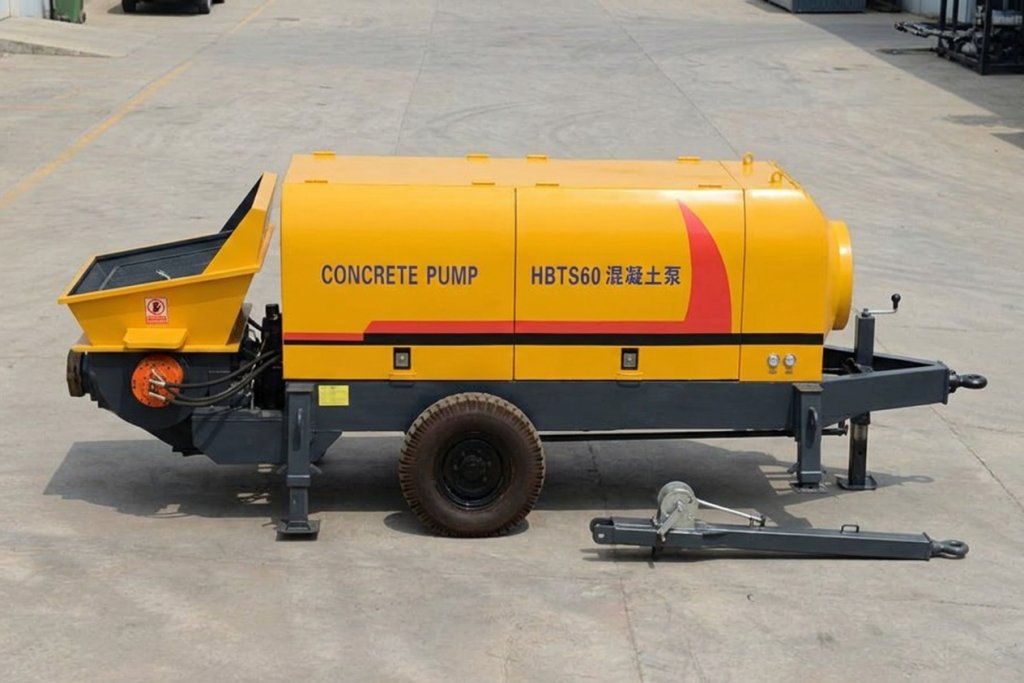
Industry analysis: A concrete pump setup area is more than an empty rectangle on a site plan. It must accommodate the selected machine, its supporting equipment, the route for ready-mix trucks and the people managing the placement. A location that looks workable on a drawing can become unusable when an excavation, overhead obstruction or delivery queue is considered. This seven-check planning guide helps contractors, pump operators and dispatchers identify questions before equipment arrives. It is a coordination aid, not a substitute for the pump manufacturer’s instructions, the operator’s assessment or site-specific safety requirements.
1. Confirm the machine and its operating envelope
Begin with the actual pump configuration rather than a generic equipment icon. Ask the pump provider for the machine’s footprint, outrigger arrangement where applicable, setup height and access needs. A boom pump and a line pump can impose different space requirements. Identify where the vehicle will enter, turn, set up and leave. The concrete pump setup area should not be blocked by stored materials, temporary fencing or a second trade’s equipment when the pour starts.
A site sketch should show the intended pump position and the working area needed around it. If the site changes between planning and delivery, the sketch should be checked again with the operator. Avoid treating a reduced setup footprint as an informal workaround: any permitted configuration must follow the specific manufacturer’s instructions and be accepted by the responsible operator.
2. Review ground support and concealed conditions
The concrete pump setup area must be supported by ground suitable for the machine and its stabilizers. A surface may appear firm yet conceal recent backfill, buried services, drainage structures or voids. Identify recent excavation and underground utilities on the plan, and ask who can verify the ground condition. The American Concrete Pumping Association’s safe setup guidance emphasizes marked hidden voids, suitable ground support and adequate room for outriggers; the machine manufacturer’s requirements take precedence.
Do not assume that a paved surface proves the subgrade can carry concentrated loads. Ground-support assessment, pad or cribbing selection and any required engineering input belong with qualified people using the actual equipment loads and site conditions. If those facts are unavailable, record the gap and resolve it before confirming the location. A practical handoff states who supplies ground information and who has authority to reject an unsuitable position.
3. Check the vertical and horizontal obstruction map
Mark overhead lines, building edges, scaffolds, tree canopies and temporary works, not only ground-level barriers. The boom’s planned movement or the line route may pass through a different part of the site from the parked vehicle. The pumping team should evaluate clearances against the equipment instructions and the requirements applicable at the site; this article does not prescribe a universal clearance distance. Never improvise around an overhead electrical hazard.
Then review the horizontal route. Can a ready-mix truck approach the hopper without crossing the pump’s working zone? Is there a clear pedestrian path that avoids delivery traffic and hose movement? Are there blind corners that require traffic control or a designated spotter? A setup drawing should describe these interfaces, not merely indicate the final location of the pump.
4. Plan truck access and a realistic delivery sequence
Concrete placement is a linked operation. The pump cannot be assessed independently of the trucks that feed it. Identify the entry gate, approach direction, waiting location, discharge position and exit route. If a truck has to reverse, establish who controls that movement and where other workers will be. Separate the delivery queue from the pump setup area so a waiting truck does not block emergency access or another trade.
Compare the intended placement pace with the site’s ability to receive vehicles. A hypothetical project may have a pump capable of more output than a narrow gate and single discharge point can sustain. That is a planning example, not a claimed Hengyuan customer result. Dispatch, the contractor and pump provider should agree on an achievable sequence and a contact method for delays. For related coordination questions, see Hengyuan’s concrete pump overview.
5. Assign communications and stop-work decisions
A pre-pour conversation should name the site contact, pump operator, ready-mix dispatcher and person coordinating the placement crew. Confirm how they communicate when access changes, a truck is delayed or the pump must stop. The joint industry checklist for pumping ready-mixed concrete includes contacts, site conditions, pump details, traffic control and delivery timing. Its structure is useful because a missing contact can turn a small obstruction into a long interruption.
Record who can move parked equipment, who can authorize a revised truck route and who will reassess the concrete pump setup area if ground conditions change. Do not rely on an undocumented assumption that the operator will simply relocate on arrival. A concise written handoff gives each party a way to raise a concern before the machine is committed to a position.
6. Reserve space for placement and cleanup
The setup plan should include more than the first truck and the first hose position. Consider the hose team’s movement, access to the pour, any line supports needed under the equipment plan and the location of the next placement stage. Keep the pump’s work area clear of unrelated storage. The responsible crew should confirm any barriers or exclusion areas required by its procedure and the site’s risk assessment.
Also decide where approved cleanup activities will occur and how trucks will reach that location without crossing the active placement zone. The joint industry checklist explicitly includes a chute rinse-off area and water availability. This is a planning prompt, not permission to discharge wash water anywhere: the site’s environmental controls and local requirements govern the actual method. If the cleanup route is blocked at the end of the pour, the operation may still be unfinished even though placement has stopped.
7. Recheck the plan just before arrival
Construction sites are dynamic. A safe layout agreed a week earlier may have changed because of excavation, temporary power, material deliveries or weather. Before releasing the pump and first concrete trucks, ask the site contact to confirm the agreed location remains available. Compare current conditions with the plan, then let the responsible operator inspect the actual concrete pump setup area. A mismatch should trigger a new assessment, not a rushed adjustment.
A short final checklist can be shared with everyone involved: actual pump model confirmed; ground and concealed hazards reviewed; overhead and horizontal clearances checked; truck route and queue agreed; contacts assigned; cleanup area identified; and operator acceptance pending on-site inspection. Keep the checklist tied to a named pour and revision date so old assumptions are not mistaken for current conditions.
Planning takeaway
The value of a concrete pump setup area review is not the drawing itself; it is the shared decision about whether the proposed location can support the whole operation. Ground support, obstructions, vehicle movements, crew access and cleanup all need owners before arrival. Hengyuan recommends treating the seven checks as early coordination questions and leaving final equipment setup decisions to qualified personnel using the applicable manufacturer instructions and the conditions they actually find on site.
Contact Us: +86 199 3949 4756