
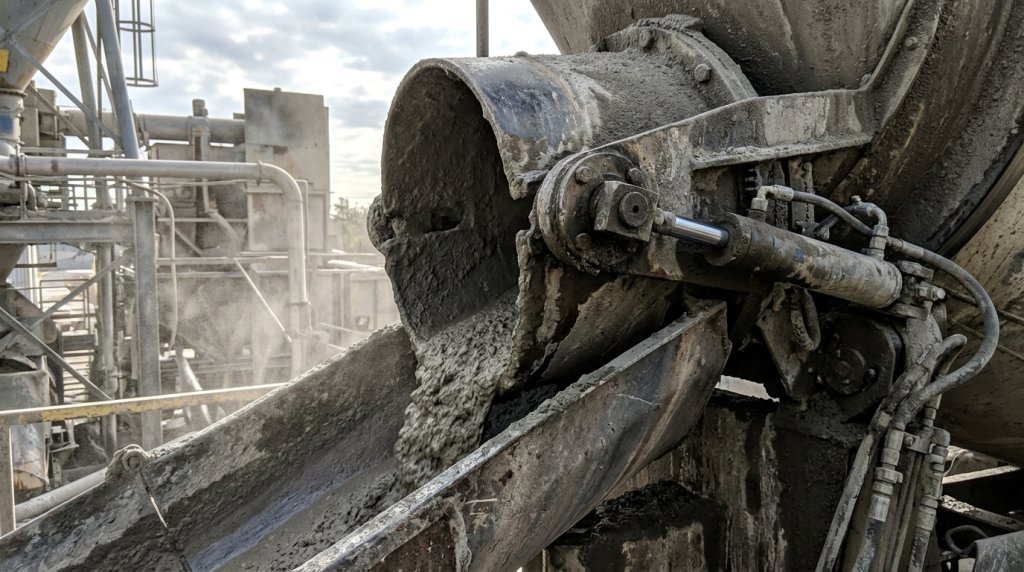
A concrete plant loading chute is the final transfer point between batching equipment and a truck’s receiving hopper. A good loading plan does more than put a vehicle under an outlet: it connects truck position, material flow, communication, housekeeping and the batch record. This industry analysis offers six practical checks for reviewing that interface without treating a visual observation as a repair instruction.
The exact arrangement depends on whether a plant sends batched ingredients to a truck mixer or sends centrally mixed concrete to a transport vehicle. Truck geometry and plant clearances also vary. Operators should follow the site’s approved traffic, guarding and equipment procedures; only authorized people should inspect or service a chute. The questions below help a team plan its review and document what it sees from a safe location.
Contents
Why the Transfer Point Matters
A batch can be weighed correctly and still encounter a messy or interrupted transfer at the truck. Material that strikes the receiving hopper unevenly, buildup near the outlet or a poorly understood stop signal can complicate both loading and the later explanation of a batch. None of these observations alone proves that a chute is defective. Truck position, a gate, material condition, mixer discharge and the operator’s view may all affect what is seen.
Industry guidance distinguishes central mixing from truck mixing, and truck inspection guidance calls for charging openings and chute surfaces to be kept in suitable condition. Those broad principles are useful, but a plant must use its own equipment manuals and quality plan to define acceptance criteria. For a general account of how plant systems feed the mixer, readers can review Hengyuan’s concrete batching plant overview. The checks here focus only on the loading interface.
Six Concrete Plant Loading Chute Checks
1. Confirm the assigned truck and loading position
Before a batch is released, confirm that the truck at the loading point is the vehicle assigned to the batch record. The driver and plant operator need an agreed stop position and a clear way to signal that the vehicle is ready. A camera or position indicator can help, but it should not replace the site’s required direct checks when visibility is uncertain. Record an unusual position rather than assuming that the next truck will align in the same way.
A concrete plant loading chute may serve vehicles with different receiving-hopper heights or arrangements. The operating team should understand the clearance envelope for the actual fleet. If alignment cannot be confirmed from the approved observation point, stop the sequence and use the plant’s escalation process. Do not ask a person to stand under an outlet or between a truck and a fixed structure to improve the view.
2. Check the planned path into the receiving hopper
The outlet and the truck hopper should form a clear transfer path before material moves. Observe whether the chute, hood or deflector is in the position specified for that truck and whether the hopper opening is unobstructed. A small misalignment can show up as splashing, spillage or material collecting where it should not. Describe the symptom and location without reaching in to correct it during a live batch.
It matters which process is being loaded. Ingredients charged into a truck mixer and concrete discharged from a central mixer do not arrive in the same condition. The team should not borrow a loading sequence or mixer setting from a different plant type merely because the chute looks similar. The approved recipe and equipment procedures determine the sequence. A concrete plant loading chute review should therefore name the plant mode as well as the vehicle.
3. Make start, pause and stop signals unambiguous
Loading involves at least a driver, a batch operator and sometimes a spotter or yard coordinator. Define who has authority to start the discharge, who can call an immediate stop and how that instruction reaches the control room. If the driver’s view of the chute is limited, the team should use its approved communication method rather than a hand signal that can be mistaken for another movement. Record communication failures as operational exceptions.
The loading point can be noisy, and a truck may be moving between waiting and charging positions. A clear pause signal is as important as a start signal when the hopper is not ready or material flow looks abnormal. The concrete plant loading chute checklist should be connected to the yard’s traffic plan so that a stopped truck does not create an unplanned conflict with the next vehicle.
4. Observe flow and buildup from a safe place
During an authorized observation, note whether the flow is centered, whether it begins and ends as expected, and whether material builds up on visible surfaces. A restriction may appear as an irregular stream, but the cause could lie upstream or in the receiving hopper. Preserve the batch reference and describe what was visible. Do not diagnose a hidden blockage from the control screen alone.
Hardened material on a chute or hopper can change the transfer path. Cleaning and inspection should be planned for a time and method allowed by the plant’s isolation and access procedures, not improvised while a truck is being charged. Keep people clear of falling material and moving equipment. If the view is obstructed, mark it as an observation limit and arrange a qualified review instead of seeking a closer unsafe position.
5. Review spillage and the truck exit route
Spillage around a concrete plant loading chute is both a housekeeping issue and a clue about where the transfer path may need attention. Record where material lands and whether the pattern changes with a particular truck or batch stage. The record should distinguish fresh material from old buildup. Avoid guessing a quantity from a photograph or assuming that every spill came from the chute; the vehicle and surrounding equipment also need consideration.
Plan the exit path as part of the loading cycle. A truck should not have to move through a cleanup area or pass another vehicle in a position that blocks the operator’s view. Assign who decides when the loading point is ready for the next truck and how housekeeping work is separated from vehicle movement. This keeps a small transfer issue from becoming a yard-wide delay.
6. Connect the observation to the batch and maintenance records
A report that says only “chute problem” leaves the next shift little to investigate. Include the truck identifier, batch or ticket reference, time, plant mode, observed flow, loading position, visible buildup and any stop or restart decision. Note who was informed and whether quality staff need to review the batch. Preserve the original production data rather than replacing an unusual entry with an estimated correction.
If authorized maintenance changes an outlet, guard, sensor or operating instruction, record what was checked before the loading point returned to use. The plant’s responsible personnel decide what verification is appropriate. A concrete plant loading chute record should close with an owner and a follow-up point so that a repeated symptom can be recognized without asking the next crew to repeat an unsafe observation.
Recording an Exception
A compact form can cover the six checks: vehicle and batch identifiers, stop position, plant mode, safe observation point, transfer-path condition, communication method, visible flow, spillage location, immediate decision and follow-up owner. Include the relevant maintenance or quality reference if one exists. Use “unknown” where an observation was not possible. A precise unknown is more useful than an invented explanation.
Review several records together rather than treating each one as an isolated anecdote. If a pattern appears only with one truck, the receiving hopper may deserve review. If it appears with several trucks at the same loading point, the plant-side transfer arrangement may be relevant. Neither pattern is proof of cause; it is a way to direct qualified investigation. A consistent record helps production, dispatch, quality and maintenance discuss the same event.
Hypothetical Loading Example
Imagine a hypothetical plant where a truck is assigned to a batch and takes its normal position, but material begins to land near one side of its receiving hopper. This is not a Hengyuan customer case or an account of a real installation. The operator uses the site’s approved stop procedure, notes the truck and batch references, and reports the visible flow path to the designated supervisor. The supervisor determines the next safe step under the plant’s traffic, quality and equipment rules.
The observation does not establish that the chute moved or failed. A different truck position, hopper condition or upstream flow could also be involved. By separating the visible symptom from an assumed cause, the team protects the batch evidence and avoids a rushed adjustment at a live loading point.
Closing Review
A concrete plant loading chute works best as part of a planned truck-loading system, not as an isolated piece of steel. Confirm the assigned vehicle and position, check the transfer path, make signals clear, observe flow safely, manage spillage and exit traffic, and connect any exception to batch and maintenance records. Hengyuan recommends adapting these six questions to the actual plant, fleet and approved site procedures rather than treating a generic checklist as a substitute for trained judgment.
Contact Us: +86 199 3949 4756