
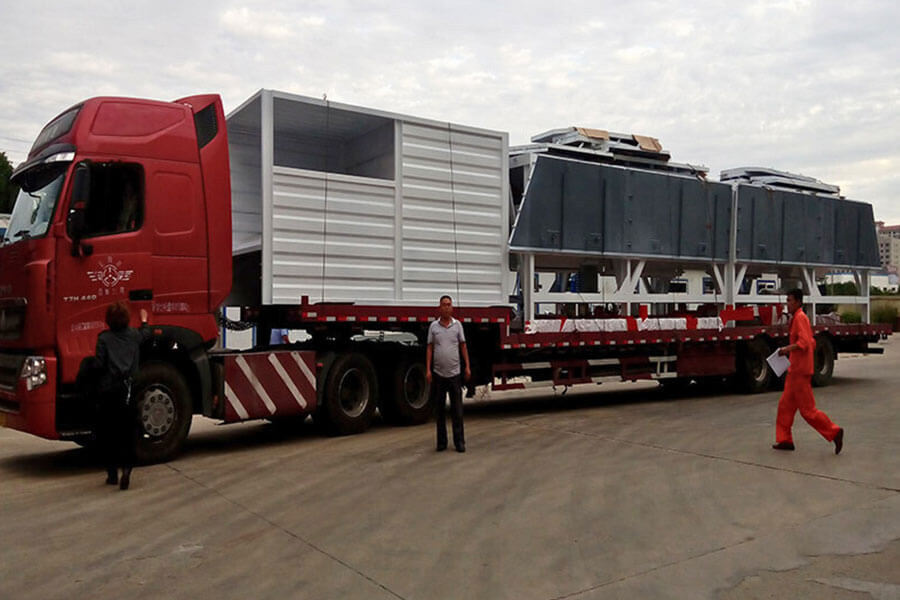
What is a containerized concrete batching plant?
A containerized concrete batching plant is a modular concrete production system that integrates the main batching, weighing, mixing, control, and auxiliary units into container-friendly modules. Compared with a conventional fixed plant, this design is easier to transport, faster to install, and more convenient for projects that need to move production between sites or export equipment across long distances.
For contractors, the main value is not only mobility. A containerized layout can reduce civil work, shorten commissioning time, protect key components during transportation, and simplify site organization. It is especially useful for infrastructure projects, remote construction sites, temporary ready-mix supply, mining projects, overseas projects, and areas where installation time is limited.
Containerized plant vs conventional batching plant
A conventional concrete batching plant is usually selected for long-term production, high output, and fixed commercial concrete operations. It can be designed with large aggregate storage, multiple cement silos, wide belt conveyors, and permanent foundations. This structure is strong and highly customizable, but installation and relocation take more time.
A containerized concrete batching plant focuses on modular transport and quick deployment. Major components are arranged in container-sized frames or enclosed modules, making sea freight and inland transport easier. The layout can also reduce loose parts during shipment, which is helpful for export buyers who want clearer packing, faster assembly, and lower risk during installation.
Main components and configuration options
A typical containerized system includes aggregate bins, weighing units, a mixer, cement silo or powder storage system, screw conveyors, water and admixture metering, pneumatic system, control room, and discharge structure. Depending on the required capacity, the plant can use a twin-shaft mixer, different aggregate bin volumes, independent cement silos, and automatic control software for recipe management.
Capacity selection should be based on the real pouring demand, transport distance, mixer truck cycle time, and daily working hours. A project that only needs periodic on-site supply may choose a smaller modular setup, while a commercial ready-mix project normally needs stronger aggregate storage, larger silo capacity, and a more permanent foundation plan.
When should buyers choose a containerized design?
Choose a containerized batching plant when the project requires fast installation, export-friendly transport, relocation, compact layout, or reduced on-site assembly work. It is also a strong choice when the buyer wants a cleaner equipment package with control room, wiring, and key components protected in modular units.
Before ordering, confirm the target output, available land size, power supply, cement supply method, aggregate feeding method, shipping restrictions, local installation conditions, and whether the plant must be moved after the project. These details affect the module design, loading plan, foundation drawings, and final quotation.
Henan Hengyuan provides containerized concrete batching plant solutions for domestic and overseas construction projects. Share your capacity target, destination country, site layout, and concrete application, and our engineers can recommend a suitable modular configuration with transport and installation considerations.
Export and installation planning
For export buyers, containerized design can make loading, shipping, customs inspection, and on-site inventory easier to manage. The supplier should provide a packing list, module drawings, electrical diagrams, foundation requirements, and clear installation sequence. This helps the local team prepare cranes, concrete foundation work, power connection, and cement silo installation before the equipment arrives.
Containerized plants are often selected for road projects, bridge construction, industrial parks, island projects, and temporary concrete supply bases. When the project schedule is tight, reducing installation complexity can be as valuable as increasing nominal capacity.
They are not always the best choice for every buyer. If the project is a permanent commercial ready-mix station with very high daily output, a conventional stationary plant may offer more space for large aggregate storage and future expansion. The best decision depends on project duration, relocation plan, transport distance, and the volume of concrete required per day.
Containerized plant inquiry summary
For a containerized batching plant inquiry, provide destination country, required output, relocation plan, site size, power standard, and shipping restrictions. These details help engineers design modules that are easier to transport, install, and maintain.