
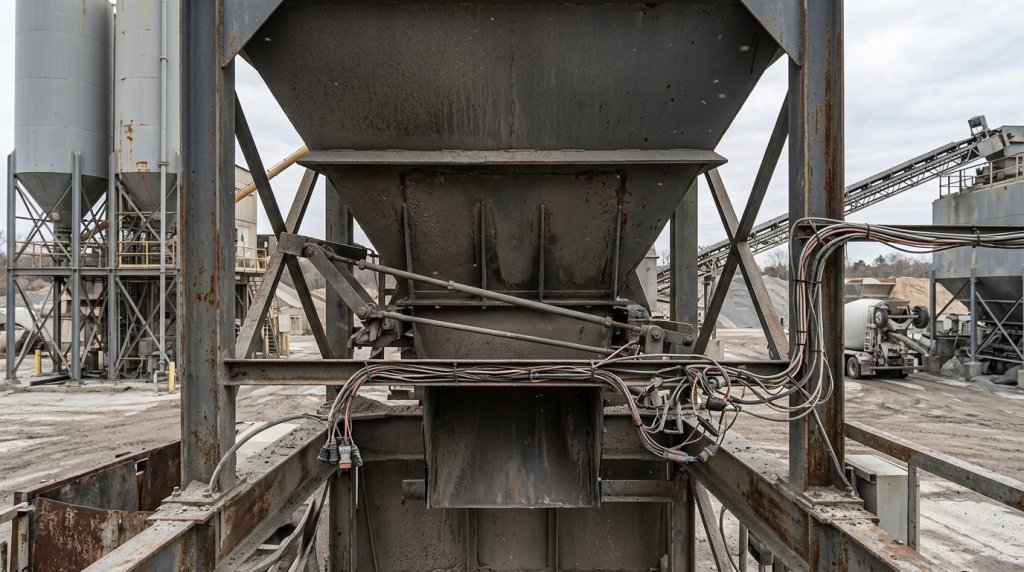
An aggregate bin gate is a small interface between stored material and the weighing sequence of a concrete batching plant. If its movement, material flow or closing behavior becomes uncertain, a batch record can be difficult to interpret even when the display looks normal. This industry analysis offers six aggregate bin gate checks for planning a safe observation and a useful handoff between operators, quality staff and maintenance.
These are questions to document, not instructions to work on a live gate. Bin layouts, actuators, guards and control logic vary. The plant’s equipment manual, approved operating procedure and energy-control program determine who may inspect, isolate, adjust or test the equipment. A shift team should describe what it can observe from a designated safe place and avoid reaching into a bin, chute or moving mechanism.
Contents
Why a Gate-Specific Record Helps
Aggregate feed problems are often reported as a single symptom: the weigh hopper filled slowly, the displayed weight changed unexpectedly or a batch took longer than planned. Those observations do not prove the gate is at fault. Material condition, a feed route, a sensor, a controller setting or the scale itself may also deserve review. A more precise record identifies the bin, the stage of the batch and the difference between a commanded action and what staff actually saw.
That distinction supports the plant’s quality process. Industry certification guidance treats the accuracy of batching equipment as something to verify and document, while plant safety guidance emphasizes guarding and controlled servicing. Neither source creates a universal adjustment rule for an individual gate. The team should preserve batch evidence and let qualified personnel determine the cause. For the related weighing context, Hengyuan’s aggregate weighing guide can be read alongside this gate-specific checklist.
Six Aggregate Bin Gate Checks
1. Identify the bin, material and gate command
Start with the equipment identifier rather than “the sand gate” or “the first bin.” Record the bin number, material designation, batch reference and time. If the controller shows a gate-open or gate-close command, note when that command appeared. A controller command is evidence of what the system requested, not proof that the physical gate completed its travel. Keep those two facts separate in the shift note.
The same aggregate bin gate may behave differently under different material conditions. If the observation happens only with a particular stockpile or after a bin refill, record that context without declaring a cause. The purpose is to give the next reviewer a starting point and to prevent the same event from being reconstructed from memory hours later.
2. Observe the feed sequence from a safe position
Describe the sequence visible to the operator: whether material began to flow after the command, whether the flow appeared steady and whether it stopped when expected. A brief delay, an intermittent stream or a continued trickle can each be reported as an observation. Do not estimate hidden gate travel or reach near the opening to confirm it. If the view is obstructed, say so.
A useful aggregate bin gate note also names the observation point. That lets a second person assess whether two shift reports describe the same behavior. If safe visibility is poor, the corrective action may be to arrange a qualified inspection under the plant procedure, not to move an operator into an unsafe position during production.
3. Compare feed behavior with the weighing record
The weigh hopper and batch controller provide another part of the story. Record the target and actual aggregate values for the affected batch, if the plant’s normal report provides them. Was the weight rising as expected, or did the display change after a close command? Did the controller log an interruption? Avoid replacing an unusual value with an assumed “correct” figure. The original record is needed for a reliable quality review.
Weight behavior alone cannot diagnose a gate fault. A scale signal, material remaining in a chute or another feed path could also affect the report. Qualified quality and maintenance staff should decide which checks are appropriate. The operator’s job in this checklist is to connect the aggregate bin gate observation to a specific batch and preserve the unedited evidence.
4. Separate material-flow symptoms from mechanical symptoms
A slow feed may be described as a flow symptom, but it does not automatically mean that the actuator is weak or the gate is stuck. Material moisture, grading, buildup or a change in stockpile conditions may affect how aggregate moves through the bin. Conversely, a visible change in gate motion deserves attention even if the batch eventually reaches its target. Report what changed and when; avoid assigning a repair from the control-room display.
Do not enter a bin, strike a chute or clear a blockage as part of a routine observation. Storage bins and hoppers present serious mechanical and material hazards. The site’s authorized isolation and access procedures must govern any close examination. A well-written aggregate bin gate record reduces the temptation to improvise because it gives the responsible technician enough context to plan a controlled inspection.
5. Look for closure and leakage patterns
When the gate is expected to be closed, note any visible continued material movement into the weigh hopper or around the gate area. Record whether it is a one-time observation or a repeated pattern, and whether it corresponds with a particular bin or batch stage. A description such as “fine material continued to fall for several seconds after the close indication” is more useful than “gate leaking.” It describes a symptom without claiming the seal or actuator has failed.
Keep people away from falling material and moving parts. If continued flow could affect the batch or create a hazard, follow the plant’s escalation procedure rather than trying to hold or block the gate. The supervisor should decide whether production needs to pause, which batches require quality review and who can inspect the aggregate bin gate safely.
6. Close the loop after maintenance or process changes
A handoff is incomplete if the next shift only hears that the gate was “fixed.” Record what component or process was reviewed, who authorized the work and what verification was completed before normal use resumed. If a controller parameter, sensor, feed route or material designation changed, the operating instructions and batch-record interpretation may also need review. Those decisions belong to the plant’s authorized team.
The final note should identify a follow-up owner and the observation point to use on the next shift. This makes it possible to distinguish a resolved event from a recurring one. An aggregate bin gate may be only one part of the feed system, but its return-to-service record should connect maintenance, production and quality decisions.
A Practical Handoff Record
A short form can capture the six checks without becoming a repair manual. Include plant and bin identifiers, material, batch reference, time, controller command, safe observation point, observed feed or closure behavior, relevant weight or alarm record, immediate notification and decision owner. Add a work-order reference and final verification result after qualified maintenance. If a detail is unknown, mark it unknown rather than guessing.
Review recurring notes together. Several reports from the same bin may reveal a pattern worth formal investigation, while isolated symptoms may point to different conditions. The record should be easy for the next shift to understand without requiring anyone to repeat an unsafe observation. Keep the gate record connected to the official batch and maintenance documents, not to an informal chat message alone.
Hypothetical Batch Example
Imagine a hypothetical plant where an operator sees a close command for one aggregate bin, then notices that the weigh-hopper reading continues to rise. This is not a Hengyuan customer case or a report of a real installation. The operator preserves the batch reference and controller record, notes the safe observation point and alerts the designated supervisor. The supervisor follows the site’s quality and safety procedures to determine whether production can continue and whether an authorized technician should inspect the gate and related systems.
The example does not establish that the gate leaked. A delayed material release, scale behavior or another feed path could require review. By separating the observed sequence from a proposed cause, the team protects both the evidence and the people who must investigate it.
Closing Review
An aggregate bin gate check is most useful when it supports a clear decision rather than a hurried adjustment. Identify the bin and command, observe the safe feed sequence, preserve weighing data, distinguish flow from mechanical symptoms, record closure behavior and close the maintenance handoff. Hengyuan recommends adapting these six questions to the plant’s own manuals, quality plan and authorized safety procedures.
Contact Us: +86 199 3949 4756