
Industry insight | Hengyuan Concrete Machines
Matching Concrete Batching Plant Output to Jobsite Delivery Capacity
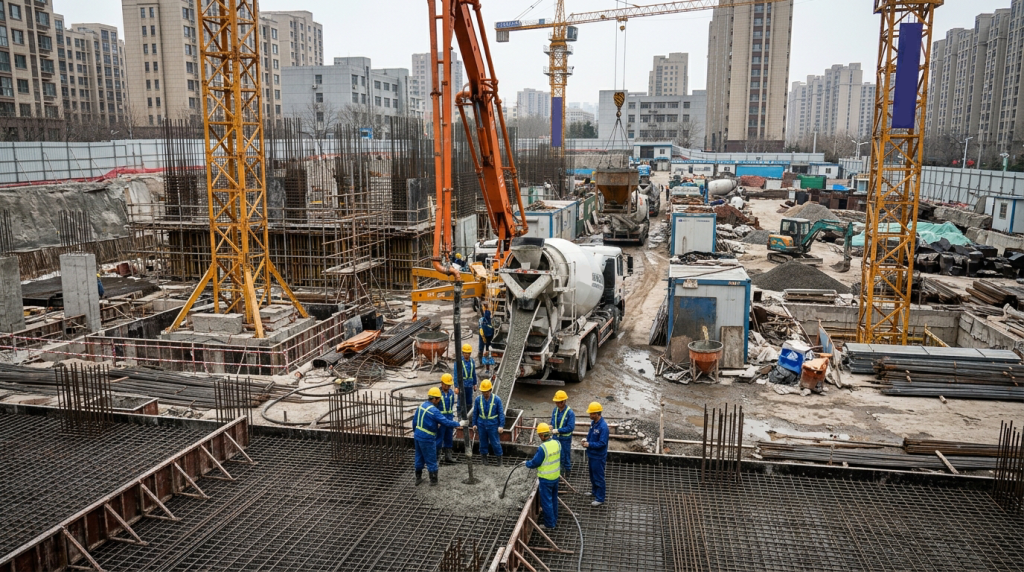
High concrete batching plant output does not automatically mean a steady supply to the jobsite. A plant can have ample mixing capacity and still struggle to maintain a reliable supply to the placement crew. The practical question for an equipment review is how much concrete the complete operation can deliver and place under the conditions of a particular project.
For contractors comparing batching plants, the transport and unloading plan deserves a place beside the equipment specification. A plant upgrade should be evaluated against the constraints it will actually address, whether that is loading capacity, delivery availability, or the timing of concrete placement.
Start with the placement plan
Before setting a production target, agree on the placement sequence and the rate the crew expects to sustain. Confirm the access route, delivery point, unloading method, and person responsible for communicating interruptions.
The National Ready Mixed Concrete Association’s CIP 31: Ordering Ready Mixed Concrete recommends coordinating delivery with placement methods, preparing to receive arriving concrete, and promptly communicating schedule changes. These are useful starting points for a joint discussion between the plant, dispatcher, and site team.
Compare concrete batching plant output on a common basis
Ask the equipment supplier to explain the operating assumptions behind its quoted concrete batching plant output. Then build a separate planning estimate using the project’s proposed loading arrangement, truck availability, route, and placement method. Keep theoretical equipment capacity and the planning estimate clearly labeled so they are not treated as interchangeable promises.
A simple transport estimate can help expose a mismatch:
Estimated fleet delivery rate = available trucks × usable load per truck ÷ full truck cycle time in hours.
This is a planning calculation, not a guaranteed operating result. The cycle should include loading, outward travel, site waiting, discharge, return travel, and any other recurring time. Use a consistent basis for load volume and check actual vehicle limits and project requirements.
Test the plan against delays
Instead of relying on one average journey time, compare a normal operating scenario with a slower scenario. Record what changes when site access is restricted, a vehicle becomes unavailable, or unloading takes longer than expected. The purpose is to identify which assumption deserves attention before selecting equipment.
For an onsite batching arrangement, replace the road delivery assumptions with the actual transfer method. A short distance alone does not establish an achievable placement rate; loading and receiving operations still need an agreed sequence.
Connect dispatch records to equipment decisions
A practical review sheet can record planned and actual loading times, departure, arrival, discharge, and return, alongside a short reason for each delay. Review comparable placements together rather than drawing a conclusion from one unusual shift.
If the records repeatedly show vehicles waiting at the plant, investigate the loading process and equipment availability. If waiting occurs mainly at the receiving point, discuss access and the placement sequence with the site team. Each pattern suggests a different question for the next equipment review. Measure concrete batching plant output alongside the reasons for waiting, so the review identifies a useful improvement rather than simply a larger machine.
Questions to resolve before choosing a plant
- What placement rate is needed for the planned work sequence?
- Which assumptions support the proposed plant and delivery capacities?
- How will the team respond to a delay or temporary work stoppage?
- Who can adjust dispatch instructions, and how will changes reach the plant?
- Which operating records will be reviewed after the first placements?
5 essential checks for reliable concrete batching plant output
Use these five checks to turn the production discussion into an operating plan. They complement the delivery calculation and help the plant and site teams agree on what to monitor.
- Define the measurement window. Record whether concrete batching plant output refers to one uninterrupted hour, an entire shift, or the average during a placement. Compare results using the same period and make pauses visible in the records.
- Check the loading sequence. Confirm where the next truck waits, who authorizes loading, and how the driver receives the correct delivery details. A clear sequence gives the dispatcher a practical basis for coordinating the next load.
- Review a hypothetical fleet cycle. For illustration only, six available trucks carrying eight cubic metres each on a two-hour cycle imply an average transport rate of 24 cubic metres per hour. These invented planning inputs are not Hengyuan equipment specifications or a customer result. A slower cycle would lower this estimate.
- Agree on pause instructions. Identify who tells the plant when site work stops and who confirms readiness to resume. Coordinate concrete batching plant output with the receiving team’s current instructions instead of relying on an earlier timetable.
- Review the first placement. Compare the planned sequence with the loading and delivery records. Discuss the main source of waiting before proposing changes to concrete batching plant output, fleet availability, or the receiving arrangement.
Keep the review specific to the project. The goal is a workable supply plan with clear responsibilities and measurable assumptions. Equipment capacity, transport availability, and placement readiness belong in the same discussion.
For a Hengyuan concrete equipment enquiry, bring the placement plan, site layout, and delivery assumptions into the conversation. These inputs help frame a useful comparison of plant configurations and identify the questions that need project-specific confirmation before an equipment decision.
Contact Us: +86 199 3949 4756