
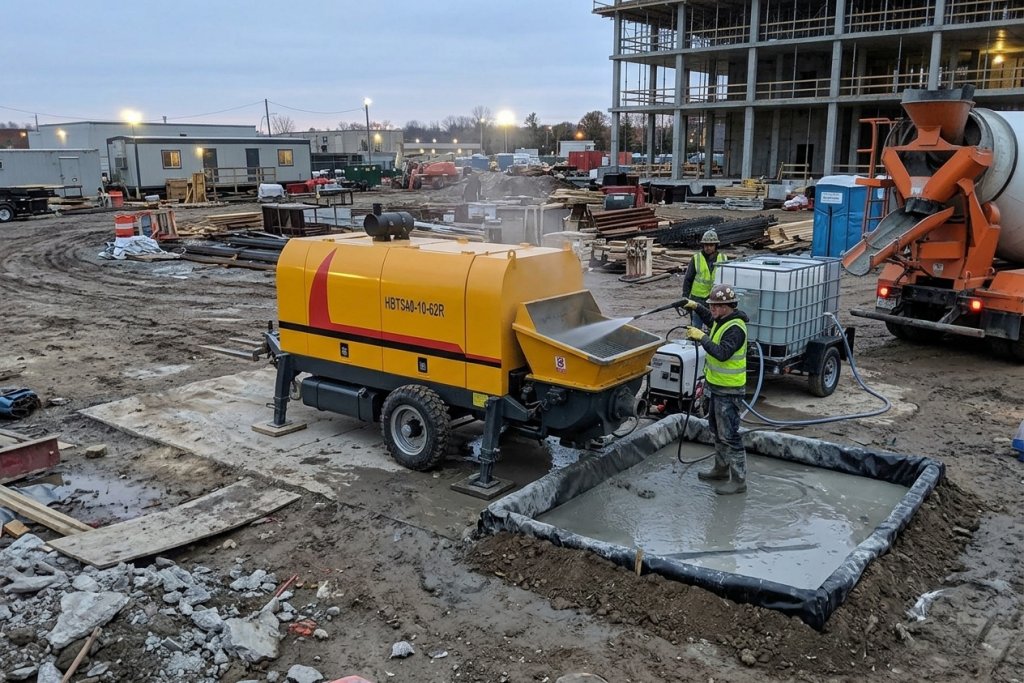
Concrete pump washout is often treated as the final small task after a placement. In practice, it needs space, a designated owner, suitable containment and a safe route before the first truck arrives. Leaving those decisions until the pump is ready to leave can create a rushed handoff between the pump crew, concrete supplier and site manager.
This industry analysis sets out six planning checks for concrete pump washout. It is a coordination guide, not a pump-cleaning procedure. The pump operator must follow the installed equipment manual, trained work methods and site safety plan. Environmental controls and disposal arrangements must follow the requirements that apply to the particular project and location.
Contents
Why the End of the Pour Needs a Plan
The jointly published checklist for pumping ready mixed concrete asks the contractor, producer and pump contractor to identify a rinse-off area and water availability before placement. It also covers contacts, access and pump details. That structure is useful because concrete pump washout is a shared site decision even though only trained pump personnel should operate the pump-cleaning system.
The US Environmental Protection Agency’s concrete washout fact sheet explains why wet concrete residues and washwater should be contained rather than allowed to reach the ground or drains. The fact sheet is a planning reference, not a substitute for a project’s local permit, environmental plan or waste contractor instructions.
Six Concrete Pump Washout Planning Checks
1. Name the responsible people before placement
A concrete pump washout plan should identify the site contact who assigns the washout location, the pump operator who controls the equipment, the person responsible for the containment facility and the dispatcher who may need to know when the pump is released. Record names or roles, the preferred contact channel and the point at which a change must be communicated.
Do not assume the concrete truck driver can decide where the pump may clean out. Nor should the pump crew be left to discover that the assigned area is inaccessible at the end of the pour. A short pre-placement discussion can establish who authorizes a different location if the original area becomes unavailable.
2. Reserve a reachable, suitable area
Mark the proposed area on the site plan and confirm the pump can reach it using an approved route. Consider other vehicles, pedestrian paths, temporary structures and ground conditions. If the pump must be moved after placement, the pump contractor should assess that move under its normal setup and travel procedures; this article does not prescribe how to move or clean the machine.
Concrete pump washout should not rely on a space that doubles as a truck queue, emergency access lane or unprotected drain approach. Walk the route with the relevant site and pump representatives before work starts. A map that looks clear in the office may conflict with a trench, stored materials or another trade’s equipment on the day.
3. Match containment to the expected task
Confirm that the designated containment arrangement can accept the material and washwater expected from the specific pump and placement. Check who supplies it, who inspects it, and what the crew should do if it is full, damaged or unavailable. Avoid treating an open, leaking or unassigned container as a valid plan merely because it is near the pump.
The EPA fact sheet describes the objective of retaining washwater and solids so they do not migrate to soil or surface water. The exact containment design and disposal route are site-specific. Concrete pump washout planning should therefore connect the pump crew’s needs with the site’s environmental controls rather than copy a generic container size from another project.
4. Check water, access and timing together
Identify whether water is available where the authorized crew needs it and who is responsible for providing it. Include access to the washout area in the site sequence, not just a note that water exists somewhere on the property. If the placement runs late or a second truck occupies the access route, the site contact should know how to keep the area available for the pump crew.
Time is a coordination constraint, not a license to bypass a safe method. The American Concrete Pumping Association clean-out bulletin stresses planning the location and preparation before the pour ends. Its equipment-operation guidance belongs with trained personnel and the manufacturer manual. The site planner’s role is to remove avoidable access and resource surprises.
5. Separate pump clean-out from mixer-chute rinse
Concrete pump washout and mixer-truck chute rinse may need different access, timing and collection arrangements. Identify where each activity will occur and who owns the handoff between them. The joint pumping checklist asks about a chute rinse-off area as part of the wider pour plan; it does not mean a truck chute should be rinsed into the pump hopper.
Keep the instructions simple for arriving drivers: the permitted area, the person to ask if it is unavailable, and the route back to traffic flow. If a truck-mounted collection system is used, confirm that the site plan accommodates it. Do not improvise disposal routes from memory or assume that one crew’s equipment can receive another crew’s residue.
6. Plan removal, records and the next shift
Before the pour, decide who will arrange collection or removal of the captured material, who will inspect the area afterward and where any completion note belongs. A washout facility may serve more than one placement; its usable capacity and condition should be checked before the next job rather than assumed from the previous shift.
Record exceptions, not only routine completion. If the assigned area was changed, containment had to be replaced, or access was blocked, note the cause and the corrective action. Those details can improve the next concrete pump washout plan without turning a simple record into an elaborate report.
A Practical Handoff Record
A one-page handoff can capture the six decisions: responsible contacts, approved location and route, containment owner, water and timing arrangements, separate truck-rinse instructions, and removal responsibility. Attach the relevant site map or mark the location directly on the drawing. If any item is unresolved, assign an owner and a decision deadline before the placement begins.
For a broader view of the equipment around a concrete placement, the Hengyuan company profile introduces batching and concrete machinery. Equipment selection is only one part of readiness; the pump contractor and site team still need a shared plan for the end of the pour.
Hypothetical Site Example
Imagine a site with a narrow gate and a temporary washout container positioned beside the truck waiting area. The arrangement appears convenient during the morning walk-through, but by late afternoon empty mixer trucks need the same lane to leave. The pump crew cannot safely assume that the container remains reachable.
In this hypothetical case, the useful action is not a last-minute instruction to work faster. The site contact should confirm an approved alternate access arrangement before placement, tell dispatch and the pump contractor which route is reserved, and verify that the containment remains suitable. The example illustrates a coordination problem, not a reported Hengyuan customer project.
Closing the Plan
Concrete pump washout is easier to manage when it is treated as a planned site operation rather than a final afterthought. The six checks above connect the people, area, containment, resources, truck interface and follow-up record. They do not replace trained clean-out procedures or the project’s environmental controls.
Before the first delivery, ask a simple question: can the pump crew identify where to go, who is responsible and what happens if the planned area cannot be used? If the answer is unclear, the concrete pump washout plan still needs one more conversation.
Contact Us: +86 199 3949 4756