
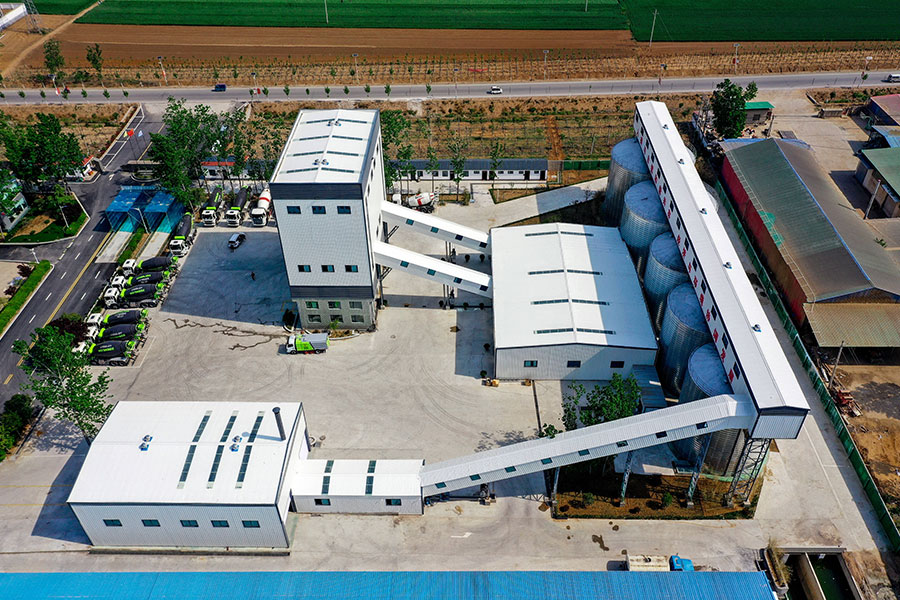
Automated concrete batching plants
Automated concrete batching plants help contractors and ready-mix suppliers produce concrete with higher accuracy, better repeatability, and lower dependence on manual operation. Instead of relying only on operator experience, the plant control system manages material weighing, recipe selection, mixing time, discharge sequence, alarms, and production records.
Quick Answer: Why Choose an Automated Concrete Batching Plant?
An automated concrete batching plant helps improve weighing accuracy, recipe control, production consistency, operator efficiency, and production record management. It is suitable for ready-mix suppliers, contractors with repeated concrete demand, and projects that need stable quality across many batches.
Buyers should choose automation based on actual production needs, operator skill level, required reporting, weighing accuracy, service support, and whether the plant will produce multiple concrete grades.
Automation Feature Checklist
| Automation Feature | Buyer Benefit |
|---|---|
| Recipe management | Helps operators switch concrete grades with fewer manual errors. |
| Automatic weighing | Improves batching accuracy for aggregate, cement, water, and admixtures. |
| Production records | Supports quality tracking, customer records, and daily output management. |
| Alarm and fault prompts | Helps operators respond faster to sensor, valve, motor, or material supply issues. |
| Remote support option | Makes troubleshooting easier when the project is far from the equipment supplier. |
Automated Batching Plant FAQ
Is automation necessary for a small batching plant?
Automation is useful even for smaller plants if the buyer needs repeatable concrete quality, easier operation, and clearer production records. The automation level can be adjusted to the project budget.
What should be checked in the control system?
Check weighing accuracy, recipe storage, language, electrical cabinet protection, data reports, spare parts, operator interface, and whether remote diagnosis is available.
Can an older batching plant be upgraded with automation?
Some older plants can be upgraded, but the feasibility depends on the existing weighing system, sensors, electrical cabinet, mixer controls, and mechanical condition.
Main benefits of automation
The first benefit is batching accuracy. Aggregate, cement, water, and admixtures are weighed according to stored formulas, helping each batch stay closer to the designed mix. The second benefit is production efficiency. Operators can switch recipes quickly, reduce repeated manual input, and monitor the whole process from the control room.
Automation also improves quality traceability. Batch records, material consumption, alarms, and formula changes can be checked after production. This is useful for commercial concrete plants, precast yards, road projects, and infrastructure projects where customers may require stable quality documentation.
Key automated plant components
An automated plant normally includes aggregate batching equipment, powder weighing, water and admixture weighing, mixer control, pneumatic control, sensors, electrical cabinet, industrial computer or PLC, and production management software. The system should match the plant capacity and the number of concrete grades produced each day.
When automation matters most
Automation is especially valuable when the plant produces multiple concrete grades, serves many mixer trucks, works long daily shifts, or supplies projects with strict quality requirements. For small temporary sites, a simpler control system may be enough. For long-term ready-mix production, a more complete automatic control system can reduce operating risk and improve management efficiency.
Buyer checklist
Before ordering, ask the supplier about weighing accuracy, formula storage, control language, manual override, alarm records, data export, remote support, spare electrical components, and operator training. Also confirm whether the system can support future upgrades if the plant adds more silos, admixture tanks, or production lines.
Henan Hengyuan can configure automated concrete batching plants for commercial concrete supply, building projects, road construction, and precast production. Share your required capacity, concrete grades, and site layout so engineers can recommend a practical automation level.
Automation planning mistakes to avoid
Some buyers only ask whether a plant is automatic, but automation has different levels. A simple control cabinet may support basic weighing and discharge, while a more advanced system may include recipe management, production reports, material consumption statistics, alarm history, and remote troubleshooting. Before comparing prices, confirm which functions are included.
Another common mistake is ignoring operator training. Even a well-designed automatic system needs trained operators who understand calibration, manual override, emergency stops, sensor alarms, and daily inspection. Clear manuals and supplier support help the plant run more reliably after installation.
Automation should also match the mechanical system. If aggregate feeding, cement supply, or truck circulation is too slow, software alone cannot deliver high output. The best automated batching plant combines suitable plant structure, reliable sensors, practical control logic, and a layout that supports smooth production.
How automated batching supports cost control
Automation can also support cost control by reducing over-batching, improving cement and admixture accuracy, and making material consumption easier to review. When production records show unusual water use, repeated alarms, or unstable aggregate weighing, managers can find the issue earlier. Over time, this helps reduce waste and improves customer confidence in the concrete supply.
Automation upgrade path
Some buyers start with basic automatic batching and later upgrade to stronger production management. Possible upgrades include additional formula storage, printer or data export, material consumption reports, remote diagnosis, more admixture channels, and integration with truck dispatch management. Planning these options early can make future expansion easier.
For existing plants, automation upgrades should begin with a review of sensors, weighing systems, control cabinet condition, and operator workflow. A software upgrade alone cannot solve mechanical feeding or weighing problems if the physical system is already unstable.
Automation decision summary
The right automation level depends on production scale, recipe variety, operator skill, and management needs. Buyers should choose functions that solve real production problems instead of paying for features that the plant team will not use.