
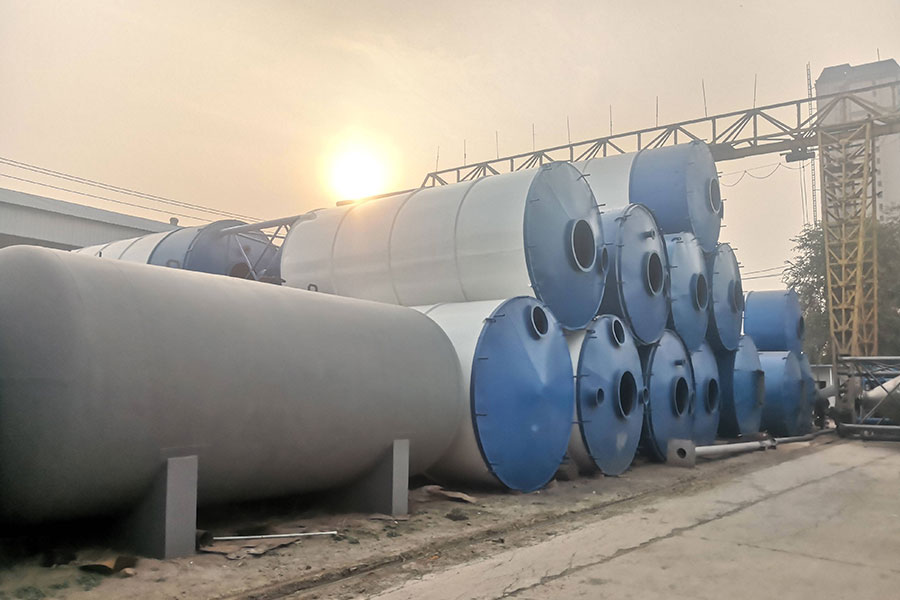
Application scenarios of cement silos
Cement silos store powdered materials such as cement, fly ash, mineral powder, and dry additives. They are widely used with concrete batching plants, dry mortar lines, precast production, road construction, bridge projects, and temporary concrete supply sites. Choosing the right silo type affects storage capacity, feeding stability, site layout, installation speed, and maintenance convenience.
Vertical cement silo applications
Vertical cement silos are common in stationary concrete batching plants and long-term ready-mix operations. They provide large storage capacity while using less ground area, making them suitable for sites that need continuous concrete production. A vertical silo is usually matched with screw conveyors, dust collectors, pressure safety valves, level indicators, and aeration systems.
This type is suitable for commercial concrete plants, precast yards, industrial construction bases, and projects with stable material supply. Because installation usually requires foundation work and lifting equipment, vertical silos are best for projects that will remain in one place for a longer period.
Horizontal cement silo applications
Horizontal cement silos are often selected for mobile batching plants, temporary jobsites, and projects that require fast installation or relocation. Their lower height can reduce lifting requirements and make transport easier. They are useful when site height is limited, foundation preparation time is short, or the project needs a compact modular layout.
Compared with vertical silos, horizontal silos may have lower single-unit storage capacity, but they can save setup time and improve flexibility. They are often used in road construction, small to medium projects, remote sites, and export projects where simple installation is important.
How to choose the right silo
Buyers should consider daily concrete output, cement consumption, delivery frequency, available land, crane availability, foundation conditions, transport restrictions, and whether the plant will be relocated. Dust collection, moisture protection, discharge reliability, and screw conveyor matching are also important for stable operation.
If the batching plant is permanent and output is high, vertical silos usually provide better storage efficiency. If the project is temporary, mobile, or needs quick commissioning, horizontal silos can be more practical. Henan Hengyuan can match cement silos with stationary, mobile, compact, and containerized batching plant layouts according to project conditions.
Maintenance and safety considerations
Cement silo maintenance should not be ignored. Operators need to check dust collectors, level indicators, pressure safety valves, aeration pads, discharge gates, and screw conveyors regularly. Blocked discharge, moisture inside the silo, damaged filters, or inaccurate level signals can interrupt batching plant production and create safety risks.
For vertical silos, foundation strength, anchoring, wind load, ladder access, and safety rails are important. For horizontal silos, buyers should check transport dimensions, supporting legs, discharge angle, and whether the silo can be cleaned conveniently. In both cases, the silo should be matched with the plant’s production capacity so cement feeding does not become a bottleneck.
Before purchase, confirm the material type, required storage capacity, delivery truck conditions, site layout, installation tools, and local environmental requirements. A properly selected cement silo improves material storage, protects powder quality, and helps the batching plant run with fewer interruptions.
Cement silo sizing and plant matching
Silo capacity should be matched to daily concrete output, cement delivery frequency, and the number of concrete grades produced. A small temporary project may use one compact silo, while a ready-mix plant may need multiple silos for cement, fly ash, and other powder materials. If the silo is too small, material delivery becomes frequent and production may stop while waiting for powder supply.
Buyers should also check screw conveyor length, feeding angle, discharge speed, and dust collection capacity. A silo that stores enough powder but feeds too slowly can still limit batching plant output. For export projects, transport dimensions and local installation tools should be confirmed before choosing vertical or horizontal silo design.
Silo quotation summary
When requesting a cement silo quotation, include material type, required storage capacity, plant model, site layout, transport limits, and installation conditions. This helps the supplier recommend silo type, screw conveyor, dust collector, and safety accessories together.