Concrete Plant Wash Water Management and Containment
Quick Answer: Why Plan Wash Water Management Before Installation?
Wash water management should be planned before a concrete batching plant is installed because mixer cleaning, truck washout, yard drainage, sediment, and reused water all affect site cleanliness, maintenance, and production stability. Without a plan, wastewater can block traffic routes, create mud, and increase cleanup cost.
Buyers should define washout points, drainage channels, settling pits, pump access, sediment removal routines, and whether reclaimed water can be used in production.
Wash Water Management Table
| Planning Area | What to Check |
|---|---|
| Washout location | Separate truck washout, mixer cleaning, and general yard washing where practical. |
| Drainage route | Collect concrete washwater and solids in a contained system; size drainage and overflow controls for site conditions and approved handling routes. |
| Sediment removal | Leave space and access for cleaning cement slurry, sand, and aggregate fines. |
| Reuse control | Confirm when reclaimed water can be reused and how water quality will be checked. |
| Maintenance routine | Assign regular checks for pumps, pits, channels, valves, and cleaning equipment. |
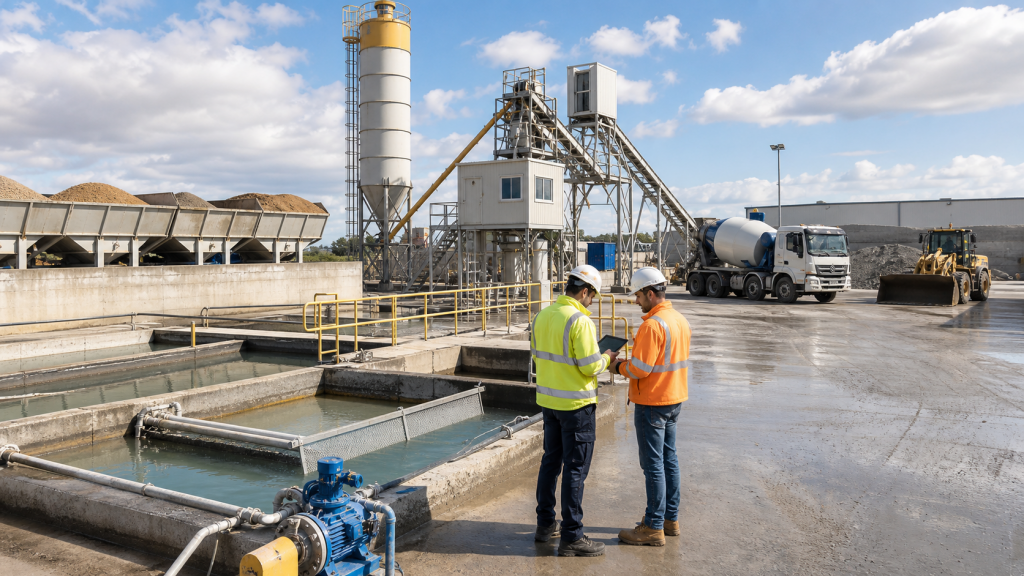
Concrete plant wash water management should define how concrete washout water and solids are contained, inspected, recovered or removed. Coordinate truck routes, rain overflow capacity, sediment access and any proposed reuse with the site requirements before installation.
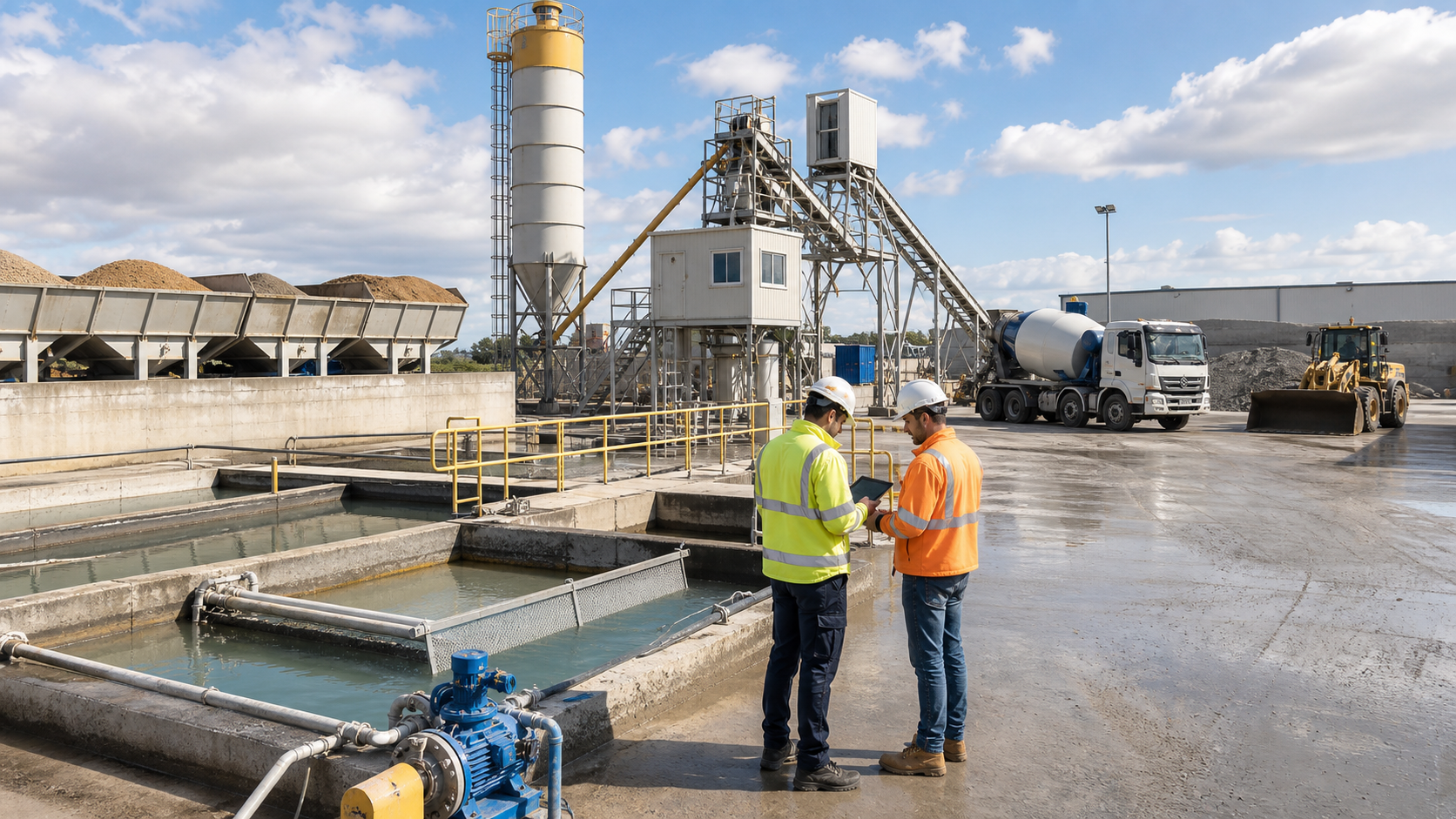
This practical equipment-planning guide is supported by the primary technical references cited below. Apply the project specification, equipment instructions and local environmental and occupational requirements; the cited guidance does not establish approval or verified performance for this plant.
Define washout containment before installation
A stationary concrete batching plant or mobile concrete batching plant is often evaluated first by capacity, mixer type, aggregate storage, control system, and installation footprint. Those items remain important, but the supporting water plan deserves the same early review. Teams need to understand where wash water will be collected, how solids will settle, whether recovered material can be managed separately, and how cleaned water may return to non-critical plant tasks where suitable.
Early planning also helps buyers compare equipment choices more realistically. A plant that has clear drainage routes, practical washout space, and safe access for mixer trucks may be easier to operate than a larger layout that leaves water handling as an afterthought. When water, slurry, and returned concrete are handled in a controlled area, the production team can reduce confusion around cleanup, maintenance, and daily site movement.
Batching plant layout affects water control
Wash water management starts with layout. The plant yard should separate clean traffic routes from washout, settling, and recovery areas. Mixer trucks need enough room to enter, discharge rinse water safely, and leave without blocking aggregate delivery or loading operations. Loader travel should not push material into drainage paths, and the operator should be able to see whether the washout area is becoming congested.
EPA's Concrete Washout best-management-practice guidance explains that concrete washwater is caustic and that leaks or rain-driven overflow can reach soil, drains and surface waters. It recommends leak-proof containment and inspection, including after heavy rain. Apply these containment principles alongside the actual site permit and local requirements; a settling pit or clear-looking water does not by itself establish permission to discharge. EPA Stormwater Best Management Practices: Concrete Washout (PDF).
For permanent plants, this may mean assigning enough space for a settling basin, reclaimed water tank, aggregate recovery unit, or concrete recycling system. For temporary or mobile plants, the plan may be simpler, but it still needs defined collection points, ground preparation, truck access, and maintenance space. The right solution depends on project duration, daily output, available land, material flow, and local operating requirements.
Material recovery should match the production process
Returned concrete and washout solids are not just cleanup issues. They also affect aggregate handling, yard space, mixer truck scheduling, and end-of-shift routines. If a site expects frequent returned concrete, the plant team should decide how that material will be separated, stored, reused, or removed before production begins. If the expected volume is small, a basic controlled washout process may be enough. If the site runs high daily volume, a more structured recovery system may be easier to manage.
NRMCA's concrete-materials guidance explains that recycled and non-potable water proposed as concrete mixing water must be tested and qualified under the applicable ASTM C1602 requirements. Distinguish collecting washwater from approving its use in a concrete mixture: settling alone does not demonstrate suitability, and the project specification and quality team must define the qualification and records. NRMCA Concrete Materials FAQ: Recycled and Non-Potable Mixing Water.
Buyers can use the product center to review plant configurations and then discuss how water handling connects with aggregate bins, conveyors, mixers, truck lanes, and service access. The goal is not to add complexity for its own sake. The goal is to keep normal plant operation, cleaning, recovery, and maintenance from interfering with one another.
Mixer truck washout needs a defined workflow
A concrete mixer truck can only support efficient batching when its movement is predictable. Loading, dispatch, return, washout, and parking should be mapped as one route. If trucks have to reverse through narrow areas, cross loader paths, or wait near the aggregate feed area, the washout process can slow the entire yard.
The washout workflow should also consider timing. End-of-day cleaning often happens when operators are tired and the yard is crowded with equipment returning from the jobsite. Clear signs, lighting, drainage, and defined responsibilities can help keep the routine consistent. For projects using a concrete pump, pump washout, pipeline cleaning, and truck return timing should be coordinated so washout areas do not become bottlenecks.
Control records support better daily decisions
Batching plant control records are useful beyond mix production. Material consumption, water use notes, returned concrete records, maintenance logs, and operator observations can help managers understand whether the water handling process is working. If the recovery area fills too quickly, if trucks spend too long waiting, or if cleaning routines vary by shift, those patterns should be visible before they become daily production problems.
Service planning matters as well. Pumps, valves, sensors, settling areas, conveyors, mixer seals, pneumatic components, and electrical controls all need inspection routines. Project teams can review service information and prepare site photos, output targets, truck flow sketches, water source details, and washout expectations before confirming a plant configuration.
Practical checklist for wash water planning
- Map mixer truck loading, return, washout, parking, and exit routes before finalizing the plant layout.
- Confirm where wash water, returned concrete, and settled solids will be collected.
- Separate washout and recovery areas from aggregate delivery, loader movement, and pedestrian routes.
- Define whether a settling basin, reclaimed water tank, or concrete recycling system is required.
- Plan routine cleaning responsibilities for operators, drivers, and maintenance staff.
- Check that drainage, ground preparation, lighting, and access remain workable in bad weather.
- Keep daily records for water use, returned concrete, cleaning issues, and service needs.
FAQ
What is concrete batching plant wash water management?
It is the planning and operation of systems that collect, settle, recover, reuse where suitable, or remove water and solids from mixer truck washout, plant cleaning, and related concrete production activities.
Why should wash water planning happen before installation?
Early planning helps the buyer reserve enough space, choose the right recovery process, keep truck movement efficient, avoid drainage problems, and make cleaning routines easier for operators.
Does every plant need the same recovery system?
No. The right approach depends on plant type, daily output, site duration, truck volume, available land, material handling process, and the buyer’s operating requirements.
What information should buyers prepare before discussing the plant layout?
Useful information includes expected output, truck count, available site space, aggregate flow, drainage direction, water source, cleaning routines, returned concrete expectations, and any concrete pump washout requirements.
Conclusion
Concrete plant wash water management connects containment, truck flow, water-quality decisions, solids handling and inspection responsibilities. A useful plan does not need to be complicated, but it should be built into the plant discussion before installation begins. Buyers can contact Hengyuan Concrete Machines with project details to discuss concrete production equipment and long-term support needs.
Our Whatsapp: +86 199 3949 4756