

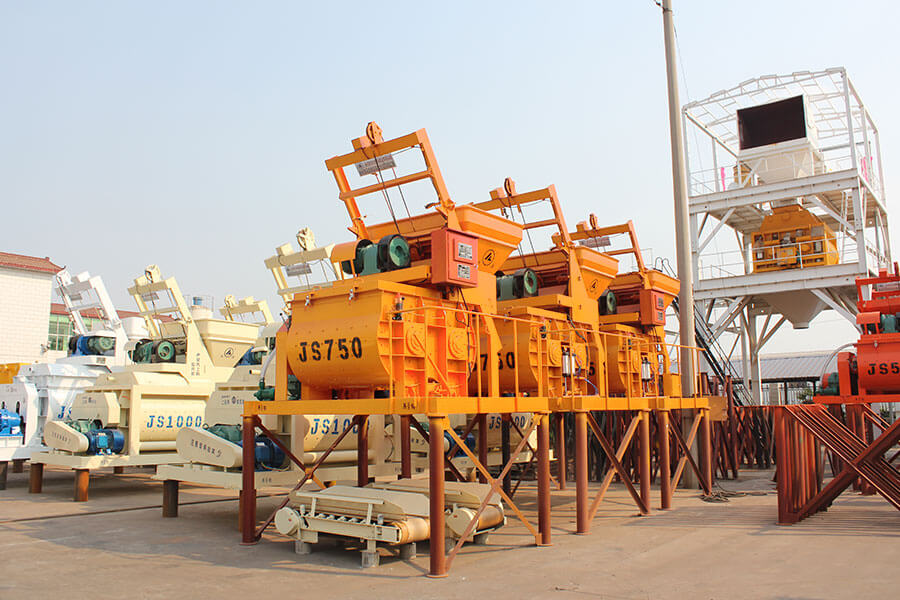
Mobile twin shaft concrete mixer
A mobile twin shaft concrete mixer combines strong mixing performance with easier site movement. It is suitable for contractors who need uniform concrete but also require flexible deployment across different projects. Compared with simple mixing equipment, a twin shaft mixer provides higher mixing intensity and more stable concrete quality.
Why choose a twin shaft mixer?
Twin shaft mixers use two horizontal mixing shafts with paddles to create strong material movement. This design helps mix cement, aggregate, water, and admixtures more evenly. It is widely used for ready-mix concrete, precast products, road projects, building construction, and batching plants that require stable output.
Benefits of a mobile configuration
Mobile configuration can reduce installation time and make relocation easier. It is helpful for road construction, temporary concrete supply, remote projects, and contractors who serve multiple jobsites. A mobile mixer can also be integrated into mobile batching plant systems where quick commissioning matters.
Key specifications to compare
Buyers should compare mixer capacity, motor power, liner and blade material, discharge method, aggregate size, mixing cycle, transport dimensions, control system, maintenance access, and spare parts availability. A suitable mixer should match the plant output, concrete type, site space, and transport conditions.
How to choose a supplier
A reliable supplier should provide technical drawings, configuration suggestions, wearing parts list, installation support, and clear after-sales service. For export projects, buyers should also confirm packing, voltage, shipping size, spare parts, and remote technical guidance.
Henan Hengyuan supplies mobile twin shaft concrete mixer solutions for batching plants, construction projects, road work, and concrete production systems. Share your required output, concrete type, aggregate size, and site layout so engineers can recommend a suitable mixer configuration.
Maintenance and wearing parts
Twin shaft mixers work under heavy abrasion, so liners, blades, shaft seals, bearings, reducers, and discharge doors should be inspected regularly. Good maintenance keeps mixing uniform and prevents concrete leakage or abnormal noise. Operators should clean the mixer after production and avoid hardened concrete buildup inside the mixing chamber.
For mobile projects, transport checks are also important. Before moving the mixer, inspect bolts, support legs, cables, control cabinet, and protective covers. After relocation, confirm leveling, electrical connection, empty running, and discharge function before full production starts.
Project matching advice
A mobile twin shaft concrete mixer should be selected according to hourly output, concrete grade, aggregate size, site movement frequency, and whether it will work alone or as part of a batching plant. If the project requires frequent relocation, compact structure and fast setup are important. If concrete quality is the priority, mixer strength and wearing parts quality should receive more attention.
When a mobile mixer is not enough
If the project needs continuous commercial concrete supply, multiple concrete grades, or large daily output, a complete mobile or stationary batching plant may be more suitable than a standalone mobile mixer. Hengyuan can help compare mixer-only solutions with full batching plant configurations according to production goals.
Mobile twin shaft mixer quotation checklist
When requesting a quotation, provide the expected hourly output, concrete grade, maximum aggregate size, power supply, mobility requirement, site size, and whether the mixer will be matched with a batching machine or a complete batching plant. These details help the supplier recommend the right mixer size, motor power, discharge method, and control configuration.
Buyers should also confirm liner material, blade material, reducer brand, shaft seal design, spare parts package, and shipping dimensions. These details affect long-term operating cost and maintenance convenience.
Supplier evaluation summary
A suitable mobile twin shaft mixer supplier should understand both mixing performance and project mobility. Buyers should compare technical support, spare parts, drawings, delivery time, and whether the supplier can match the mixer with batching and conveying equipment.
Mobile mixer application summary
Mobile twin shaft mixers are most useful when a project needs both strong mixing quality and flexible site movement. They can support temporary batching setups, road projects, precast yards, and contractors who move between multiple jobsites.
Mobile twin shaft mixer selection points
A mobile twin shaft concrete mixer is usually selected when buyers need stronger mixing performance and easier relocation than a conventional fixed mixer layout. The key is to match mixer capacity, material size and maintenance support with the actual project.
| Buyer question | Why it matters | What to send |
|---|---|---|
| Required output | Determines mixer volume and cycle planning. | Hourly output, batch size and daily working hours. |
| Material condition | Affects mixing strength and wear parts. | Aggregate size, concrete grade and admixture use. |
| Mobility needs | Affects frame design, transport and installation. | Relocation frequency, road access and site space. |
Mobile twin shaft mixer FAQ
What is a mobile twin shaft concrete mixer used for?
A mobile twin shaft concrete mixer is used for projects that need strong mixing performance with easier relocation, such as road work, temporary production sites and medium-sized construction projects.
How is a twin shaft mixer different from a drum mixer?
A twin shaft mixer usually provides stronger forced mixing, better uniformity and faster cycle time, while a drum mixer is simpler and often used for smaller or less demanding applications.
What should buyers compare when selecting a mobile twin shaft mixer?
Buyers should compare mixer capacity, aggregate size, motor power, liner and blade material, discharge method, maintenance access, spare parts supply and matching batching equipment.
Is a mobile twin shaft mixer suitable for export projects?
Yes. It can be suitable for export projects when transport dimensions, voltage, spare parts, installation support and local jobsite conditions are confirmed before shipment.
Related equipment and guides
Use these related pages to compare equipment options, technical layouts and quotation planning details before selecting a concrete machinery solution.