
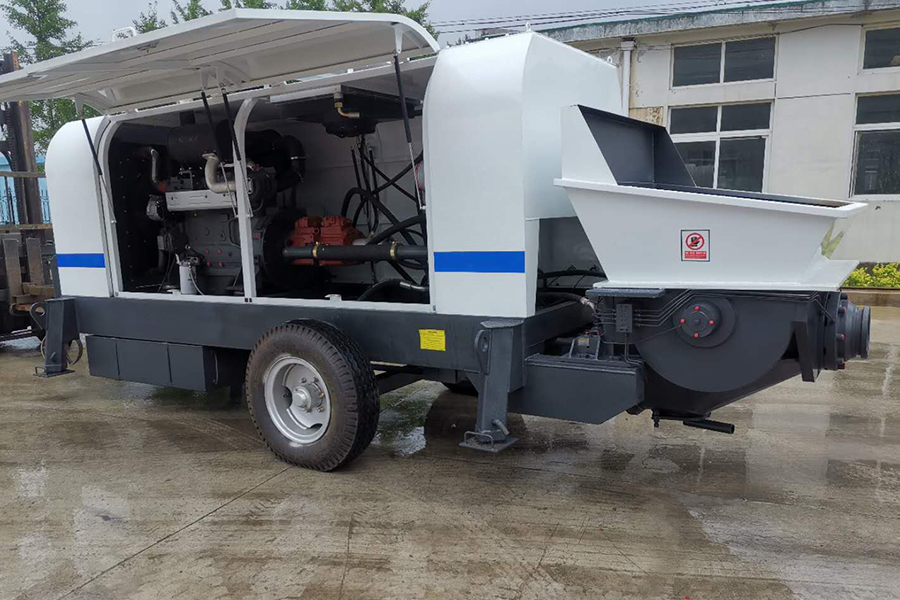
Concrete mixing pump types and differences
A concrete mixing pump combines concrete mixing and pumping in one machine. It is popular for small and medium projects because it can produce concrete on site and deliver it through pipelines without using a separate mixer and pump. Different types of concrete mixing pumps are designed for different power conditions, project sizes, mobility needs, and concrete requirements.
Diesel vs electric concrete mixing pump
Diesel concrete mixing pumps are suitable for remote sites, rural construction, road work, irrigation channels, and areas without reliable grid power. They are flexible and can move between jobsites more easily. Electric concrete mixing pumps are suitable for sites with stable electricity, lower noise requirements, and lower daily running cost. They are often used near towns, factories, and fixed construction areas.
Drum mixer pump vs twin-shaft mixer pump
A drum-type mixer pump is compact and practical for general small construction, house building, foundations, and simple concrete placement. It is easy to operate and maintain. A twin-shaft mixer pump provides stronger mixing performance and better uniformity, making it suitable for projects that need higher concrete quality, faster mixing, or more stable production.
Trailer-mounted and compact configurations
Most concrete mixing pumps use a trailer-mounted structure, allowing the machine to be towed to different working positions. Compact models are useful for narrow jobsites, rural roads, small buildings, and projects where space is limited. Buyers should check transport size, pumping distance, vertical height, aggregate size, mixer volume, and pipe layout before choosing a model.
How to choose the right model
Start with the jobsite conditions. If power is unstable, diesel is safer. If the project is fixed and electricity is reliable, electric may reduce operating cost. If concrete quality and mixing intensity are important, consider a twin-shaft configuration. If the project is small and budget-sensitive, a drum-type mixer pump may be enough.
Also confirm the expected output, aggregate size, concrete grade, pumping distance, pipe diameter, slope, working hours, and maintenance ability. Henan Hengyuan can recommend concrete mixing pump configurations for rural construction, small commercial projects, houses, roads, and medium-scale works.
Concrete mixing pump application scenarios
Concrete mixing pumps are often used for rural houses, small commercial buildings, farm construction, road shoulders, drainage channels, slope protection, foundations, floor slabs, and repair projects. They are useful when ready-mix concrete is difficult to deliver or when a separate mixer and pump would increase labor and equipment cost.
For rural construction, simple operation and stable pumping are usually more important than very high output. For medium projects, buyers may need stronger mixing capacity, longer pumping distance, and better spare parts support. For remote projects, diesel power and easy maintenance are often the priority.
Key specifications to compare
When comparing models, check theoretical output, mixer capacity, maximum aggregate size, pumping pressure, horizontal and vertical delivery distance, engine or motor power, hopper design, hydraulic system, pipe package, wearing parts, and after-sales support. A model with a higher output number is not always better if the site cannot supply materials fast enough.
Buyers should also ask whether the machine can handle the planned concrete grade and slump. If the concrete is too dry, too coarse, or poorly graded, pumping blockage may occur. Good communication about mix design and site conditions helps the supplier recommend a more reliable configuration.
Concrete mixing pump ownership cost
The purchase price is only one part of concrete mixing pump cost. Buyers should also consider fuel or electricity consumption, hydraulic oil, wearing parts, pipe replacement, operator training, maintenance time, and transport between jobsites. A slightly stronger configuration may reduce downtime if the machine will be used frequently.
For rental businesses, easy operation, fast cleaning, spare parts availability, and durable wearing parts are especially important. A reliable machine helps maintain customer confidence and improves equipment utilization across multiple projects.
Model selection summary
The best concrete mixing pump model is the one that matches the site, concrete mix, power source, pumping distance, and maintenance capability. Sharing these details before purchase helps the supplier avoid recommending an undersized or overcomplicated machine.