
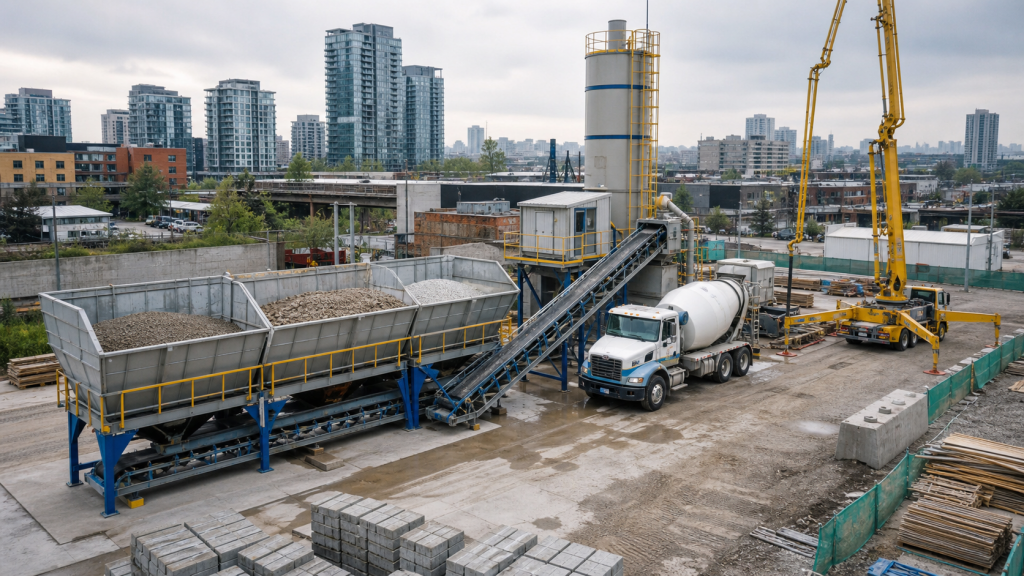
July 21, 2026 – Urban contractors are paying closer attention to compact layout planning when they compare a compact concrete batching plant for busy project sites. In dense work areas, the buying decision is not only about rated output. It also depends on aggregate loading, cement storage, truck turning space, concrete discharge, pumping distance, installation access, and service support.
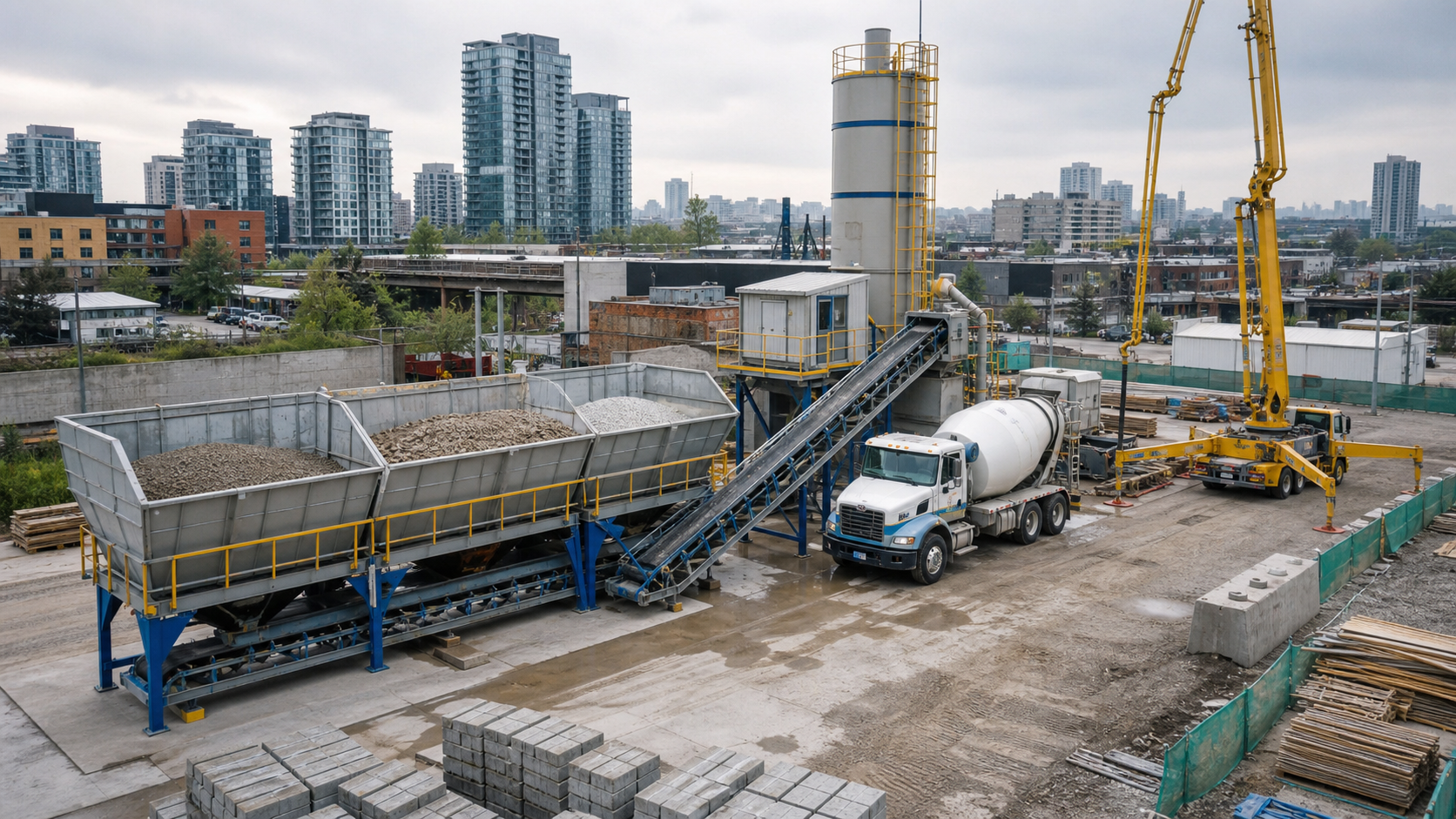
This article is an original industry analysis for contractors, ready-mix producers, and construction equipment buyers. It does not rely on specific third-party company announcements, customer cases, regulations, or price claims. The focus is practical equipment planning for project teams that need reliable concrete production where site space and traffic movement are limited.
Why compact layout planning matters
Compact layout planning helps buyers review the batching plant as a complete production workflow. Aggregate bins, weighing units, conveyors, cement silo, screw conveyor, mixer, control system, water supply, additive dosing, truck loading position, and concrete delivery equipment all influence whether the plant can support stable production after installation.
For a long-term supply point, a stationary concrete batching plant may provide the stronger base. For contractors moving between work zones or serving temporary urban projects, a mobile concrete batching plant may reduce setup pressure and help equipment move closer to the pour area. The best configuration depends on output demand, site space, transport routes, local power supply, and future project plans.
Capacity should match the real site rhythm
Hourly output is important, but it should be reviewed with the surrounding workflow. A plant with suitable nominal capacity can still be limited by aggregate loading space, cement delivery timing, truck access, mixer cycle time, or concrete placement distance. Buyers should compare the plant layout with the expected daily schedule, not only the equipment model name.
When preparing an inquiry, project teams should describe the expected concrete output, aggregate type, cement supply method, available installation area, truck route, power conditions, and whether the plant will serve one site or several sites over time. These details help the manufacturer recommend a more accurate configuration from the product center.
Mixer and weighing accuracy remain central
The concrete mixer and weighing system directly affect batch consistency. Buyers should confirm whether the mixer type, aggregate bin arrangement, cement weighing, water metering, and additive dosing match the concrete grade and aggregate condition used on the project.
A compact footprint should not mean accepting a weak core configuration. A compact or movable plant still needs stable weighing, efficient mixing, clear maintenance access, and an electrical control system that operators can use consistently.
Truck movement and pumping need early review
Some jobsites can discharge concrete directly into mixer trucks with simple circulation. Others need additional placement equipment because the pouring point is distant, elevated, narrow, or difficult to access. In those cases, a concrete pump or mixer pump should be reviewed with the batching plant instead of being treated as a separate purchase.
Before confirming equipment, buyers should review mixer truck parking, turning radius, pumping distance, concrete mix requirements, site access, power conditions, and the pouring schedule. Matching the plant and pumping equipment can reduce handling pressure and improve the overall construction rhythm.
Service planning reduces startup risk
Installation guidance, commissioning support, operator training, spare parts supply, and troubleshooting communication are important parts of the buying decision. For overseas projects and urban sites with strict time windows, clear technical documents and communication before shipment can make the first production stage easier to manage.
Project teams can review service information and share site details with Hy Concrete Machines before confirming the final plant layout.
Buyer checklist
- Confirm hourly and daily concrete output requirements.
- Compare stationary, compact, and mobile concrete batching plant layouts.
- Review site space, foundation needs, aggregate loading route, and mixer truck access.
- Check mixer type, weighing accuracy, cement supply, and control system.
- Decide whether a concrete pump is needed for placement distance or height.
- Confirm installation, commissioning, training, spare parts, and remote support.
- Use actual project conditions to select the final equipment configuration.
FAQ
What is compact concrete batching plant layout planning?
It is the process of reviewing the plant, mixer, material storage, conveying equipment, control system, truck route, and concrete delivery method as one production workflow instead of choosing a model by capacity alone.
When is a mobile concrete batching plant a practical option for urban work?
A mobile plant is practical when the project needs a compact layout, faster installation, relocation flexibility, or concrete production closer to changing work areas.
Should buyers choose the highest-capacity plant available?
Not always. The plant should match real production demand, site logistics, material supply, mixer cycle time, truck access, and the expected construction schedule.
Why review truck access before choosing a batching plant?
Truck access affects loading, waiting time, traffic flow, and delivery reliability. A compact plant still needs enough movement space for safe and steady concrete production.
Conclusion
For urban project sites, compact layout planning can help buyers choose a concrete batching plant that fits the full construction workflow. A practical configuration should match production demand, site layout, mixer performance, truck movement, concrete delivery method, and service support. Buyers can contact Hy Concrete Machines with site details to discuss a suitable equipment plan.