
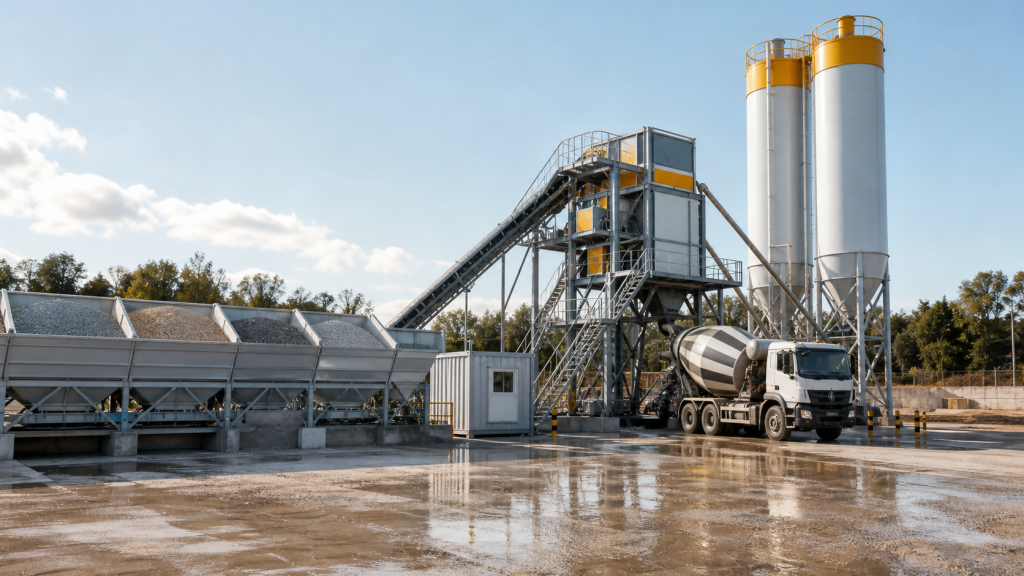
July 29, 2026 – Buyers are paying closer attention to modular concrete batching plant layout planning as construction sites and ready-mix yards face tighter space, faster relocation needs, and more pressure to keep material movement organized. The discussion is practical: aggregate storage, cement silo position, conveyor routing, mixer access, control-room visibility, and maintenance space all affect daily concrete production.
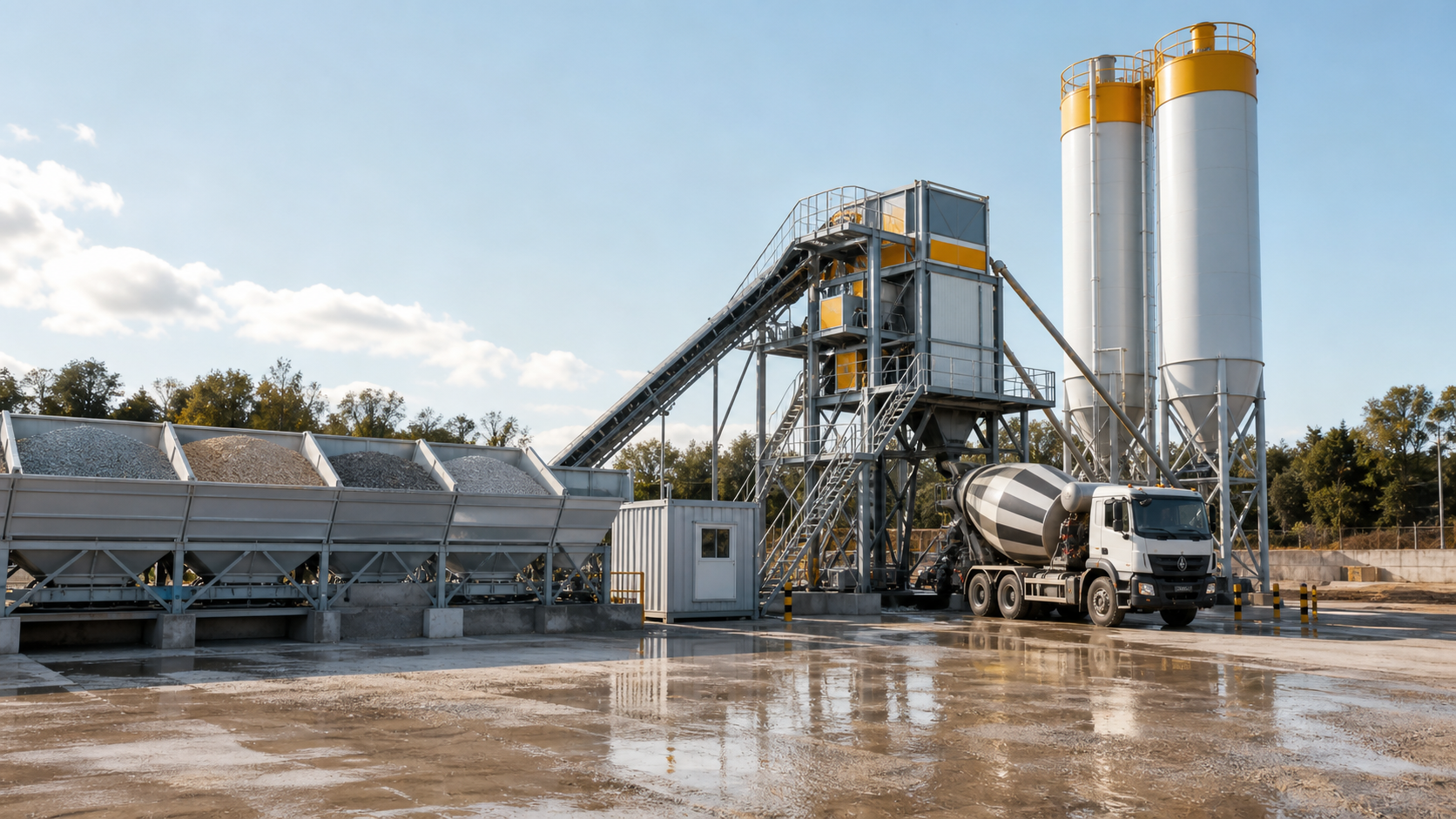
This article is an original industry analysis for contractors, ready-mix producers, and construction equipment buyers. It does not rely on specific third-party company announcements, customer cases, regulations, price data, or project claims. The focus is practical planning for teams comparing batching plant layouts, truck circulation, and site workflow before ordering equipment.
Why layout planning is moving earlier
A stationary concrete batching plant or modular plant is often selected by rated output, mixer type, aggregate bin capacity, weighing accuracy, and automation level. Those points matter, but the physical arrangement can be just as important. A well-planned layout can reduce unnecessary loader travel, shorten conveyor paths, keep mixer truck lanes clear, and make daily supervision easier.
Earlier layout planning also helps buyers choose between equipment types. A compact modular batching plant may suit projects where fast installation, predictable truck access, and limited civil foundation work are priorities. A larger stationary plant may fit longer-term production sites where aggregate receiving, stockpile planning, and maintenance access can be designed into the yard from the beginning.
Material flow should be designed, not assumed
Aggregate movement is one of the most common constraints in concrete production. Wheel loaders, aggregate bins, receiving areas, and stockpiles need enough space to work without crossing the mixer truck route. If the aggregate side is crowded, the batching system may be ready but material replenishment can still slow production.
When preparing an inquiry, project teams should describe expected concrete output, aggregate types, stockpile method, cement supply, admixture storage, mixer truck route, power conditions, water supply, drainage, and available installation area. These details help the manufacturer recommend a more accurate configuration from the product center.
Mixer truck circulation affects productivity
Mixer truck circulation should be reviewed before installation starts. Trucks need a clear route to approach the discharge point, receive concrete, move to washing or inspection areas when needed, and exit without blocking aggregate delivery. A narrow or poorly marked route can create waiting time even when the batching plant has enough rated capacity.
For projects using a mobile concrete batching plant, truck circulation may change as the plant relocates. For long-term yards, the same planning affects internal road width, turning radius, traffic separation, and maintenance access. In both cases, the plant output, truck cycle, and concrete delivery plan should work as one production chain.
Control-room visibility supports daily operation
The control room should be located where operators can monitor the batching tower, truck loading point, aggregate feed, and safe access areas. Camera systems and automation can help, but basic visibility still matters. A control room that is isolated from key movement areas may make routine coordination harder than necessary.
Layout planning should also reserve working space around cement silos, screw conveyors, weighing systems, mixer platforms, electrical cabinets, and water or admixture equipment. These areas need access for inspection, cleaning, spare parts replacement, and safe daily operation.
Integration with pumping and delivery equipment
Batching plant layout should also be coordinated with downstream equipment. If concrete is delivered to a concrete pump, the mixer truck cycle, pump receiving area, washout location, and jobsite access should be reviewed together. When concrete is moved by concrete mixer trucks, the loading point and traffic route become central parts of the production plan.
Installation guidance, operator training, spare parts supply, and troubleshooting support are also part of the buying decision. Project teams can review service information and share site drawings or basic measurements with Hy Concrete Machines before confirming the final batching plant arrangement.
Buyer checklist
- Confirm target output, mixer type, aggregate bin capacity, and cement silo needs.
- Review aggregate receiving, stockpile method, loader travel, and bin replenishment.
- Plan mixer truck approach, loading position, waiting area, turning route, and exit path.
- Reserve maintenance space around silos, conveyors, mixer platforms, and control cabinets.
- Coordinate batching output, truck cycle, concrete pump needs, and delivery timing.
- Review power supply, water supply, drainage, lighting, and site access control.
- Confirm installation support, operator training, spare parts, and service response.
FAQ
Why should batching plant layout be discussed before ordering equipment?
Layout affects aggregate feeding, cement silo position, truck circulation, control-room visibility, maintenance access, and installation work. Early review helps buyers avoid a plant that fits the specification but works poorly on the actual site.
How does mixer truck access affect batching plant productivity?
The plant depends on regular truck movement. If trucks cannot approach, load, wait, and exit efficiently, production may slow down even when the batching system has enough rated output.
What information helps select a modular concrete batching plant?
Useful details include target output, mix types, aggregate sizes, cement storage, site dimensions, truck route, power and water conditions, foundation requirements, and relocation plans if the plant will move between projects.
Should batching plant planning be coordinated with pumping equipment?
Yes. The batching plant, mixer truck cycle, concrete pump, and placement crew should be reviewed as one production chain so that one bottleneck does not slow the whole job.
Conclusion
Modular concrete batching plant layout planning is gaining focus because it connects equipment capacity with real site conditions. A suitable plan should match aggregate movement, cement storage, truck circulation, control-room visibility, maintenance access, and service support. Buyers can contact Hengyuan Concrete Machines with project details to discuss practical concrete production equipment options.