
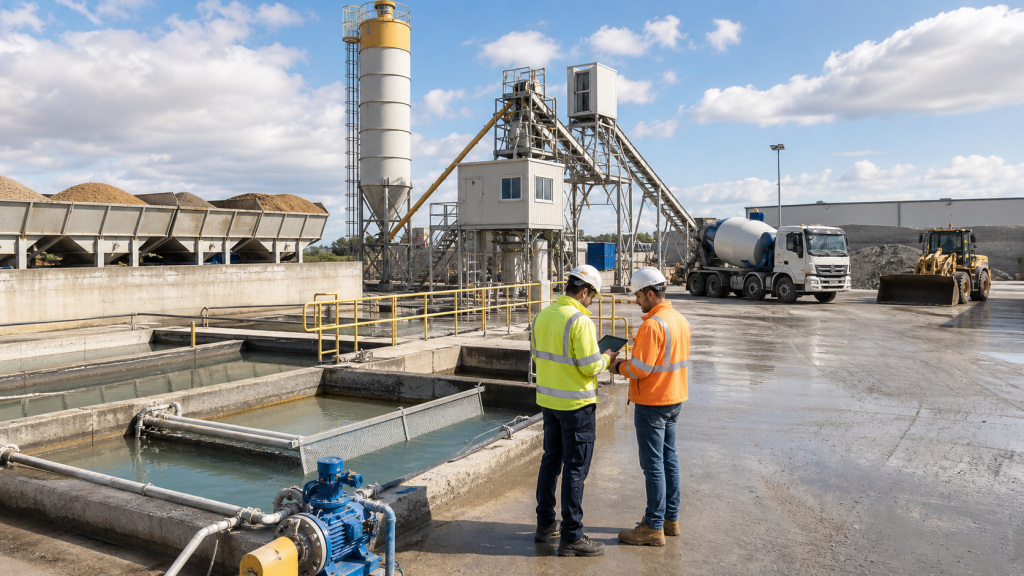
August 5, 2026 – Concrete producers and contractors are giving more attention to concrete batching plant wash water management before new equipment is installed. The focus is practical: water used for mixer truck washout, yard cleaning, aggregate handling, and plant maintenance can influence site layout, operating discipline, equipment selection, and daily production reliability.
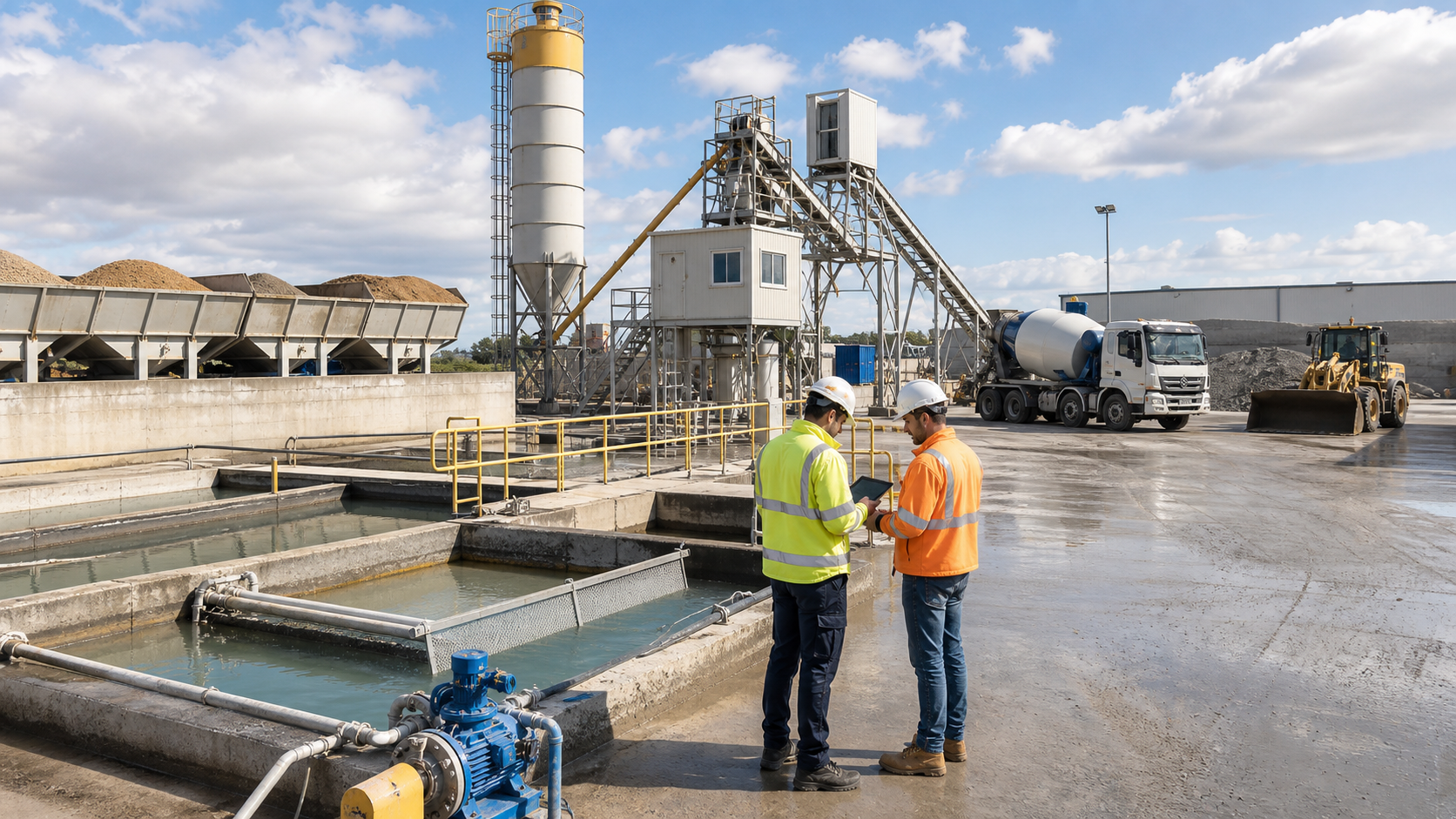
This article is an original industry analysis for ready-mix producers, contractors, and concrete equipment buyers. It does not rely on specific third-party company announcements, customer cases, regulations, price data, or project claims. The focus is practical planning for teams using batching plants, mixer trucks, aggregate systems, concrete pumps, and related production equipment.
Why wash water planning is moving upstream
A stationary concrete batching plant or mobile concrete batching plant is often evaluated first by capacity, mixer type, aggregate storage, control system, and installation footprint. Those items remain important, but the supporting water plan deserves the same early review. Teams need to understand where wash water will be collected, how solids will settle, whether recovered material can be managed separately, and how cleaned water may return to non-critical plant tasks where suitable.
Early planning also helps buyers compare equipment choices more realistically. A plant that has clear drainage routes, practical washout space, and safe access for mixer trucks may be easier to operate than a larger layout that leaves water handling as an afterthought. When water, slurry, and returned concrete are handled in a controlled area, the production team can reduce confusion around cleanup, maintenance, and daily site movement.
Batching plant layout affects water control
Wash water management starts with layout. The plant yard should separate clean traffic routes from washout, settling, and recovery areas. Mixer trucks need enough room to enter, discharge rinse water safely, and leave without blocking aggregate delivery or loading operations. Loader travel should not push material into drainage paths, and the operator should be able to see whether the washout area is becoming congested.
For permanent plants, this may mean assigning enough space for a settling basin, reclaimed water tank, aggregate recovery unit, or concrete recycling system. For temporary or mobile plants, the plan may be simpler, but it still needs defined collection points, ground preparation, truck access, and maintenance space. The right solution depends on project duration, daily output, available land, material flow, and local operating requirements.
Material recovery should match the production process
Returned concrete and washout solids are not just cleanup issues. They also affect aggregate handling, yard space, mixer truck scheduling, and end-of-shift routines. If a site expects frequent returned concrete, the plant team should decide how that material will be separated, stored, reused, or removed before production begins. If the expected volume is small, a basic controlled washout process may be enough. If the site runs high daily volume, a more structured recovery system may be easier to manage.
Buyers can use the product center to review plant configurations and then discuss how water handling connects with aggregate bins, conveyors, mixers, truck lanes, and service access. The goal is not to add complexity for its own sake. The goal is to keep normal plant operation, cleaning, recovery, and maintenance from interfering with one another.
Mixer truck washout needs a defined workflow
A concrete mixer truck can only support efficient batching when its movement is predictable. Loading, dispatch, return, washout, and parking should be mapped as one route. If trucks have to reverse through narrow areas, cross loader paths, or wait near the aggregate feed area, the washout process can slow the entire yard.
The washout workflow should also consider timing. End-of-day cleaning often happens when operators are tired and the yard is crowded with equipment returning from the jobsite. Clear signs, lighting, drainage, and defined responsibilities can help keep the routine consistent. For projects using a concrete pump, pump washout, pipeline cleaning, and truck return timing should be coordinated so washout areas do not become bottlenecks.
Control records support better daily decisions
Batching plant control records are useful beyond mix production. Material consumption, water use notes, returned concrete records, maintenance logs, and operator observations can help managers understand whether the water handling process is working. If the recovery area fills too quickly, if trucks spend too long waiting, or if cleaning routines vary by shift, those patterns should be visible before they become daily production problems.
Service planning matters as well. Pumps, valves, sensors, settling areas, conveyors, mixer seals, pneumatic components, and electrical controls all need inspection routines. Project teams can review service information and prepare site photos, output targets, truck flow sketches, water source details, and washout expectations before confirming a plant configuration.
Practical checklist for wash water planning
- Map mixer truck loading, return, washout, parking, and exit routes before finalizing the plant layout.
- Confirm where wash water, returned concrete, and settled solids will be collected.
- Separate washout and recovery areas from aggregate delivery, loader movement, and pedestrian routes.
- Define whether a settling basin, reclaimed water tank, or concrete recycling system is required.
- Plan routine cleaning responsibilities for operators, drivers, and maintenance staff.
- Check that drainage, ground preparation, lighting, and access remain workable in bad weather.
- Keep daily records for water use, returned concrete, cleaning issues, and service needs.
FAQ
What is concrete batching plant wash water management?
It is the planning and operation of systems that collect, settle, recover, reuse where suitable, or remove water and solids from mixer truck washout, plant cleaning, and related concrete production activities.
Why should wash water planning happen before installation?
Early planning helps the buyer reserve enough space, choose the right recovery process, keep truck movement efficient, avoid drainage problems, and make cleaning routines easier for operators.
Does every plant need the same recovery system?
No. The right approach depends on plant type, daily output, site duration, truck volume, available land, material handling process, and the buyer’s operating requirements.
What information should buyers prepare before discussing the plant layout?
Useful information includes expected output, truck count, available site space, aggregate flow, drainage direction, water source, cleaning routines, returned concrete expectations, and any concrete pump washout requirements.
Conclusion
Concrete batching plant wash water management is becoming a more visible part of production planning because it connects equipment layout, mixer truck flow, material recovery, site drainage, cleaning discipline, and service access. A useful plan does not need to be complicated, but it should be built into the plant discussion before installation begins. Buyers can contact Hengyuan Concrete Machines with project details to discuss concrete production equipment and long-term support needs.