
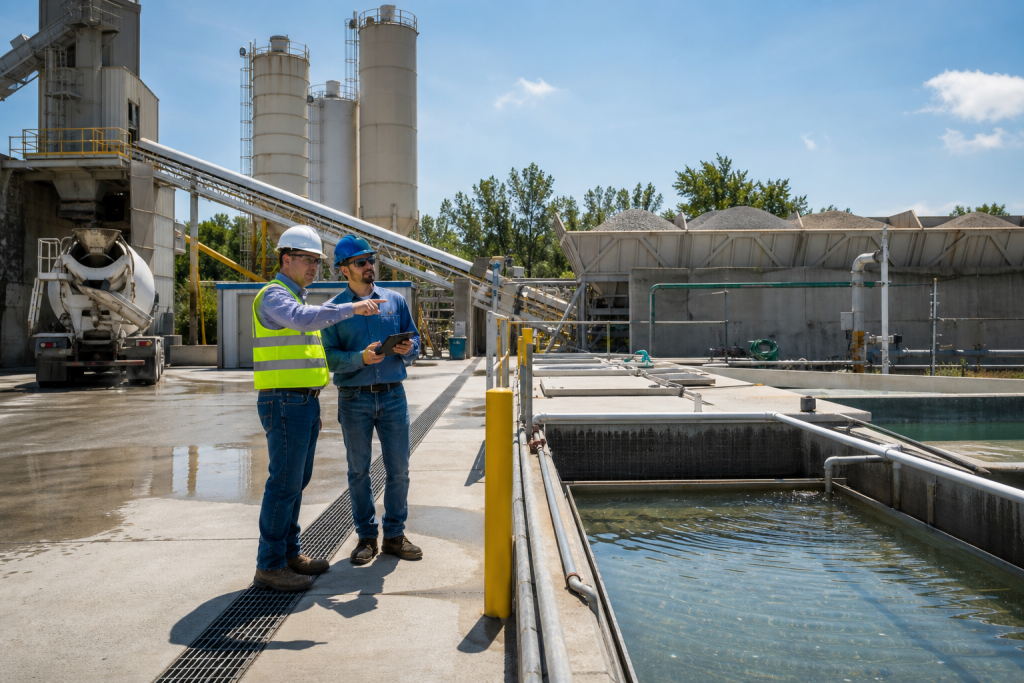
August 11, 2026 – Concrete producers and contractors are giving more attention to reclaim water planning for concrete batching plants as they review new plant layouts, upgrade older yards, and tighten daily operating routines. The topic is practical rather than theoretical: water from mixer truck washout, yard cleaning, aggregate moisture adjustment, and equipment rinsing affects batching accuracy, housekeeping, maintenance access, and site workflow.
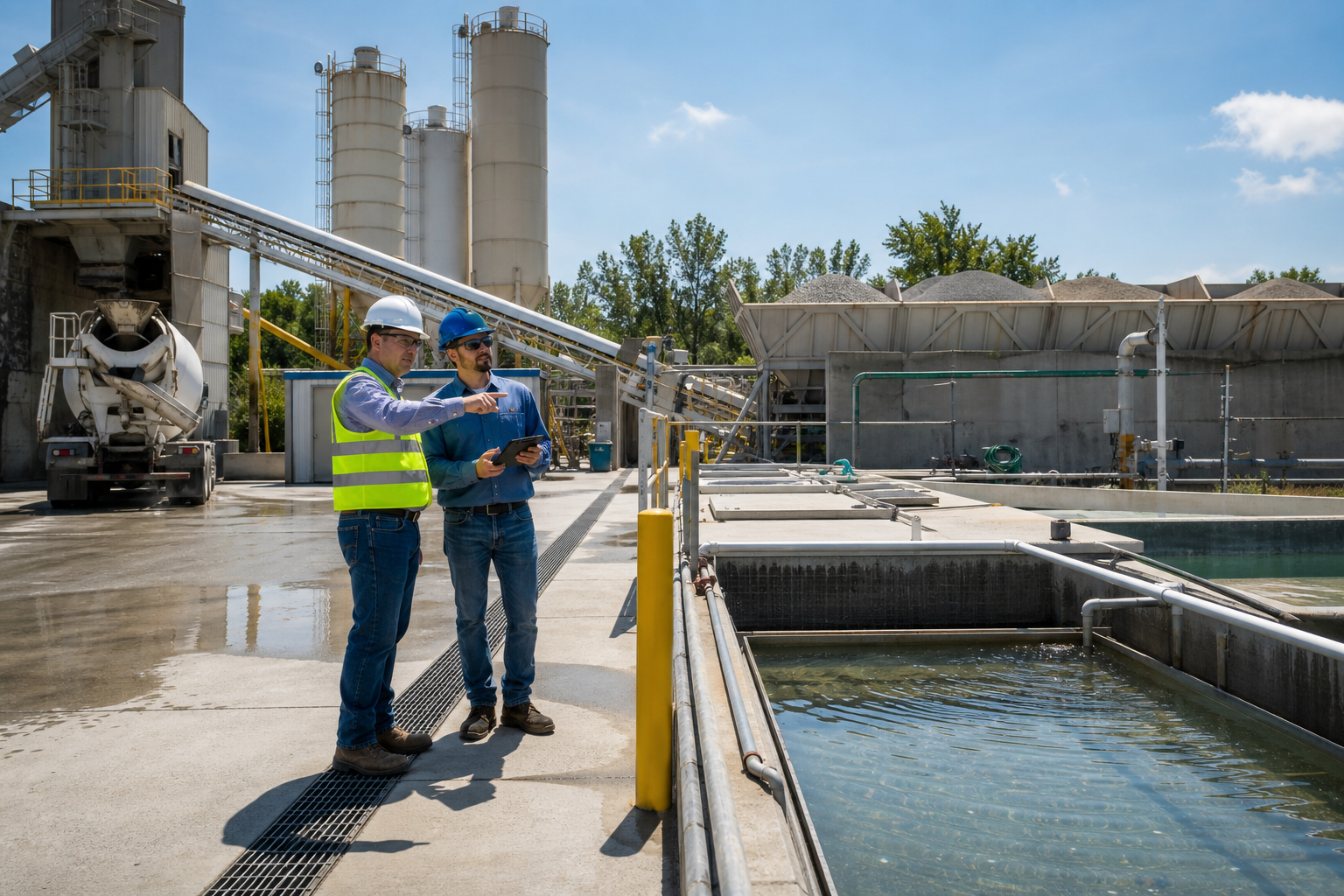
This article is an original industry analysis for ready-mix producers, contractors, plant owners, and project teams. It does not rely on specific third-party company announcements, customer cases, regulations, price data, or project claims. The focus is how buyers can plan water-related workflows around equipment that already requires daily operating discipline: aggregate bins, cement silos, conveyors, mixers, washout bays, drainage points, control rooms, and service teams.
Why reclaim water belongs in early layout planning
A stationary concrete batching plant or mobile concrete batching plant is often compared by output, mixer configuration, aggregate storage, control system, and installation footprint. Those items remain important, but the reclaim water plan should be discussed at the same time. Once a plant is installed, it is harder to change washout bay position, drainage slopes, settling tank access, road movement, water points, and cleaning zones.
Early planning helps buyers move beyond isolated components. A pump, tank, drain, water meter, hose point, or cleaning checklist may be useful, but the plant needs a complete workflow. Trucks should reach the washout area without blocking production, operators should have safe access for inspection, and maintenance teams should know which water-management items require routine checking.
Washout bay placement affects the whole yard
Mixer truck washout is one of the most visible water-management tasks around a ready-mix plant. If the washout bay is too far from the loading route, drivers may lose time and traffic may become less predictable. If it is too close to the mixer discharge, cleaning activity may interfere with batching, truck staging, or maintenance access. The layout should support a simple path: load, rinse as required, move out, and keep the production route clear.
Buyers should also think about where solids settle, how water is directed, and whether operators can inspect channels and tanks without stopping the plant. A practical reclaim water system depends on routine housekeeping. If tanks, pits, channels, or pumps are difficult to reach, small issues can turn into daily delays.
Water records should connect to batching accuracy
Water management is closely tied to batching consistency. Aggregate moisture, mixer rinse water, reclaimed water, and fresh water supply all influence how operators think about mix adjustment. The plant control process should make it clear which water sources are being used, what needs to be checked during a shift, and how operators record unusual conditions.
A good discussion also includes the concrete mixer area. The mixer platform should support cleaning, inspection, and safe movement around water lines, discharge points, and material feed areas. When access is tight, cleaning tasks may take longer and service teams may have less opportunity to catch small leaks, blocked drains, or worn hose connections before they affect production.

Control room records can make routines visible
Reclaim water planning is not only a mechanical topic. The control room should support clear operating records, including washout bay checks, settling tank observations, pump inspection dates, mixer cleaning notes, drainage comments, aggregate moisture notes, and truck loading delays. These records help managers distinguish between an equipment issue, a layout problem, a material handling routine, or a training need.
Operators should not be buried in paperwork, but a short and consistent record is useful. A practical daily checklist can show whether pumps were checked, channels were clear, tanks were inspected, washout solids were managed, and water source changes were noted. Over time, the same records can guide spare parts planning and maintenance scheduling.
Truck movement and pump access should be reviewed together
Water-management planning should include mixer truck movement, loading routines, and service access. A concrete pump, mixer truck, loader, and aggregate delivery vehicle may all share space around the plant. If traffic flow is confusing, trucks may wait in cleaning areas, drainage access may be blocked, and operators may have less room to maintain good housekeeping.
Buyers can use the product center to review plant and equipment families, then discuss how reclaim water planning connects with aggregate storage, conveyor design, mixer selection, washout placement, truck circulation, and service support. Hy Concrete Machines can also review service requirements with project teams before equipment configuration is finalized.
Practical checklist for reclaim water planning
- Review washout bay position, truck movement, drainage direction, and service access before finalizing the plant layout.
- Identify where rinse water, solids, and yard cleaning water will move during normal production.
- Make settling tanks, pumps, drains, hose points, and inspection areas practical for the maintenance team.
- Keep mixer platform access clear enough for cleaning, inspection, and routine service work.
- Define short daily records for pump checks, tank observations, channel cleaning, and water source changes.
- Plan spare parts and service intervals for pumps, hoses, valves, screens, seals, and inspection hardware.
- Start with a focused list of high-value routines instead of adding equipment that no one can maintain.
FAQ
What does reclaim water planning for concrete batching plants usually involve?
It usually involves planning washout bay placement, drainage, settling tanks, pumps, mixer cleaning, aggregate moisture records, truck movement, housekeeping routines, and maintenance access as one operating system.
Should every concrete plant use the same water-management setup?
No. The right setup depends on plant type, output target, site size, aggregate storage method, local operating routine, truck movement, service access, and the buyer’s maintenance capacity.
Can reclaim water equipment replace housekeeping?
No. Equipment can support cleaner water handling and reduce wasteful routines, but regular inspection, cleaning, operator discipline, and maintenance records remain necessary.
What should buyers prepare before discussing reclaim water layout?
Useful information includes expected production volume, plant type, aggregate storage plan, truck count, washout routine, site drawing, available water points, service access requirements, and daily maintenance routines.
Conclusion
Reclaim water planning for concrete batching plants is most effective when it is treated as part of layout planning and daily operation, not as a separate add-on. Washout bay placement, drainage, mixer cleaning, control room records, truck flow, and maintenance response all need to connect. Buyers can contact Hengyuan Concrete Machines with project details to discuss concrete equipment configuration, water-management expectations, and long-term support needs.