
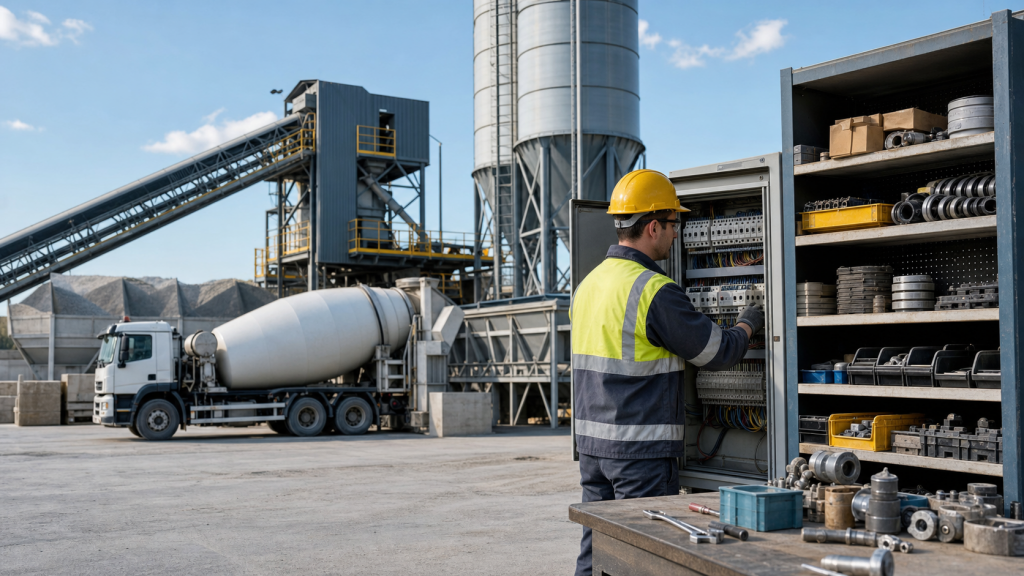
July 30, 2026 – More concrete equipment buyers are treating concrete plant service readiness as a central part of the purchase decision. Instead of looking only at rated output, mixer type, silo capacity, and automation level, project teams are asking how the plant will be inspected, maintained, supplied with spare parts, and supported after installation.
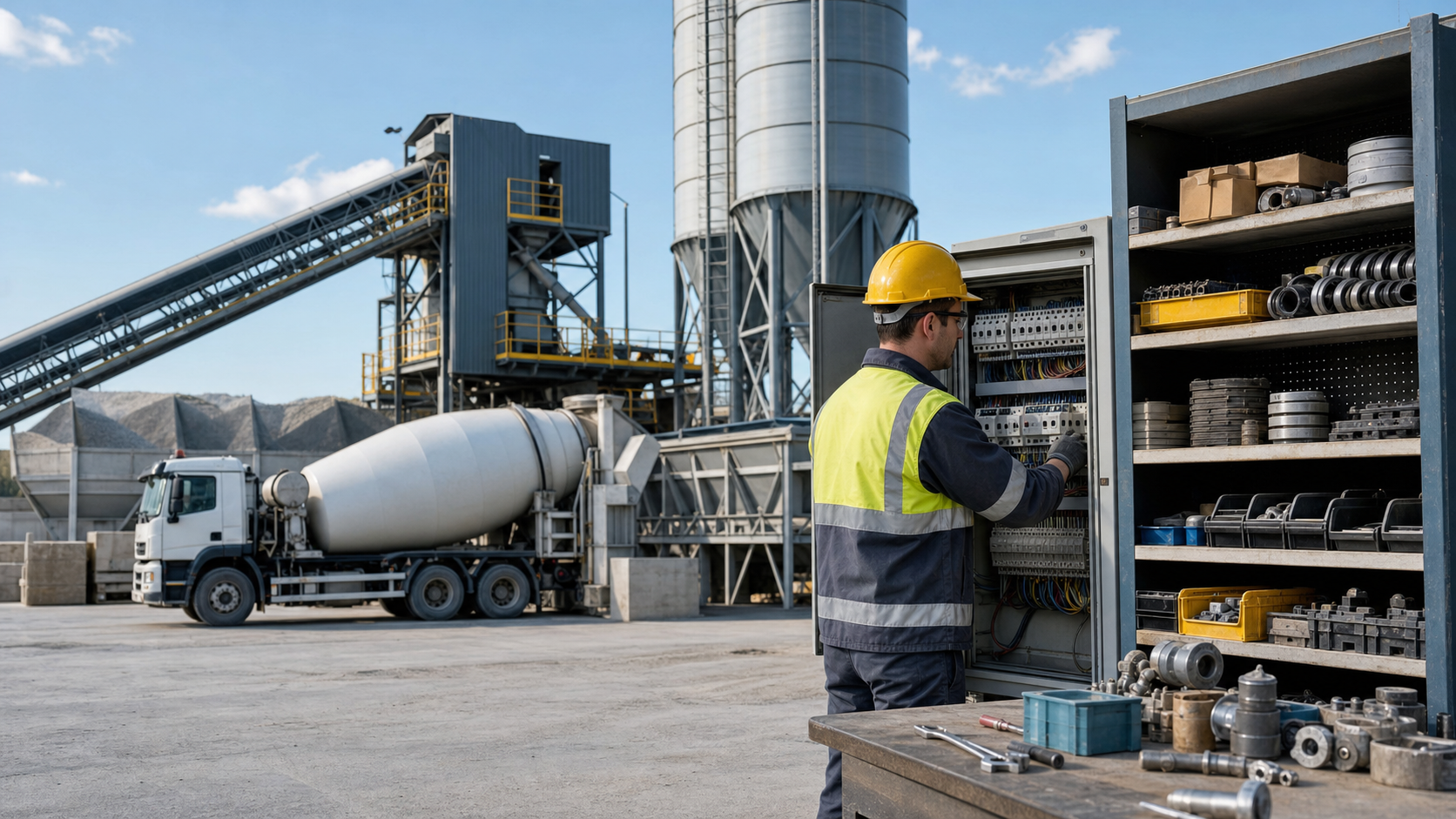
This article is an original industry analysis for contractors, ready-mix producers, and construction equipment buyers. It does not rely on specific third-party company announcements, customer cases, regulations, price data, or project claims. The focus is practical planning for teams comparing concrete batching plant configurations, spare parts readiness, maintenance access, and long-term operating support.
Why service planning is moving earlier
A stationary concrete batching plant or mobile system is often selected by output capacity, aggregate bin volume, cement silo quantity, weighing accuracy, and control system functions. Those specifications matter, but service readiness affects whether the plant can keep producing when sensors, valves, belts, screw conveyors, electrical components, or wearing parts need attention.
Earlier service planning also helps buyers compare equipment types. A compact mobile concrete batching plant may suit projects that need fast relocation and simplified setup, while a larger stationary plant may suit a long-term ready-mix yard with a dedicated maintenance area. In both cases, the buyer should understand which parts are consumable, which parts should be kept in stock, and which checks operators should perform during routine production.
Spare parts should match the operating plan
Spare parts planning should be based on plant model, mixer type, control system, local working hours, raw material conditions, and the buyer’s maintenance capability. A practical spare parts list may include wear liners, mixer blades, belts, rollers, electrical components, sensors, pneumatic parts, seals, valves, filters, and selected tools for routine inspection.
The goal is not to store every possible component. The goal is to identify the parts most likely to affect uptime and make sure the site team knows where they are, how they are installed, and when they should be replaced. Buyers can use the product center to identify the plant type and then discuss a model-specific spare parts package before shipment.
Maintenance access affects daily reliability
Maintenance access should be reviewed before installation starts. Teams need safe working space around cement silos, screw conveyors, weighing systems, mixer platforms, water pumps, admixture systems, air compressors, electrical cabinets, and control rooms. If these areas are crowded, even a simple inspection can become slow and inconvenient.
Control-cabinet access deserves special attention. Electrical components, terminals, relays, sensors, and automation interfaces should be protected from dust and moisture while remaining reachable for inspection. Operators should also be trained to recognize abnormal alarms, unstable weighing signals, air pressure problems, and mixer discharge issues before they become larger production problems.
Training turns equipment support into usable support
Service support is most effective when the site team understands the plant. Operator training should cover startup and shutdown procedures, batching workflow, weighing calibration awareness, mixer cleaning, belt and roller inspection, silo safety checks, fault reporting, and basic preventive maintenance. Clear training reduces avoidable downtime and helps remote support teams diagnose issues faster.
Documentation also matters. Buyers should keep wiring diagrams, spare parts lists, lubrication points, operating instructions, troubleshooting notes, and supplier contacts in one controlled location. When the plant is used by multiple shifts, consistent documentation helps each team follow the same maintenance routine.
Integration with pumping and delivery equipment
Service readiness should also be coordinated with downstream equipment. If concrete is delivered to a concrete pump, the mixer truck cycle, pump receiving area, washout location, and pump maintenance needs should be reviewed together. When concrete is moved by concrete mixer trucks, fleet condition, drum cleaning, loading point access, and delivery scheduling become part of the same operating plan.
Installation guidance, operator training, spare parts supply, and troubleshooting support are therefore part of the buying decision, not afterthoughts. Project teams can review service information and share plant model, site layout, operating hours, concrete output target, and maintenance expectations with Hy Concrete Machines before confirming equipment details.
Buyer checklist
- Confirm plant model, target output, mixer type, cement silo needs, and automation level.
- Prepare a model-specific spare parts list before shipment.
- Reserve safe maintenance space around silos, conveyors, mixer platforms, pumps, and control cabinets.
- Train operators on startup, shutdown, cleaning, inspection, alarm response, and fault reporting.
- Keep wiring diagrams, manuals, spare parts records, and supplier contacts in one location.
- Coordinate batching plant support with mixer truck, concrete pump, and delivery equipment needs.
- Confirm installation guidance, remote troubleshooting process, spare parts supply, and service response.
FAQ
Why should service readiness be discussed before ordering a batching plant?
Service readiness affects daily uptime. Buyers should know which parts need routine inspection, which spare parts should be stocked, how operators will be trained, and how support will work after installation.
What spare parts should a concrete batching plant buyer consider?
The list depends on the plant model and operating conditions, but common planning areas include mixer wear parts, belts, rollers, sensors, pneumatic components, valves, seals, filters, and selected electrical parts.
How does operator training support concrete plant reliability?
Training helps operators follow correct procedures, recognize early warning signs, report faults clearly, clean the mixer properly, and carry out routine checks that reduce avoidable downtime.
Should concrete plant service planning include delivery equipment?
Yes. The batching plant, mixer trucks, concrete pump, washing area, and delivery schedule should be reviewed as one production chain so maintenance planning supports the whole operation.
Conclusion
Concrete plant service readiness is becoming a larger buyer priority because equipment value depends on more than rated capacity. A practical plan should connect spare parts, maintenance access, operator training, documentation, control-system support, and delivery equipment coordination. Buyers can contact Hengyuan Concrete Machines with project details to discuss concrete production equipment and long-term support needs.