
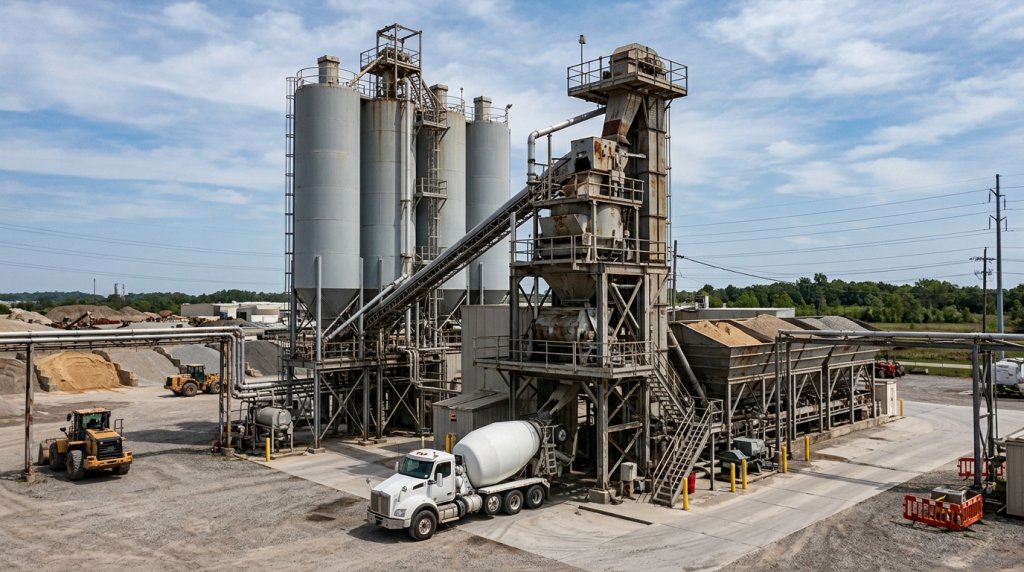
Cement silo aeration is easy to overlook when a batching plant is running smoothly. It becomes more visible when powder discharge slows, a conveyor waits for material, or an operator has to investigate an inconsistent batch. A useful maintenance plan starts before that interruption: document how the installed silo is meant to work, then compare observations with that baseline.
This industry analysis presents six planning checks for cement silo aeration. It is not a commissioning procedure or a substitute for the equipment manufacturer’s instructions. Silo designs, air supplies and protection systems differ. Qualified staff should set inspection methods and intervals for the actual installation, following site safety controls and applicable requirements.
Contents
How Aeration Fits the Batching Process
Aeration helps powder move toward a silo outlet. On some installations, air is introduced through pads or nozzles at the cone; the arrangement and operating cycle depend on the silo and material. The air supply, control valves, outlet and downstream screw conveyor all affect what the operator sees at the batch house. Slow discharge alone does not identify which component is at fault.
The WAM screw-conveyor manual asks troubleshooting teams to document the number and position of silo aeration devices, operating pressure and cycle, along with outlet and conveyor conditions. That is a useful model for a site-specific checklist: record the equipment actually installed rather than copying settings from another plant.
Six Cement Silo Aeration Planning Checks
1. Record the intended operating sequence
Start with the current cement silo aeration drawing, supplier manual and commissioning record. Identify which zones exist, when they are enabled and how they interact with the discharge gate and conveyor. If the controller sequence differs from the documentation, log the difference and ask why it was made before changing it. A deliberate adjustment for a particular material should not be mistaken for an error; an undocumented adjustment should not become the new baseline by accident.
Keep one approved sequence sheet near the maintenance record. An operator can then report the exact step at which flow changes rather than saying only that the silo is slow. That detail makes a later discussion with the equipment supplier more productive.
2. Review pads, nozzles and accessible air lines
Plan a competent inspection of the cement silo aeration devices and accessible connections at an interval based on the manufacturer’s guidance and observed condition. Look for evidence of damaged seals, blocked outlets, loose fittings or changes that were not recorded. Do not open a pressurized system or enter a silo as part of a casual check. Any intrusive work needs isolation, a site-approved method and personnel qualified for that task.
Access is part of the planning decision. If an item cannot be inspected safely from the designed service points, record the access limitation and arrange a suitable maintenance window. A checklist that quietly assumes access nobody has will not be followed consistently.
3. Check air quality and supply performance
Cement silo aeration depends on an air supply that meets the installed equipment specification. Include filters, drains, pressure indications, drive components and valves that actually exist on the plant. Record measurements under comparable operating conditions, and compare them with the supplier’s limits. A changing reading is a reason to investigate, not a diagnosis by itself.
If condensate appears in a line or drain, document where and when it was found. Review cement silo aeration air drying, filtration and line routing with the maintenance team before deciding whether the inspection interval should change. Do not substitute an unverified plant-air connection or increase pressure simply to force material through a restriction.
4. Treat protection devices as a separate system
Cement silo aeration and silo protection interact, but they are not the same inspection. Assign a qualified person to review the installed pressure relief valve, level detection, filters and alarms against their own manuals and the site’s protection plan. The Mineral Products Association guide to silo over-pressurisation and protection includes a maintenance checklist for these devices and emphasizes that service frequency depends on the equipment fitted and delivery pattern.
Do not transfer the guide’s example pressure settings or intervals to a different silo without design review. The useful takeaway is organizational: identify the device, its responsible maintainer, its test method and the record that proves the check was done. A clean-looking control panel is not a functional test.
5. Include the outlet and conveyor in fault-finding
If discharge slows, the restriction may be at the cone, outlet gate, screw conveyor or receiving hopper rather than at a cement silo aeration pad. Check the available records for each part of the path. Note whether the gate reaches its intended position, whether the conveyor behavior has changed, and whether any visible build-up has been reported at accessible points. The WAM manual’s troubleshooting questions cover these areas alongside the aeration arrangement.
A hypothetical example shows why this matters: suppose the air-supply readings are stable but the conveyor repeatedly starts under an unusual load. Replacing every aeration pad would be an expensive guess. The maintenance team should compare the outlet and conveyor evidence first, using the relevant manual and safe inspection procedure.
6. Connect spare parts to the installed model
List the model and specification of each serviceable cement silo aeration device, filter and relevant valve component. Check compatibility with the supplier before ordering; similar-looking parts may not perform the same function. Record lead time, storage conditions and the person authorized to release a part for replacement. A spare should support a planned repair, not justify continuing to operate equipment outside its approved condition.
Link the inventory to the inspection record. When a component is replaced, retain the old condition note, replacement identification and any post-maintenance check. This creates a traceable history for the next technician and helps distinguish a repeated fault from an isolated repair.
A Record That Supports Fault-Finding
A useful cement silo aeration record need not be complicated. Keep the approved operating sequence, equipment identifiers, comparable air-supply readings, observed discharge symptoms, protection-device test references and dated corrective actions together. Set a review interval that follows the actual plant, supplier instructions and observed changes rather than an arbitrary universal calendar.
Describe symptoms precisely. “Silo slow” is less useful than noting the material, approximate level, which zone was active, whether the outlet gate was open, and what the conveyor indicated. Where measurements cannot be made safely, record that limitation instead of inventing a value. A missing measurement is an action item, not permission to guess.
What to Do When Discharge Slows
When a plant first reports poor flow, preserve the evidence before adjusting cement silo aeration settings. Confirm the material and operating state, compare the current sequence with the approved one, and review recent maintenance notes. Ask a competent person to examine the accessible air-supply and outlet information, then decide which equipment-specific procedure applies. Avoid hammering the silo, bypassing a protective device or escalating air pressure without an approved diagnosis.
The aim is not to turn operators into silo technicians. It is to give them a clear reporting path and to give technicians enough context to choose the next safe test. If the problem is recurring, bring the silo and conveyor suppliers into the review with the recorded symptoms and installed-model details.
Final Planning Question
Cement silo aeration is most manageable when the plant can answer one question: what evidence would show that this system has changed since it last worked well? The six checks above turn that question into a practical record of sequence, hardware, air supply, protection, discharge path and compatible spares.
For a broader view of the batching equipment around the silo, see the Hengyuan company profile. Use this article as a planning framework, then apply the actual equipment manuals and site safety procedures before any maintenance action.
Contact Us: +86 199 3949 4756