
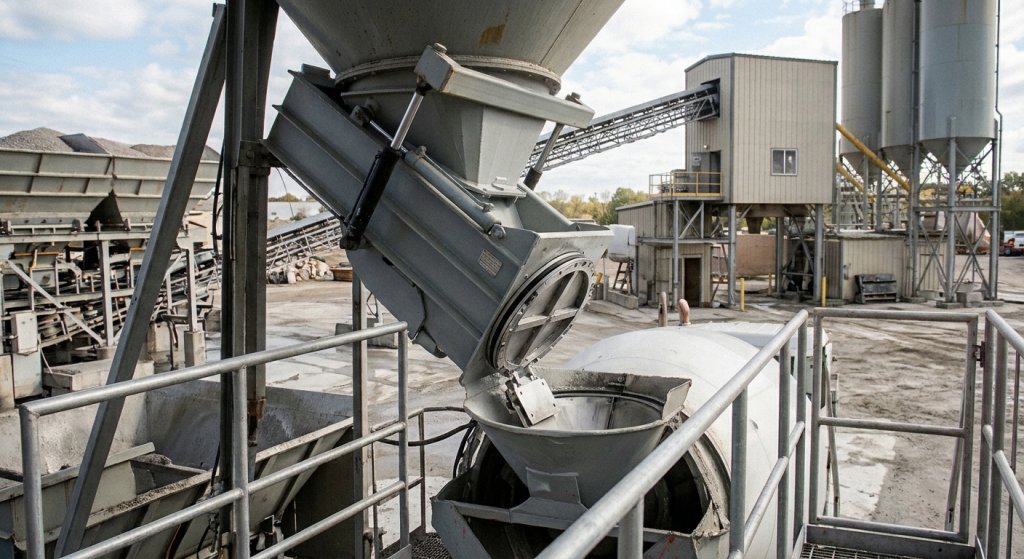
The mixer discharge gate is a small part of a concrete batching plant that can create a large coordination problem. It has to hold material during mixing, open at the intended time and direct the batch into the receiving path. A gate that hesitates, leaks or fails to close consistently can interrupt the next cycle. The practical question for plant teams is not how to improvise a repair during production, but how to recognize a concern early, keep people clear of hazards and pass a useful record to qualified maintenance staff.
This industry analysis sets out six mixer discharge gate checks for pre-shift planning and maintenance handoff. It is not a service procedure. The equipment manual, site energy-control program and responsible technician determine how inspection, isolation, adjustment and testing are performed. The checks below focus on observations and decisions a plant team can document without guessing at a fault or entering a hazardous area.
Contents
Why a Separate Gate Check Helps
Plant maintenance lists often group the mixer, discharge gate and receiving equipment together. That is efficient for scheduling, but it can hide where a symptom begins. A slow truck-loading sequence might reflect the gate, a chute obstruction, a waiting vehicle or a control signal. If the shift record says only “mixer slow,” the next person has to reconstruct the event from memory. A more precise mixer discharge gate note identifies what happened, when it happened and whether it repeated.
Safety is part of the planning boundary. Public safety guidance for concrete manufacturing emphasizes guarding around mixers and energy isolation before servicing machinery. The same principle applies here: routine observation must not become a reason to reach into the gate or bypass a guard. A plant may use pneumatic, hydraulic or other actuation arrangements, so its own manufacturer documentation and trained personnel must define the safe method. This article does not prescribe a universal sequence for any gate design.
Six Mixer Discharge Gate Checks
1. Identify the gate and its normal sequence
Start with the exact mixer and gate being discussed. Record the equipment identifier, the control screen name and the receiving path. In a plant with more than one mixer or loading point, “the gate” is ambiguous. The operator should know what a normal closed, opening, open and closing indication looks like in the approved operating procedure. If a control display or status light does not agree with the observed cycle, that difference deserves a specific note rather than an assumption that the sensor is wrong.
A useful shift description includes the batch number or time, the command given and the response seen from a safe position. It does not require personnel to stand under the outlet or inspect moving parts while the mixer operates. The purpose of this first mixer discharge gate check is to establish a baseline that another shift can recognize.
2. Separate a gate symptom from a downstream delay
Before assigning a fault, check whether the receiving path was ready. Was the chute positioned as intended? Was the truck or other container in the approved loading location? Was discharge waiting for a signal from downstream equipment? These questions help distinguish a true gate problem from a normal interlock or a logistics delay. They also prevent a rushed adjustment to a component that may be working correctly.
When a delay occurs, note the conditions without changing safety controls. A concise entry might say that the open command was issued, the status indication changed and the receiving vehicle was not yet positioned. Another entry might say the vehicle was ready but the gate response lagged on two successive batches. Those are different maintenance conversations. The mixer discharge gate record should make the distinction clear.
3. Watch for leakage, buildup and incomplete emptying
From the designated safe observation point, look for material escaping when the gate should be closed, buildup around the outlet and residue that remains after a normal discharge. These signs do not by themselves identify a failed seal, damaged blade or control fault. They do show that the plant should stop treating the condition as a vague housekeeping issue. Record where the material was seen and whether the condition changed across batches.
Cleaning and close inspection belong in a planned maintenance window with the required isolation and access controls. Do not reach into a mixer discharge gate to clear a suspected blockage while equipment can move. A qualified person can compare the observation with the manufacturer’s wear limits and determine whether the gate, its seating surface or the downstream chute needs attention. For the related mixer body, see Hengyuan’s mixer liner and blade wear inspection guide; that topic is related but should not be confused with the gate diagnosis.
4. Record actuation and indication concerns separately
A gate can have a mechanical movement issue, an actuation issue or a misleading position indication. An operator may not be able to determine which one is present, and should not need to. Write down whether the gate appeared to move, whether the control indication changed and whether the sequence completed. Avoid a conclusion such as “bad cylinder” without a qualified inspection. A symptom-based note gives technicians evidence while leaving the diagnosis open.
Maintenance planning should identify all relevant energy sources before work begins. A gate may involve stored energy even after a control panel is switched off. The specific isolation, restraint and verification steps must come from the site procedure and equipment documentation, not from a general article. This mixer discharge gate check is therefore a communication prompt, not permission for an operator to remove a guard, disconnect a line or test an actuator.
5. Connect the gate check to the loading plan
The gate sits between the mixer and the truck or other receiving equipment. If it cannot deliver a batch predictably, downstream scheduling may need to change. A production lead should know whether the issue is being monitored, whether the mixer is taken out of service or whether a qualified technician has cleared it. The decision belongs with the responsible plant and quality personnel under the site’s procedures.
Keep the handoff short but explicit: which loading point is affected, which batch was last completed, where the material went, whether any spillage was contained and who approved the next step. This prevents a later crew from assuming that an interrupted discharge was already resolved. The mixer discharge gate plan is not just about the component; it is also about the people and equipment waiting below it.
6. Close the loop after maintenance
Once qualified personnel have investigated, record the finding and the action taken. Was buildup removed under the approved procedure? Was a worn part repaired or replaced? Was the original symptom not reproduced? The record should distinguish observation, diagnosis, corrective work and return-to-service approval. A statement that the gate is “fixed” without those details is difficult to verify during the next shift.
The person authorizing return to service should confirm that guards, access panels and controls are restored according to site rules and that any required functional test was completed by the right personnel. If the test is inconclusive, keep the issue open. Compare the post-work behavior with the original batch-time observation. That comparison is the final mixer discharge gate check and makes the record useful for future troubleshooting.
A Simple Handoff Record
A practical form can fit on one page. Include mixer and gate ID, date and shift, batch reference, observed symptom, control indication, receiving-path condition, safe-area observation, person notified, work-order reference and decision on continued operation. Add fields for technician findings and return-to-service sign-off. Keep the form close to the batch log so that quality and maintenance teams can connect an event to the production record without relying on memory.
It helps to define who can stop the process, who can request maintenance and who can authorize a restart before a problem occurs. Those responsibilities should reflect the plant’s actual organization, not an assumed generic chain of command. A good mixer discharge gate checklist supports that division of work: operators describe, qualified staff investigate and the responsible person decides when the line is ready.
Hypothetical Example
Imagine a hypothetical central-mix plant where the control display reports that a discharge cycle has ended, but the operator notices a small amount of material still at the outlet from the safe viewing area. The operator records the batch and symptom, informs the supervisor and follows the site’s rule for pausing the line. A qualified technician later inspects the gate under the required isolation procedure and documents a finding. The plant resumes only after its designated approver reviews the test and the receiving path. This is an illustration of a handoff, not a Hengyuan customer case or a claim that a particular failure occurred.
The example also shows why a photograph or a single sentence is not enough on its own. The time, batch, indication and downstream condition give the technician a better starting point. The final record should say whether the original symptom was resolved or remains under observation.
Closing Thought
A reliable mixer discharge gate process starts before anyone reaches for a tool. Identify the component, observe from a safe place, separate downstream delays from gate symptoms, record what happened and give qualified staff a clear handoff. When maintenance is complete, document the return-to-service decision. These six checks turn a vague “mixer problem” into a traceable operating decision without asking an untrained person to diagnose or repair hazardous equipment.
Contact Us: +86 199 3949 4756