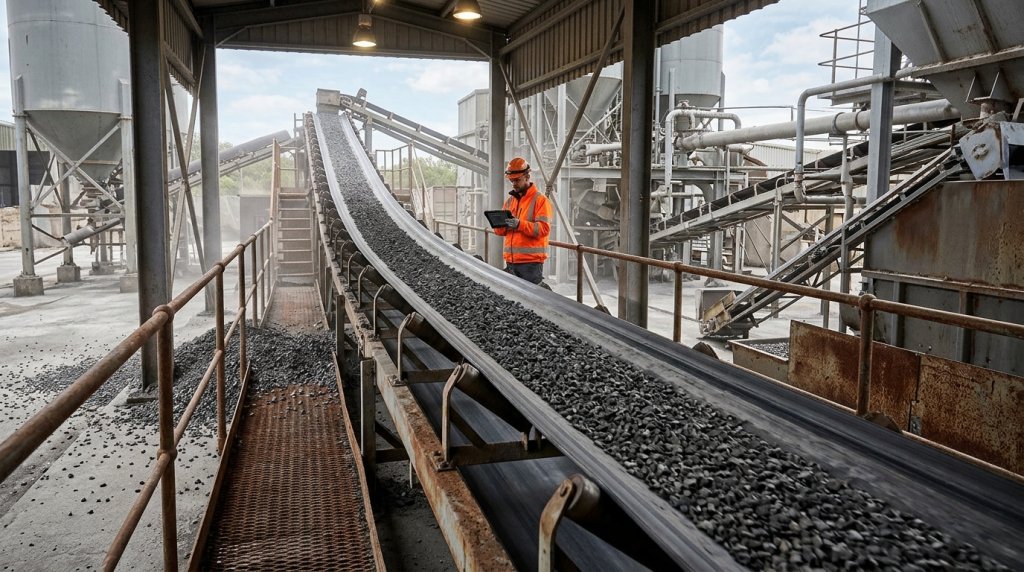
An aggregate conveyor belt can move material through a concrete batching plant while still giving the team early signs that its path needs attention. A belt that appears to drift, leaves material at a transfer point or develops an unusual edge mark deserves a clear observation and a safe handoff. This industry analysis presents six tracking checks that help operators describe a concern without turning a routine walk-through into an improvised repair.
These checks are not a belt-adjustment procedure. Conveyor arrangements, guards, controls and maintenance responsibilities differ by plant. The equipment manual and site energy-control program govern inspection and service. Staff should observe from designated safe positions and leave access behind guards, cleaning, adjustment and testing to authorized personnel. A useful aggregate conveyor belt record explains what happened and where; it does not guess which component must be changed.
Contents
Why Tracking Needs Its Own Handoff
Conveyor performance is often reported simply as “running” or “stopped.” That misses useful information between those states. A belt may continue to run while one edge approaches a guard, material escapes at a transfer, or buildup appears near a return path. The next shift needs to know whether the observation occurred at startup, during a particular aggregate feed, or after a change in loading. The more precise the description, the easier it is for a qualified technician to assess the system safely.
Safety comes before diagnosis. Public concrete-manufacturing safety guidance identifies conveyor jams, guarding and energy isolation as important concerns. The operational lesson is to avoid reaching toward moving belts, rollers or transfer points to “see what is wrong.” If an observation calls for close inspection, the plant’s authorized maintenance process should determine how the conveyor is stopped, isolated and examined. This article does not prescribe a universal legal rule or a live-adjustment method for every plant.
Six Aggregate Conveyor Belt Checks
1. Identify the exact location and operating condition
Begin with the conveyor identifier and the part of its route where the concern is visible. Is the observation at the loading end, a transfer, the discharge, the return side or a guarded drive area? A note such as “belt off center” is hard to act on without a location. Record which material was being conveyed and whether the belt was loaded, empty, starting or stopping when the symptom appeared.
The aggregate conveyor belt may pass through more than one enclosure or elevation. Use the plant’s existing equipment names, not an informal description that another person might interpret differently. A simple location map or fixed inspection point helps compare today’s observation with a prior shift. Do not approach an inaccessible area to obtain a better view; document the safe viewpoint and the limitation instead.
2. Describe the belt path without diagnosing the cause
Record what can be seen from a safe position. Does the belt appear to run closer to one side than usual? Is the condition steady or intermittent? Does it change when material is fed? Note any visible edge marking or unusual contact, but avoid declaring that a pulley, roller or tension setting is the cause. Several conditions can produce similar symptoms, and a visual observation alone is not a maintenance verdict.
Comparisons are more useful when they have a reference. If the plant has a baseline photo or inspection log, state whether the new observation differs from that baseline. If no baseline exists, describe the current condition without inventing a measurement. A qualified person can decide what additional checks are appropriate under the manufacturer’s instructions.
3. Check the transfer and loading context
Material placement matters to the story. If an aggregate conveyor belt looks different only while one feed route is active, record that fact. Note whether material appears centered at the visible loading point and whether a transfer produces unusual spillage. This does not authorize anyone to move a chute or reach into a running conveyor. It helps the maintenance and operations teams distinguish a material-flow question from a belt-path question.
Compare the observation with the current production setup. Was a different aggregate bin selected, was a transfer configuration changed, or was the feed rate altered within the approved operating range? Record the answer if known; do not infer it from the belt’s appearance. For a broader look at feed-route planning, Hengyuan’s concrete plant checklist provides related operational context.
4. Note spillage and buildup from safe access points
Material on the ground or in a visible enclosure can be an important clue, but the amount and location matter more than a vague statement that the conveyor is dirty. Record where aggregate is accumulating and whether the pattern is new or repeated. Distinguish material dropped at a transfer from material that appears along the belt route. The record can then direct a planned inspection instead of prompting a hurried cleanup near moving parts.
Do not clear a jam, scrape a roller or remove a guard as part of this operator check. The plant’s energy-control and housekeeping procedures govern that work. If spillage creates an immediate access or falling-material hazard, follow the site’s escalation process and keep people clear. An aggregate conveyor belt note should preserve the original observation so that the cause can be assessed after the area is made safe.
5. Record control signals and repeated interruptions
A tracking concern may be reported alongside a stop, alarm or production delay. Capture the exact control message, time and sequence if the information is available. Did the conveyor stop before or after material feed ceased? Did the same message recur? The goal is not to reset alarms repeatedly until production resumes. It is to give the responsible team a traceable account that can be compared with the controller history.
Different plants use different sensors and interlocks, so a displayed warning does not by itself establish a mechanical cause. Note what the operator saw and what the system recorded, keeping those two kinds of evidence separate. The supervisor or authorized technician should decide whether the aggregate conveyor belt can continue in service, needs a controlled inspection or must remain stopped under the plant’s procedure.
6. Close the maintenance-to-operations handoff
After authorized maintenance, ask what was inspected, what changed and what verification was completed before normal operation resumed. A work order stating only “belt adjusted” leaves the next shift without a useful baseline. Record the conveyor identifier, responsible technician, follow-up observation point and any condition that staff have been asked to watch. Do not replace a formal service record with a casual message.
Changes to guards, transfers, sensors or operating instructions need to be reflected in the documents people actually use. A clear return-to-service note also prevents the same symptom from being described as a new problem on the next shift. The aggregate conveyor belt should re-enter production through the plant’s approved safety and quality process, not through an undocumented restart.
A Clear Shift Record
A compact record can make the six checks repeatable. Include the conveyor identifier, date and time, observation point, material being conveyed, operating condition, visible symptom, related alarm or batch reference, immediate action and person notified. For follow-up, add the work-order reference and the authorized decision on continued operation. Short, factual sentences are better than a long narrative that mixes observation with speculation.
Review records across shifts for recurrence. A single unusual observation may have a different significance from a repeated one at the same location. The record should make that comparison possible without requiring an operator to enter a guarded area or perform a test beyond their role. Keep photographs, if the plant’s policy permits them, within the normal maintenance record; this article does not require or add any image.
Hypothetical Example
Consider a hypothetical batching plant where an operator notices that an aggregate conveyor belt appears nearer one side at a visible transfer only while a particular feed route is active. This is not a Hengyuan customer case or a report of a real incident. The operator records the conveyor identifier, feed route, time and safe observation point, then alerts the supervisor. The supervisor follows the site’s process to decide whether the conveyor should stop and whether authorized maintenance should investigate.
The technician later determines what inspection and corrective work are necessary under the equipment manual. The shift record does not claim that the chute or a roller caused the symptom. That distinction matters: a useful observation can support diagnosis without becoming an unsafe instruction to adjust equipment during production.
Final Planning Point
Aggregate conveyor belt tracking is easier to manage when the team separates safe observation, documented escalation and qualified maintenance. The six checks above give a practical handoff structure: locate the concern, describe the path, capture loading context, note spillage, preserve control signals and close the return-to-service record. Hengyuan recommends adapting that structure to the plant’s own manuals, site procedures and responsible personnel rather than treating any generic checklist as a substitute for them.
Contact Us: +86 199 3949 4756