
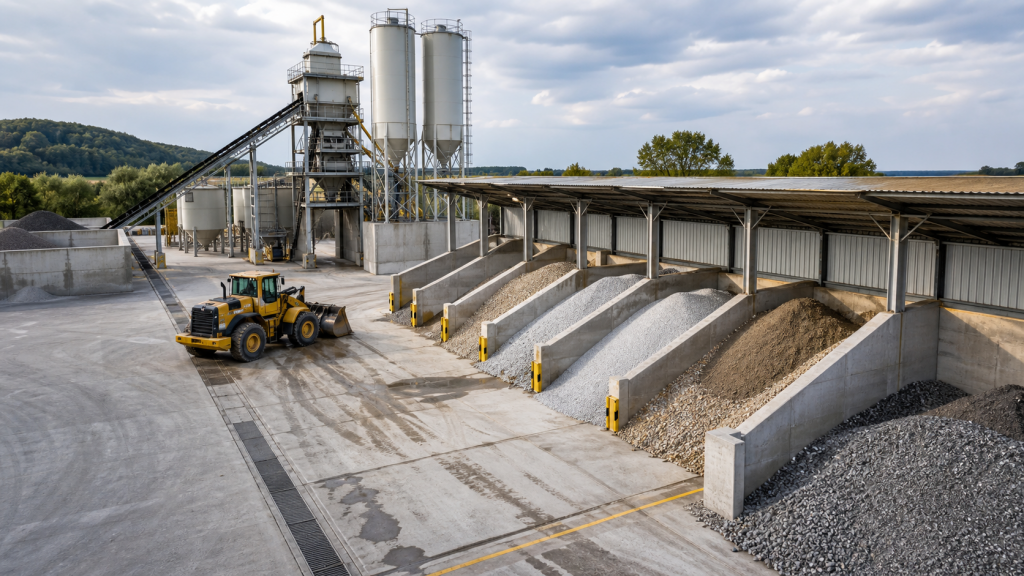
Aggregate Feed-Route Planning Moves Higher on Concrete Plant Checklists
Quick Answer: Why Plan Aggregate Feed Routes Early?
Aggregate feed-route planning should happen before the concrete plant layout is finalized because loader travel distance, aggregate bin position, belt conveyor direction, truck movement, and stockpile access all affect production efficiency. A poor route can increase fuel use, loading delays, material spillage, and safety risks.
Buyers should review aggregate storage, loader path, feeding height, belt or skip hopper choice, drainage, dust control, and maintenance access before confirming the plant layout.
Aggregate Feed-Route Planning Table
| Planning Area | What to Check |
|---|---|
| Loader path | Keep travel distance short and avoid crossing truck loading, cement delivery, or pedestrian areas. |
| Aggregate bins | Position bins for easy loading, clear visibility, and enough space for stockpile management. |
| Feeding method | Compare belt conveyor, skip hopper, and loader feeding based on capacity and site space. |
| Material spillage | Plan guards, cleanup access, drainage, and dust control around transfer points. |
| Future service | Leave room to inspect belts, rollers, hoppers, gates, and weighing components. |
August 27, 2026 – Concrete producers, contractors, and equipment buyers are giving more attention to aggregate feed-route planning when reviewing concrete batching plant layouts. The topic is practical: the path from aggregate storage to weighing, conveying, mixing, truck loading, and downstream delivery can affect production rhythm, maintenance access, moisture control, and daily site movement.
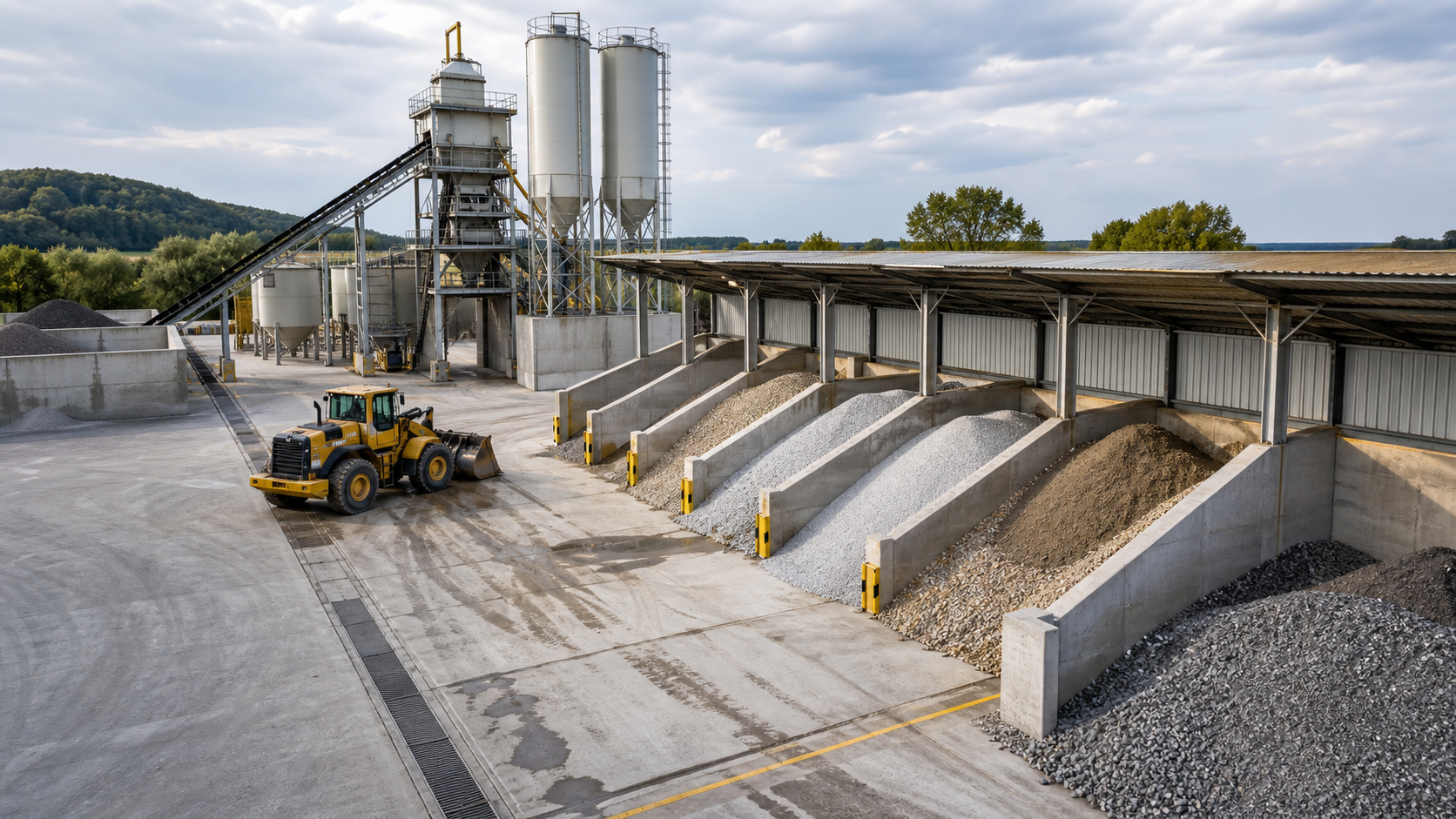
This article is an original industry analysis for ready-mix producers, plant managers, contractors, and equipment buyers. It does not rely on specific third-party company announcements, customer cases, regulations, price data, or project claims. The focus is practical planning for aggregate stockpiles, feed hoppers, belt conveyors, drainage, moisture protection, mixers, and downstream concrete delivery equipment.
Why feed routes are moving up the checklist
Aggregate storage is sometimes treated as a civil layout issue, but it directly influences the concrete batching plant workflow. If the plant yard gives loaders, bins, conveyors, drainage channels, and service routes too little space, the team may face slower feeding, more cleanup, difficult material separation, or harder access to transfer points.
Good feed-route planning does not mean adding complexity. It means reviewing how aggregates move from storage bays into covered hoppers, onto conveyors, through weighing systems, and into the mixer. When that route is clear, operators can better understand whether a slowdown is caused by material supply, loader movement, moisture condition, conveyor access, or the batching sequence itself.
Material flow starts before the hopper
The concrete mixer receives aggregates only after the storage, feeding, weighing, and conveying systems have already done their work. If stockpile bays, hopper openings, belt angles, transfer points, and loader paths are not reviewed together, the plant may develop bottlenecks that are difficult to diagnose from the mixer end of the process.
For this reason, buyers are looking more closely at bay width, retaining-wall height, roof coverage, hopper protection, belt conveyor guarding, transfer access, and the distance between material storage and the plant tower. These details help the operations team keep different aggregate sizes separated and make routine inspection more orderly.
Loader movement needs its own plan
Aggregate feed planning should include the loader route, not just the equipment footprint. A wheel loader needs enough turning space, a clean approach to each stockpile bay, and a predictable path that does not conflict with cement tanker access, mixer truck movement, maintenance vehicles, or concrete pump staging.
When loader movement is treated late in the project, the site may rely on improvised paths. That can lead to extra travel distance, repeated yard cleanup, tight turning points, or material tracking near drains and conveyors. A clearer route can reduce daily friction even when the plant equipment itself remains unchanged.
Moisture protection affects batching consistency
Aggregate moisture is a familiar operating concern, but the physical feed route can make it easier or harder to manage. Covered storage, clean bay separation, controlled runoff, protected hopper openings, and sensible conveyor covers can help the plant team limit avoidable changes in aggregate condition before weighing and mixing.
Moisture control is not only a sensor or software topic. It also depends on where material sits, how rainwater leaves the yard, whether bays are covered, how the loader approaches the material, and whether wet cleanup water reaches feed areas. These layout details support more predictable operation for both stationary concrete batching plants and mobile plant projects.
Conveyor access should be planned before commissioning
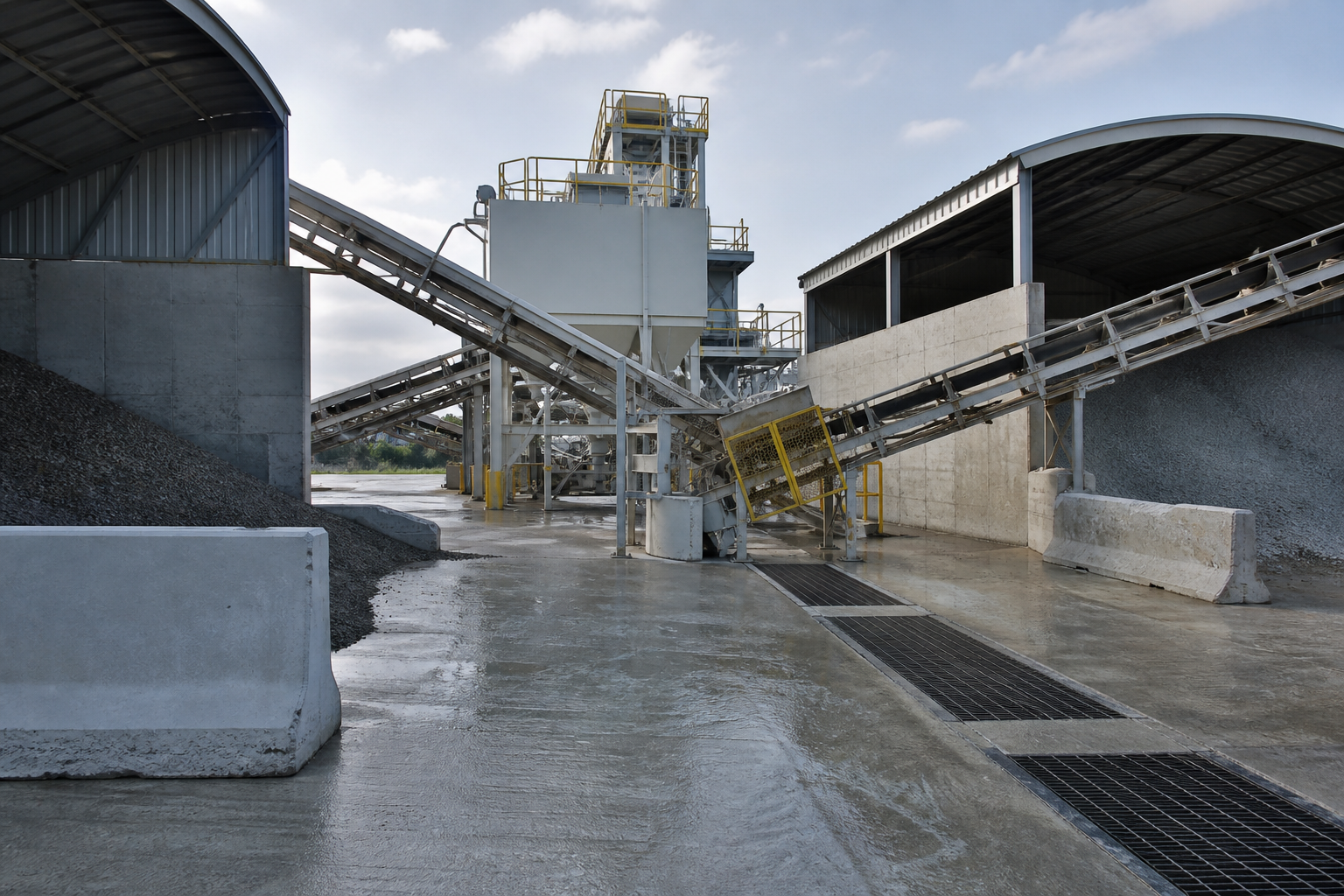
Belt conveyors and transfer points are central to aggregate movement, but they also need inspection and service access. Guarding, emergency stop placement, walkway clearance, cleanup points, belt tracking access, and drainage below the conveyor should be considered before commissioning. Poor access may not stop the first trial batch, but it can make daily maintenance slower.
Clear conveyor access also helps operators distinguish between ordinary cleanup needs and early signs of material build-up, belt mistracking, wet aggregate carryback, or transfer-point spillage. The goal is not to overbuild the site; it is to make the critical material route visible and maintainable.
Feed-route planning affects downstream equipment
Aggregate movement does not stop at the batch plant tower. It affects batching rhythm, truck loading plans, and coordination with downstream placing equipment such as a concrete pump. If aggregate feeding becomes inconsistent, the plant may slow mixer truck dispatch or adjust production priorities during a demanding pour.
A clearer feed route helps the team plan material replenishment, loader work, plant output, and yard movement before the schedule becomes tight. It also gives managers better information when reviewing daily interruptions, cleanup needs, moisture observations, and maintenance tasks around aggregate handling equipment.
Practical checklist for aggregate feed-route planning
- Confirm aggregate types, stockpile volume, bay separation, replenishment rhythm, and expected production schedule.
- Review loader turning radius, travel distance, approach direction, visibility, and conflicts with trucks or maintenance access.
- Check feed hopper protection, covered storage needs, rainwater runoff, bay drainage, and cleanup water direction.
- Review conveyor angle, transfer points, guarding, inspection access, belt tracking points, and emergency stop positions.
- Plan safe access around aggregate bins, retaining walls, concrete barriers, control cabinets, and plant foundations.
- Keep different aggregate sizes separated and avoid yard arrangements that encourage cross-contamination.
- Include material-flow observations, drainage checks, conveyor running checks, and loader-route review in commissioning records.
FAQ
Why is aggregate feed-route planning important for a concrete batching plant?
It helps the plant team coordinate aggregate storage, loader movement, hopper feeding, conveyor operation, weighing, mixing, truck loading, and maintenance access.
Does a better feed route replace aggregate moisture testing?
No. Layout planning supports moisture control, but plants still need material checks, operating procedures, drainage management, and appropriate batching controls.
What equipment should be reviewed with aggregate feed planning?
Useful items include stockpile bays, retaining walls, covered bins, feed hoppers, belt conveyors, transfer points, drainage channels, aggregate weighing systems, and mixer feeding routes.
What information should buyers prepare before discussing aggregate handling?
Useful details include plant capacity, aggregate types, expected daily output, site area, loader model, local weather exposure, drainage limits, maintenance access needs, and production schedule.
Conclusion
Aggregate feed-route planning is becoming a more practical checklist item because it affects material flow, batching rhythm, moisture control, maintenance access, yard movement, and downstream concrete delivery. A useful setup connects stockpile bays, covered hoppers, loader routes, conveyors, drainage, weighing systems, mixer demand, and commissioning checks. Buyers can contact hengyuan Concrete Machines with project details to discuss concrete batching plant configuration, aggregate handling, and equipment layout support.
Our Whatsapp: +86 199 3949 4756