A dry concrete batching plant can be a practical option for ready-mixed concrete supply, but its suitability depends on the local delivery model, mixer-truck fleet, quality-control procedures and project requirements. This guide explains how dry batching works, where the cost differences come from and what buyers should verify before choosing a plant.
What is a dry concrete batching plant?
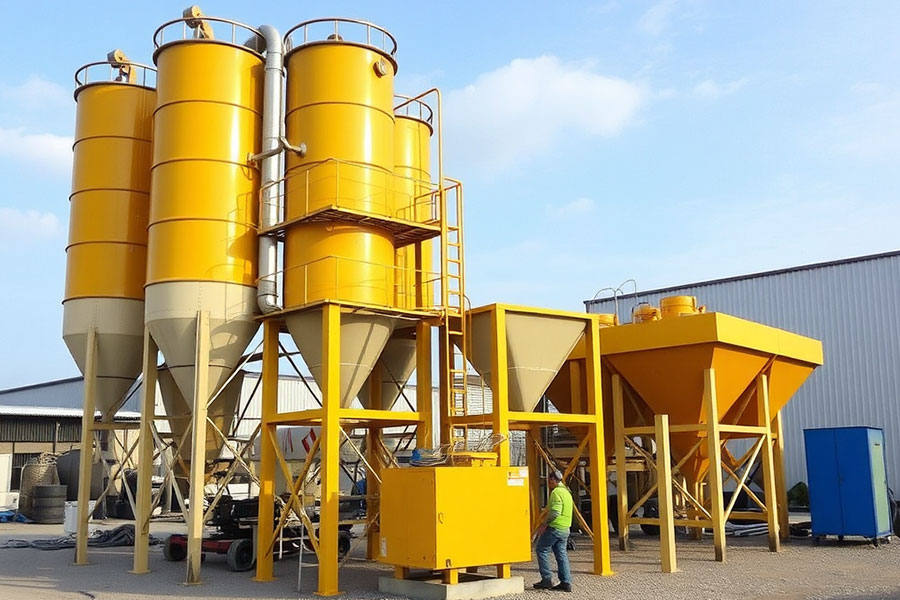
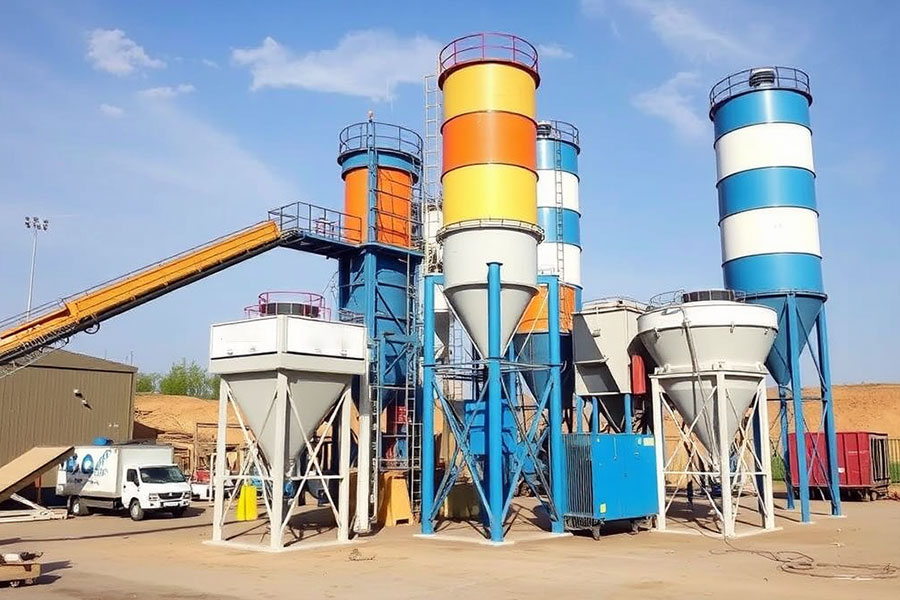
A dry concrete batching plant weighs aggregates, cementitious materials, water and admixtures according to a mix design, then loads them into a mixer truck. The truck drum completes the final mixing during transport. Depending on the selected system and local practice, water may be measured at the plant or added under a controlled procedure at the batching point or site. In this article, “dry batch” means batching concrete ingredients for truck mixing; it does not mean a dry-mortar factory.
NRMCA describes transit-mixed concrete as truck-mixed or dry-batched and notes that most or all water is usually batched at the plant. Mixing can be completed in the yard, during transport or at the jobsite. Use this distinction when reviewing a dry-batch plant; it is not the same product as packaged dry premix intended to receive water later. NRMCA About Concrete: Transit and Central Mixing.
Quick Answer: What Are the Advantages of a Dry Concrete Batching Plant?
A dry-batch plant omits a stationary central mixer and relies on suitable truck mixers. This can simplify the plant mixing equipment, but total investment, loading rate, maintenance, water use and energy consumption depend on the complete configuration, fleet and operating plan.
Dry batching is suitable when local production habits, mixer truck availability, delivery distance, and concrete quality requirements match the dry-mix process. Buyers should compare it with wet-mix plants before deciding.
Dry Batching Plant Advantage Table
| Advantage | Practical Meaning |
|---|---|
| Simpler equipment layout | No central mixer is required, which can reduce mechanical complexity. |
| Lower mixer maintenance | Maintenance focus shifts toward weighing, loading, silos, conveyors, and mixer trucks. |
| Fast truck loading | Materials can be weighed and loaded quickly when logistics are organized well. |
| Flexible ready-mix operation | Works for markets where mixer truck mixing is accepted and delivery routes are controlled. |
| Export planning | Buyers still need to confirm silos, dust control, weighing accuracy, and local standards. |
Dry Concrete Batching Plant FAQ
Is a dry concrete batching plant suitable for every project?
No. It works best when mixer trucks, delivery time, and local concrete standards support truck mixing. Projects requiring stricter mixing control may prefer a wet-mix plant.
What affects dry batching plant performance?
Weighing accuracy, aggregate moisture control, truck mixing condition, loading sequence, cement silo system, dust control, and operator training all affect performance.
Should I choose dry-mix or wet-mix?
Choose based on quality requirements, delivery distance, mixer truck availability, project scale, local standards, and whether centrally mixed concrete is required by customers.
Dry batching can reduce some plant-side equipment and loading steps because it does not use a central concrete mixer. The trade-off is that final mixing, water control and concrete delivery depend on the mixer trucks and dispatch system. The correct comparison is therefore between complete supply systems, not between a dry-batch plant and a wet-batch plant in isolation.
Dry-Batch Concrete Plants: Mixing, Costs and Delivery
Compare whole-operation energy use and costs
A dry-batch plant avoids the drives and maintenance of a central concrete mixer, and the automatic batching system can shorten the material-loading cycle. Total energy and cost per cubic metre must still include truck-drum mixing, transport, loader operation, dust collection, compressed air and maintenance. Ask for the connected-load schedule and compare the complete operating model rather than assuming that “dry” automatically means lower energy use.
Review site-specific dust, water and environmental requirements
Dust control should be planned at silo vents, cement transfer points, aggregate bins and truck-loading areas. The required package may include filters, enclosed transfer points, spraying or other controls, but its design must match the materials, layout and local environmental requirements. Confirm the supplied dust-control scope and maintenance plan in the quotation.
Strong flexibility to adapt to diverse construction needs
Confirm the actual modular arrangement, transport limits, ground support, utilities, material storage and service access for the proposed site. Configuration options should be established in the equipment scope and drawings rather than assumed from the dry-batch production method.
Plan delivery with the actual water content and truck cycle
Dry batching does not remove the need to transport concrete; it changes where final mixing takes place. Water quantity, truck capacity, route time, traffic and discharge conditions still affect delivery. A longer route increases the time available for drum mixing and can also increase slump loss, temperature effects and schedule risk. Water addition must follow the approved mix design and local standard, with records and checks; adding water simply to improve workability can reduce strength and durability.
High degree of automation and easy operation
Automation can improve batching repeatability and record-keeping, but it does not by itself guarantee compliant concrete. Weighing calibration, aggregate moisture correction, admixture preparation, truck condition, mixing time, sampling and operator response to alarms all remain essential. Specify the required recipe management, reports, permissions, alarms and remote-support functions in the quotation.
NRMCA's Plant Inspection Process separately reviews measuring accuracy, batching tolerances, aggregate-moisture accounting, mixing and delivery-fleet condition. Use these as quality-control questions when comparing plant controls and truck mixers. A touch-screen interface or dry-batch designation is not proof of concrete quality or plant certification. NRMCA Plant Inspection Process.
Reliable equipment quality and after-sales service
Ask for the agreed inspection and commissioning scope, equipment documentation, operator training, spare parts package and service responsibilities. Confirm what is included in the quotation and how acceptance checks and support will be delivered for the actual installation.
Project requirements for a dry concrete batching station
Demand for dry-batch systems varies by market and supply model. They can be competitive where customers accept truck mixing, delivery distances are manageable and trucks are available. Buyers should verify local standards, competing supply methods and whole-life costs instead of treating dry batching as a universal replacement for wet batching.
Conclusion
A dry concrete batching plant may be the better choice when the project can control truck mixing, delivery time and material quality, and when the local market accepts this supply method. It is not automatically cheaper or more accurate than a wet-batch plant. Compare the required output, mixer-truck fleet, delivery radius, quality-control plan, environmental package and whole-life cost before making a decision.
How a dry-batch concrete plant works from bin to truck
- Store and check materials. Aggregate sizes are kept in separate bins, while cement and supplementary cementitious materials are stored in silos. Aggregate grading and moisture should be checked because they affect the effective water content and batch adjustment.
- Weigh each ingredient. The control system uses the approved mix design to weigh aggregates, cementitious materials, water and admixtures. Calibration and the condition of gates, load cells and conveyors determine whether the recorded weights are reliable.
- Load the mixer truck in a controlled sequence. The batch is discharged into a clean truck drum. The loading sequence should avoid cement loss, material build-up and uneven distribution, and should be agreed with the truck operator.
- Complete mixing in the truck. The drum mixes the load during transport. The approved procedure should define water addition, minimum mixing revolutions or time, discharge limits and what to do if delivery is delayed.
The phrase “dry batch” does not mean that concrete can be stored indefinitely as a dry product. Once the batch has been loaded and water has been introduced, the concrete is a time-sensitive mixture and must be delivered and discharged within the limits set by the mix design, project specification and local standard.
What determines dry-batch efficiency and cost?
| Cost or performance factor | What buyers should verify |
|---|---|
| Plant equipment | Number of aggregate bins, silo capacity, weighing systems, conveyor arrangement, dust control and automation scope. |
| Mixer-truck fleet | Truck volume, drum condition, water-metering arrangement, availability and replacement capacity during maintenance. |
| Delivery system | Route distance, traffic, site access, unloading rate and the maximum time allowed from batching to discharge. |
| Quality control | Moisture testing, calibration, admixture control, slump testing, sampling, records and response to non-conformance. |
| Site operations | Loader response, stockpile capacity, cement replenishment, truck circulation, cleaning and planned maintenance. |
A dry-batch system may require lower plant equipment investment than a comparable wet-batch plant because it does not include a central mixer. However, the total solution can require a larger or better-managed mixer-truck fleet and stronger delivery controls. Use a whole-operation cost model: equipment, foundations, trucks, loading, transport, testing, maintenance, energy, labour and downtime.
Quality-control plan for truck-mixed concrete
- Approve the mix design and define how aggregate moisture will be measured and entered into the batching system.
- Calibrate weighing systems on a scheduled basis and after repairs or significant drift.
- Record the actual batch weights, water addition, truck identification, departure time and discharge time.
- Inspect truck drums and blades, and control wash water so residual water does not change the effective water content.
- Check slump, temperature and sampling requirements at the agreed frequency; investigate trends rather than waiting for a failed test.
- Define rejection and correction procedures. Do not permit uncontrolled water addition at the site to compensate for delay or poor planning.
Dry-batch plant buyer checklist
- Confirm that the local market, project specification and customer requirements accept truck-mixed concrete.
- Provide the required hourly and daily output, concrete grades, aggregate sizes, moisture conditions and delivery radius.
- Agree the batching sequence, water-control method, truck interface and required production records.
- Check foundation drawings, silo loads, aggregate storage, loader access, power, compressed air, water and drainage.
- Review dust control, spill containment, washout arrangements and local environmental requirements.
- Ask for the equipment list, exclusions, spare-parts recommendation, commissioning scope and operator-training plan.
Compare the dry mix concrete batching plant range with the wet mix concrete batching plant, or read the detailed dry-mix versus wet-mix comparison. For a project-specific review, send the required output, site data and delivery model.