
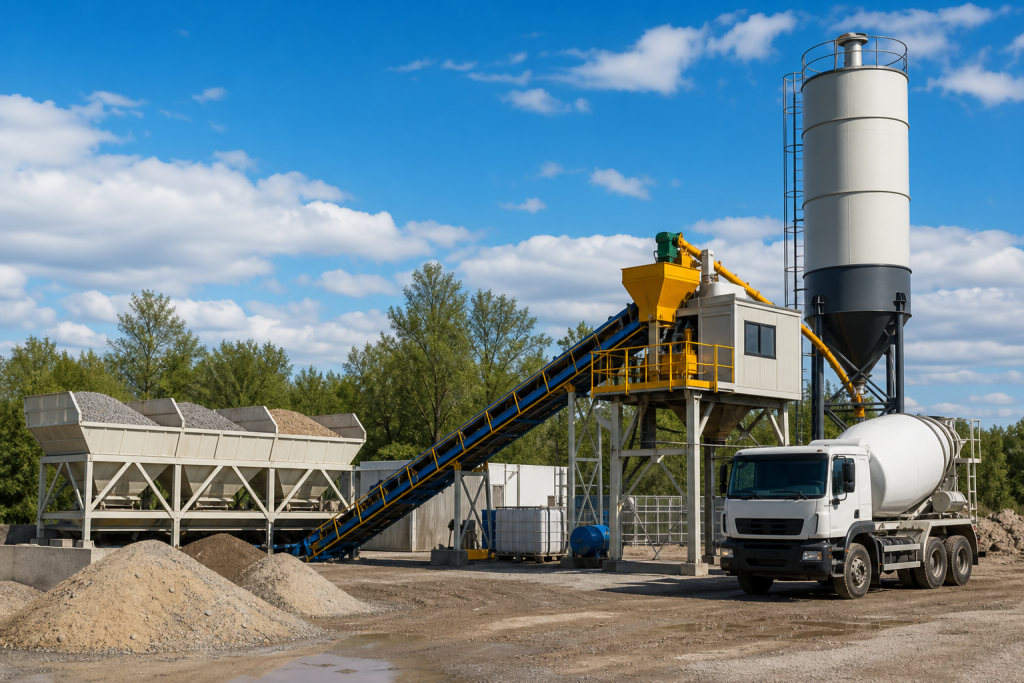
Mobile concrete production is becoming a practical choice for contractors, ready-mix suppliers, and project owners who need flexible concrete supply without building a permanent batching site. A mobile concrete batching plant combines aggregate batching, weighing, conveying, mixing, and control systems in a compact layout that can be moved between jobsites when project conditions require it.
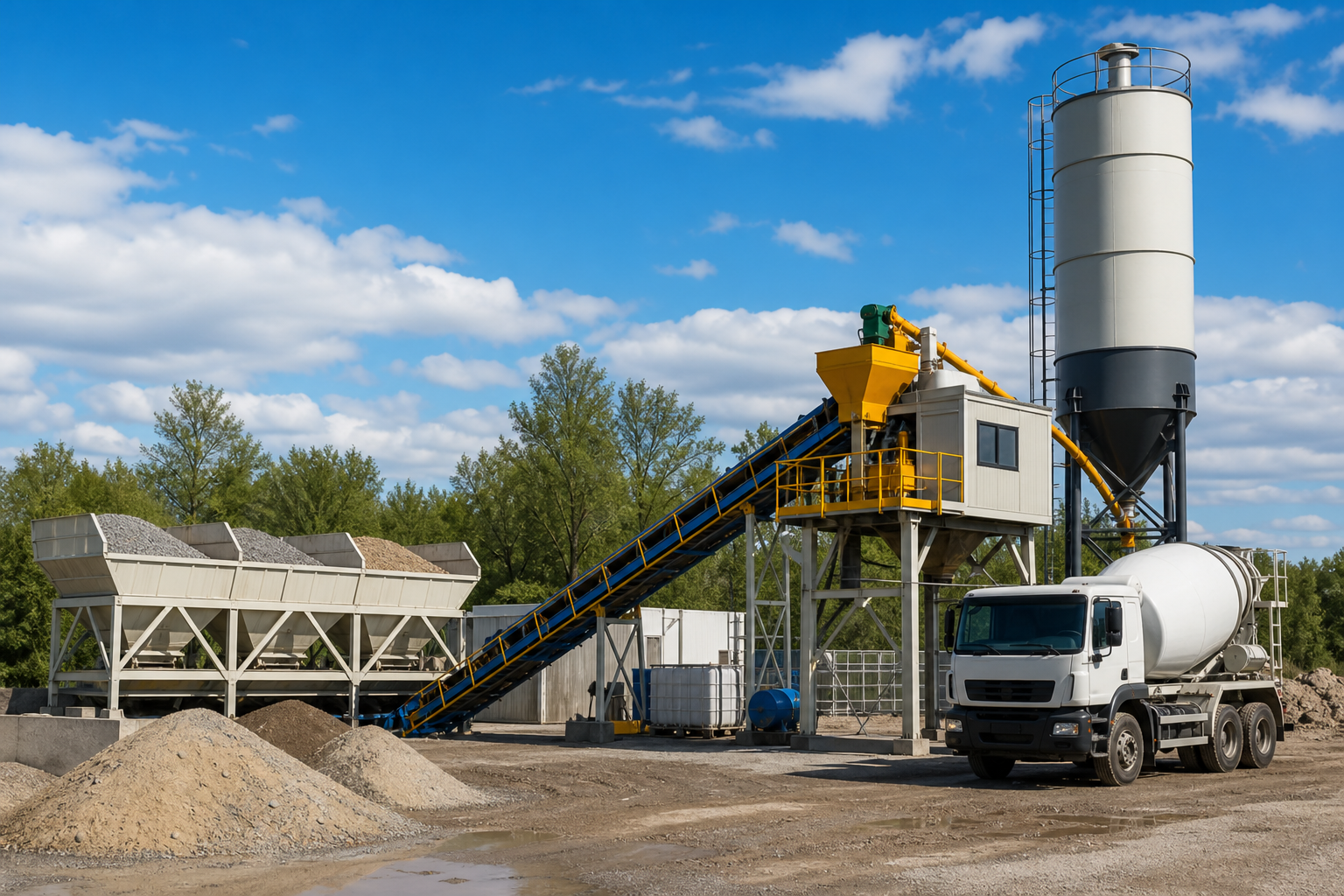
For small and medium construction projects, the buying decision should not be based on capacity alone. The right plant should match the required concrete volume, available site space, raw material storage method, transport conditions, and the level of technical support needed during installation and operation.
What is a mobile concrete batching plant?
A mobile concrete batching plant is a concrete production system designed with a more compact and movable structure than a conventional stationary plant. It usually includes aggregate bins, weighing units, a conveying system, a mixer or mixing unit, cement supply equipment, water and additive systems, and an electrical control system. The goal is to support reliable concrete production while reducing the time and civil work required for site setup.
For buyers comparing equipment options, the mobile plant category is especially relevant when a project has limited installation space, changing job locations, or a construction schedule that requires faster relocation than a fixed batching station can provide.
Key factors to review before choosing a plant
1. Required concrete output
Start with the actual daily and hourly concrete demand of the project. A plant that is too small may slow down construction progress, while an oversized system can increase transport, setup, and operating cost. Buyers should compare the expected production rhythm with the plant model, mixer type, aggregate storage arrangement, and feeding method.
2. Site layout and mobility
Small and medium projects often have limited working areas. Before ordering equipment, confirm the available installation area, truck access, aggregate loading route, cement supply position, and discharge direction. A compact layout can help the plant fit the site, but the surrounding logistics must also support stable production.
3. Mixer and weighing accuracy
The mixer and weighing system directly affect concrete consistency. Buyers should check whether the equipment configuration is suitable for the concrete grade, aggregate size, and production requirements of the project. Stable aggregate, cement, water, and additive weighing helps reduce material waste and supports consistent batch quality.
4. Cement silo, screw conveyor, and auxiliary equipment
A batching plant is not only the main machine. Cement storage, screw conveying, water supply, additive dosing, air system, and control cabinet layout should be reviewed together. For some jobsites, the choice between a vertical cement silo, horizontal cement silo, or bag cement feeding method can influence installation convenience and operating efficiency.
5. Installation and after-sales support
Equipment selection should include the service process after purchase. Clear installation guidance, commissioning support, operator training, spare parts supply, and troubleshooting communication can help reduce downtime during the early production stage. Buyers can review Hengyuan service information and communicate project requirements before confirming the final configuration.
When is a mobile batching plant suitable?
- Road, bridge, building, and municipal projects with changing work locations.
- Small to medium concrete production tasks that need a compact setup.
- Projects where transport distance from a commercial ready-mix plant is too long.
- Sites that need faster installation than a stationary batching plant.
- Contractors who want one plant to serve multiple project locations over time.
How mobile plants compare with stationary plants
A stationary concrete batching plant is usually selected for long-term, high-volume production at a fixed site. It can support larger layouts and more permanent material storage. A mobile concrete batching plant is more suitable when the buyer values relocation, compact installation, and flexible project deployment. The best choice depends on project duration, concrete demand, site conditions, and future equipment use.
Buyers can compare more equipment categories through the concrete equipment product center and the mobile concrete batching plant category page.
Buyer checklist for small and medium projects
- Confirm required concrete output and production schedule.
- Check site space, foundation needs, and truck movement routes.
- Review mixer type, aggregate bins, weighing system, and control system.
- Confirm cement storage and conveying method.
- Ask about installation, commissioning, training, and spare parts support.
- Review related project references on the successful cases page.
FAQ
Is a mobile concrete batching plant only for temporary projects?
No. It is often used for temporary or movable projects, but it can also support longer projects when the site requires a compact layout and flexible installation.
What should buyers confirm before requesting a quotation?
Buyers should prepare the expected concrete output, project type, site layout, aggregate and cement supply method, power conditions, and any special configuration requirements.
Can one mobile batching plant serve different jobsites?
Yes, that is one reason buyers consider mobile equipment. The actual relocation process depends on the model configuration, transport route, installation conditions, and local project requirements.
Does every project need the same configuration?
No. Mixer type, aggregate bin quantity, cement storage, conveying method, and control options should be selected according to the project and production requirements.
Conclusion
Choosing a mobile concrete batching plant for small and medium projects requires more than comparing model names. A practical decision should consider production demand, mobility, site layout, weighing accuracy, auxiliary equipment, and after-sales support. For project-specific equipment selection, buyers can contact Henan Hengyuan with site and production details for configuration discussion.
More technical articles are available in the news center.