
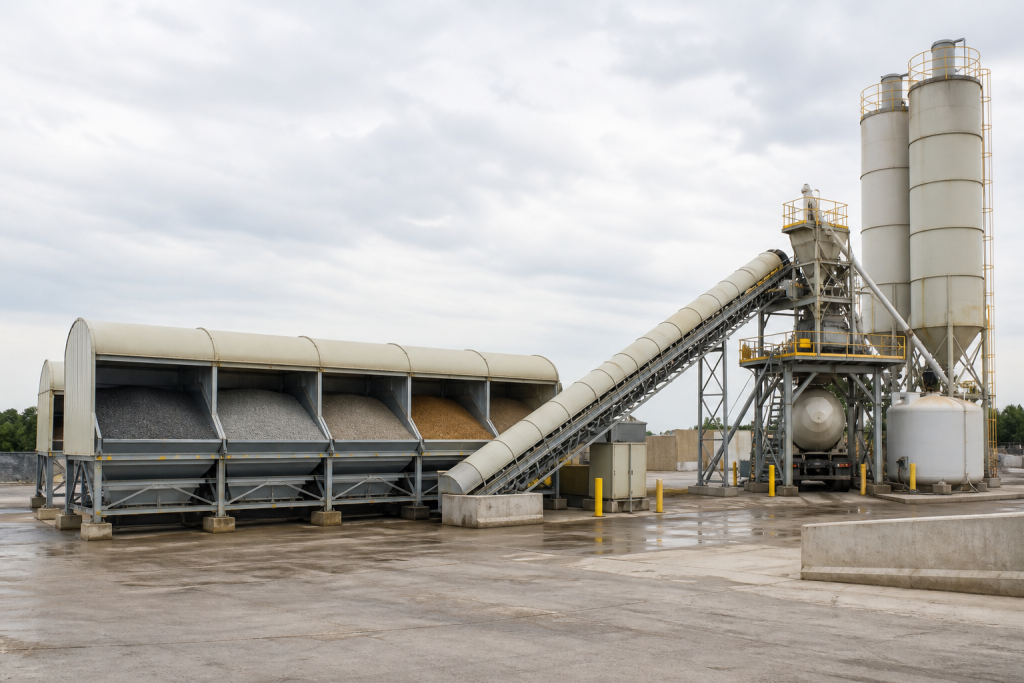
August 14, 2026 – Concrete producers, contractors, and equipment buyers are giving more attention to low-dust concrete batching plant design as they plan new yards, upgrade older equipment areas, and prepare sites for steadier daily production. Dust control is often discussed as an environmental or housekeeping topic, but it also affects operator visibility, conveyor reliability, sensor cleanliness, mixer loading rhythm, and maintenance access.
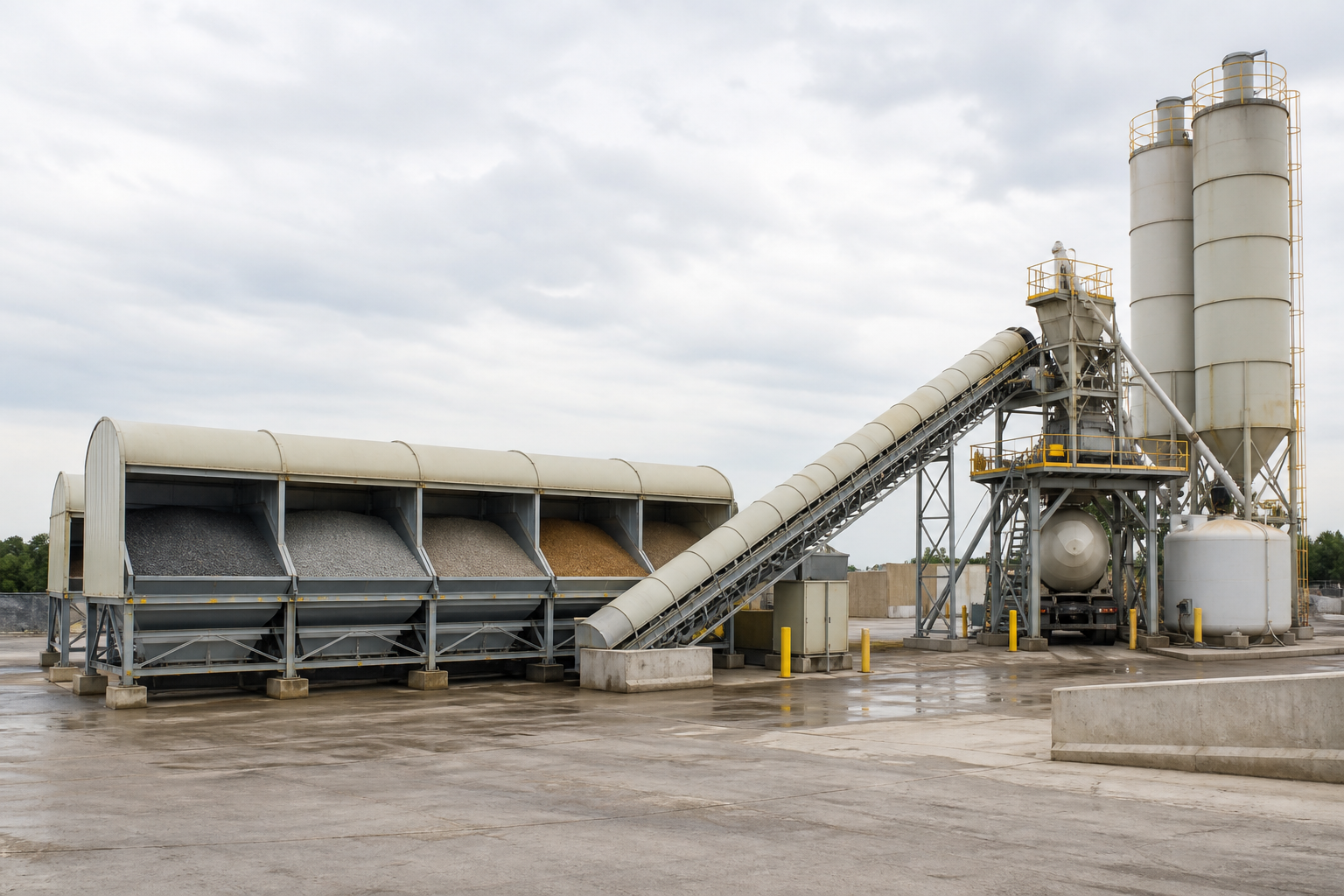
This article is an original industry analysis for ready-mix producers, contractors, plant owners, and project teams. It does not rely on specific third-party company announcements, customer cases, regulations, price data, or project claims. The focus is practical planning for teams that operate concrete batching plants, aggregate bins, conveyors, cement silos, mixer towers, water systems, dust collectors, and control rooms.
Why low-dust planning is moving earlier
A stationary concrete batching plant or mobile concrete batching plant is often selected by rated output, mixer model, aggregate bin volume, cement silo quantity, weighing system, control system, and installation footprint. Those specifications remain important, but cleaner operation also depends on how powder and aggregate move through the plant, where transfer points are enclosed, how cleaning crews reach service areas, and whether dust-control equipment is easy to inspect.
When dust control is planned late, the plant may still run, but small problems can appear every shift. A conveyor transfer point may be difficult to clean. A dust collector may be installed where filters are awkward to service. Aggregate bins may be open to wind. Cement filling lines may be routed without enough space for inspection. Operators may spend extra time on cleanup instead of keeping production moving.
Enclosures should match the material flow
Low-dust operation starts with understanding material flow. Cement, fly ash, and other powders need sealed transfer paths, suitable venting, and reliable filter access. Sand and stone need controlled feeding, stable bin loading, and practical protection from wind where site conditions require it. Conveyor covers, transfer housings, chute liners, and clean drop points can reduce scattered material when they are selected as part of the complete plant layout.
Equipment buyers should avoid treating enclosures as simple add-ons. If covers block inspection points or make cleanup slower, operators may remove panels or leave them open. A better plan places covers, doors, platforms, and access space around the way the team will actually operate. Clean operation depends on hardware and daily workflow working together.
Cement silo dust collection needs service space
Cement silos, screw conveyors, pressure relief systems, and dust collectors should be reviewed together. A silo dust collector that is hard to reach may be checked less often. A filter system that is not matched with filling practice can become a recurring maintenance point. Operators need safe access to inspect filter elements, review venting condition, check filling lines, and keep powder handling equipment in working order.
For a compact mobile plant, the dust-control plan may focus on quick setup, covered feeding points, easy silo connection checks, and simple cleaning access. For a larger ready-mix yard, the plan may include multiple silos, longer conveyors, central dust collection, covered aggregate storage, traffic separation, and more detailed service platforms. In both cases, maintainability should be reviewed before final equipment placement.
Transfer points influence daily housekeeping
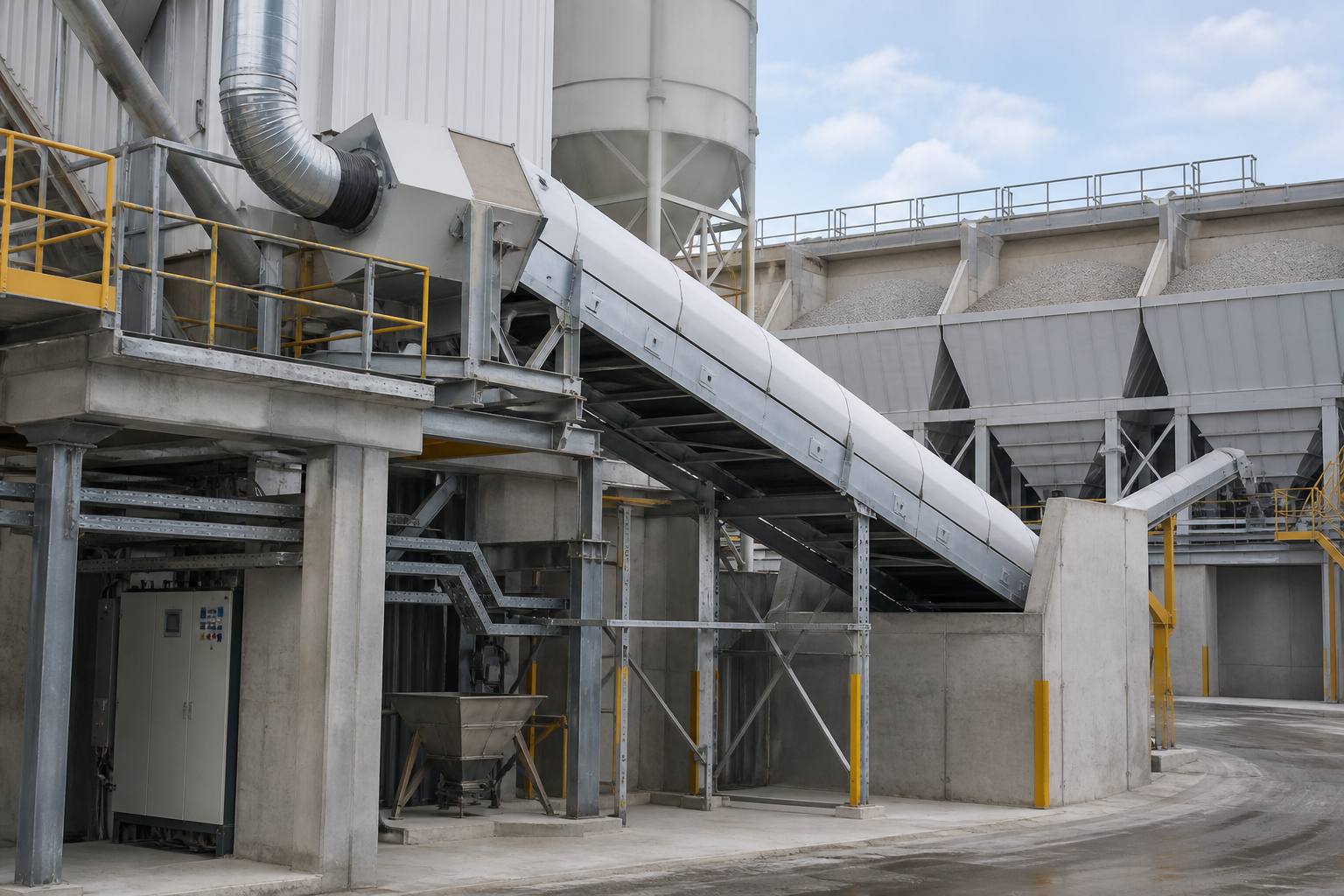
Conveyor transfer points, aggregate hoppers, weighing bins, and mixer feed areas are common places for material buildup. The issue is not only dust in the air; it is also spilled aggregate, powder residue, belt carryback, and tight spaces that are difficult to clean. A transfer point that is easy to inspect and clean can support more stable plant operation than a layout that hides the same components behind stockpiles or structural obstructions.
The concrete mixer also benefits from predictable feeding. If material transfer is messy or irregular, mixer loading may become less smooth and cleaning demand may increase. Plant teams should review hopper loading, belt speed, chute condition, dust extraction, inspection doors, and cleaning routes before production demand rises.
Aggregate storage still matters
Aggregate storage remains central to low-dust planning. Covered aggregate bins can reduce wind exposure and keep material areas more organized. Clear bay separation can reduce cross-contamination. Paved loader routes and planned drainage can keep mud away from feed areas. The goal is not to make every site look identical; the goal is to match storage, loading, drainage, and cleaning access with the plant’s daily production pattern.
Buyers can use the product center to review plant and equipment families, then discuss how aggregate storage, conveyor enclosure, cement silo configuration, service space, and site preparation connect with equipment selection. hengyuan Concrete Machines can also review service requirements with project teams before a plant layout is finalized.
Concrete pumps and site traffic should be included
Dust-control planning should not stop at the batching tower. Mixer truck loading, washout areas, concrete pump receiving points, and internal traffic routes all shape the operating environment. If trucks cross dusty aggregate routes before loading, cleaning demand may increase. If a concrete pump is supplied directly from a project plant, receiving access, queue space, and communication with the batching operator should be included in the site plan.
For project teams, the practical question is simple: can equipment, trucks, loaders, service crews, and cleaning routines work without blocking each other? If the answer is uncertain, the layout should be reviewed before installation.
Practical checklist for low-dust plant planning
- Identify cement, powder, aggregate, and mixer feed transfer points before finalizing the layout.
- Use conveyor covers, transfer housings, and chute designs that still allow inspection and cleaning.
- Keep silo dust collectors, pressure relief equipment, filling lines, and screw conveyors accessible for service.
- Review whether covered aggregate bins are useful for local wind, rainfall, and housekeeping needs.
- Plan loader routes, truck loading lanes, washout areas, and concrete pump access together.
- Include paved cleaning routes, drainage direction, spill collection areas, and safe platform access.
- Train operators to report unusual dust, material buildup, blocked filters, belt carryback, and hard-to-clean areas.
FAQ
What does low-dust concrete batching plant design mean?
It means planning powder handling, aggregate feeding, conveyor enclosures, transfer points, dust collection, cleaning access, and site traffic so the plant can operate with less scattered material and easier maintenance.
Does every batching plant need fully enclosed conveyors?
Not always. The right level of enclosure depends on site conditions, material exposure, production volume, maintenance access, and housekeeping expectations. Covers should improve operation without blocking routine inspection.
Why is service access important for dust control?
Dust-control equipment only works well when teams can inspect, clean, and maintain it. Poor access can turn a useful enclosure or filter system into a neglected maintenance problem.
What should buyers prepare before discussing a low-dust plant layout?
Useful information includes plant capacity target, powder materials, aggregate types, available land, wind exposure, loader model, truck routes, drainage condition, cleaning routines, and service access requirements.
Conclusion
Low-dust concrete batching plant design is becoming a practical planning priority because clean operation depends on more than one dust collector or one covered belt. A useful plan connects aggregate storage, powder transfer, conveyor enclosure, mixer feeding, silo service access, truck movement, cleaning routines, and long-term maintenance. Buyers can contact hengyuan Concrete Machines with project details to discuss concrete plant configuration, material handling, and service needs.