
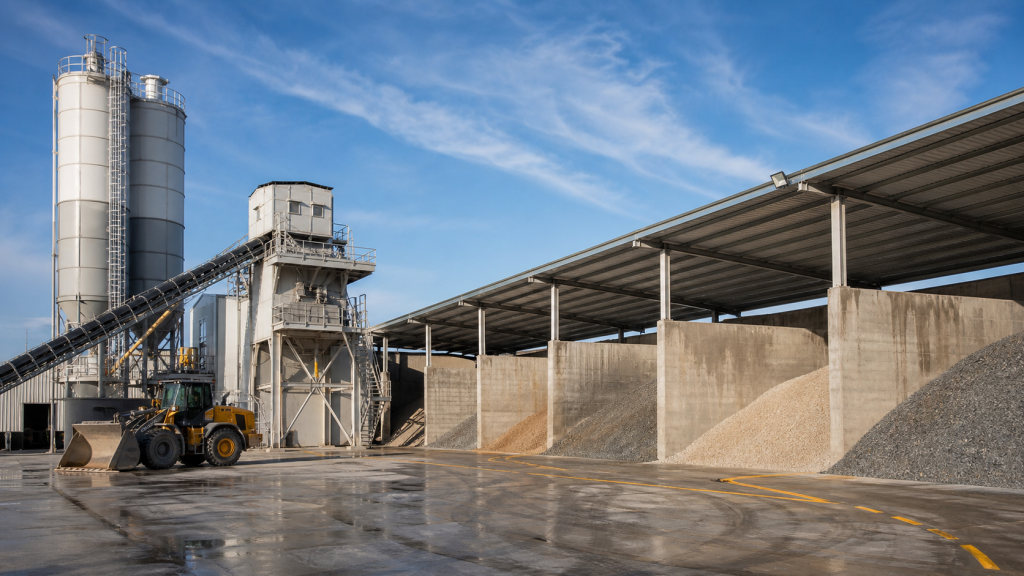
August 13, 2026 – Concrete producers, contractors, and equipment buyers are paying closer attention to aggregate feed route planning for concrete batching plants as they work to keep production stable on tighter sites. Aggregate storage, loader movement, conveyor transfer points, drainage, and moisture control are often treated as layout details, but they can directly affect batching accuracy, mixer loading rhythm, truck dispatch timing, and daily plant maintenance.
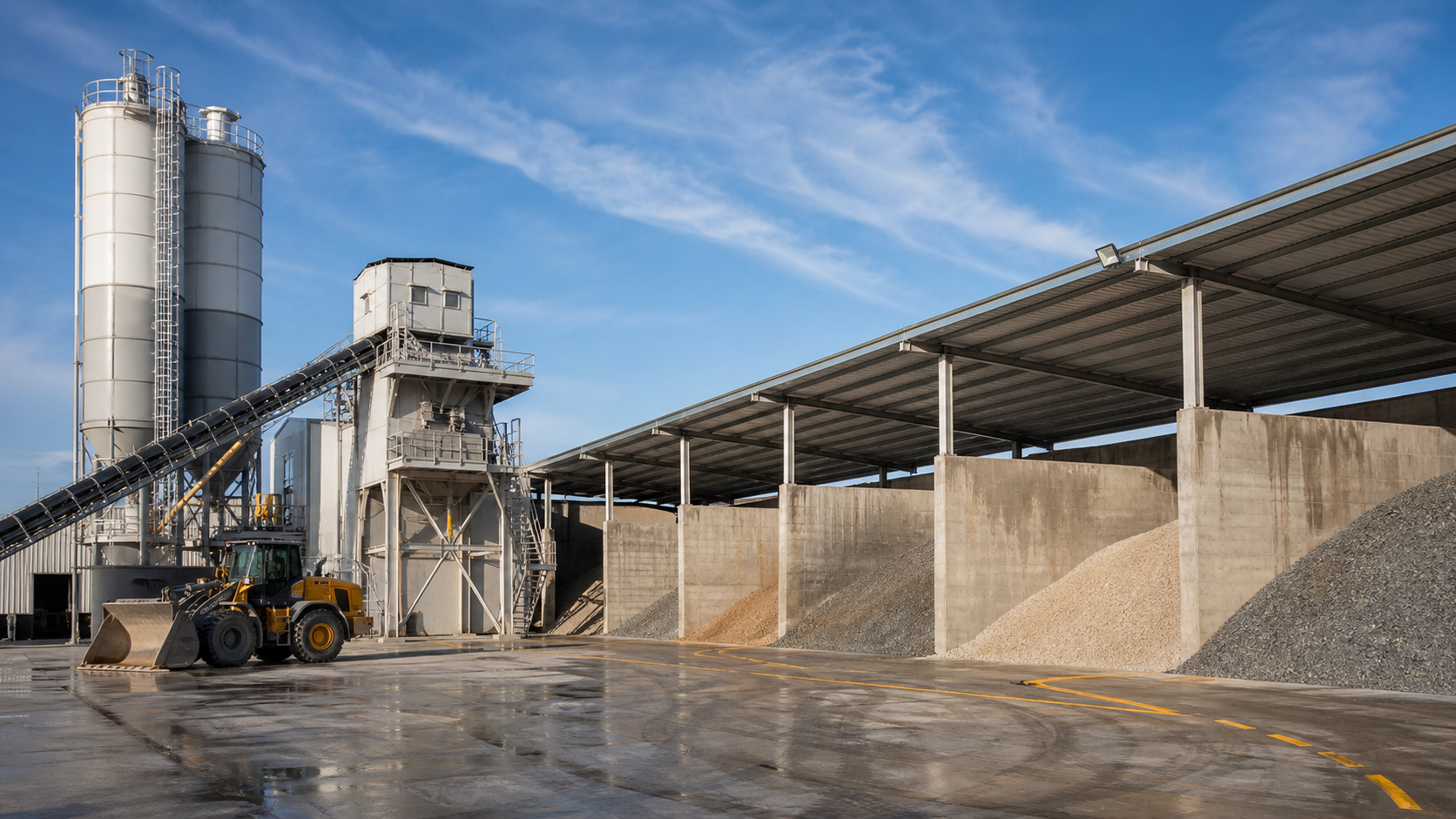
This article is an original industry analysis for ready-mix producers, contractors, plant owners, and project teams. It does not rely on specific third-party company announcements, customer cases, regulations, price data, or project claims. The focus is practical planning for teams that operate concrete batching plants, aggregate bins, conveyors, loaders, mixer towers, water systems, and control rooms.
Why aggregate routes deserve early attention
A stationary concrete batching plant or mobile concrete batching plant is often selected by rated output, mixer model, aggregate bin capacity, cement silo arrangement, weighing system, control system, and installation footprint. Those specifications remain important, but stable production also depends on how sand and stone reach the bins, how loaders move through the yard, how material is protected from rain, and how operators keep feed points clean.
When aggregate routes are planned late, the plant may still run, but small problems can appear every shift. Loader turning space may be too narrow. Mixed aggregate piles may create inconsistent grading. Drainage may push water toward feed areas. Conveyor access may be blocked by stockpiles. Operators may spend extra time cleaning spilled material rather than keeping production moving.
Storage design affects moisture and consistency
Aggregate storage is more than a question of capacity. Sand and stone should be separated clearly, loaded safely, and protected where site conditions require it. Covered aggregate bays can help reduce direct rainfall impact and make moisture changes easier to manage. Drainage channels can reduce standing water around storage and loading routes. Clean bay walls and practical pile heights help operators avoid cross-contamination between material sizes.
Moisture variation is especially important for producers that need repeatable concrete quality. A plant control system may correct water dosing only if material conditions are measured, recorded, and handled consistently. Good site planning gives moisture sensors, operators, and loaders a better chance to work with predictable material.
Loader movement should match the production rhythm
Loader movement can quietly limit the performance of a batching plant. If the loader must reverse across truck routes, travel around stockpile obstacles, or wait for other site traffic, the aggregate system becomes less predictable. Route planning should consider turning radius, visibility, pile approach angle, bay access, safe separation from mixer truck loading areas, and the distance between storage and feed hoppers.
For compact sites, a mobile concrete batching plant may reduce installation complexity, but aggregate logistics still need review. The plant footprint, loader route, stockpile location, truck loading point, washout area, and maintenance access should be checked together before equipment is placed on site.
Conveyor and transfer point access supports reliability
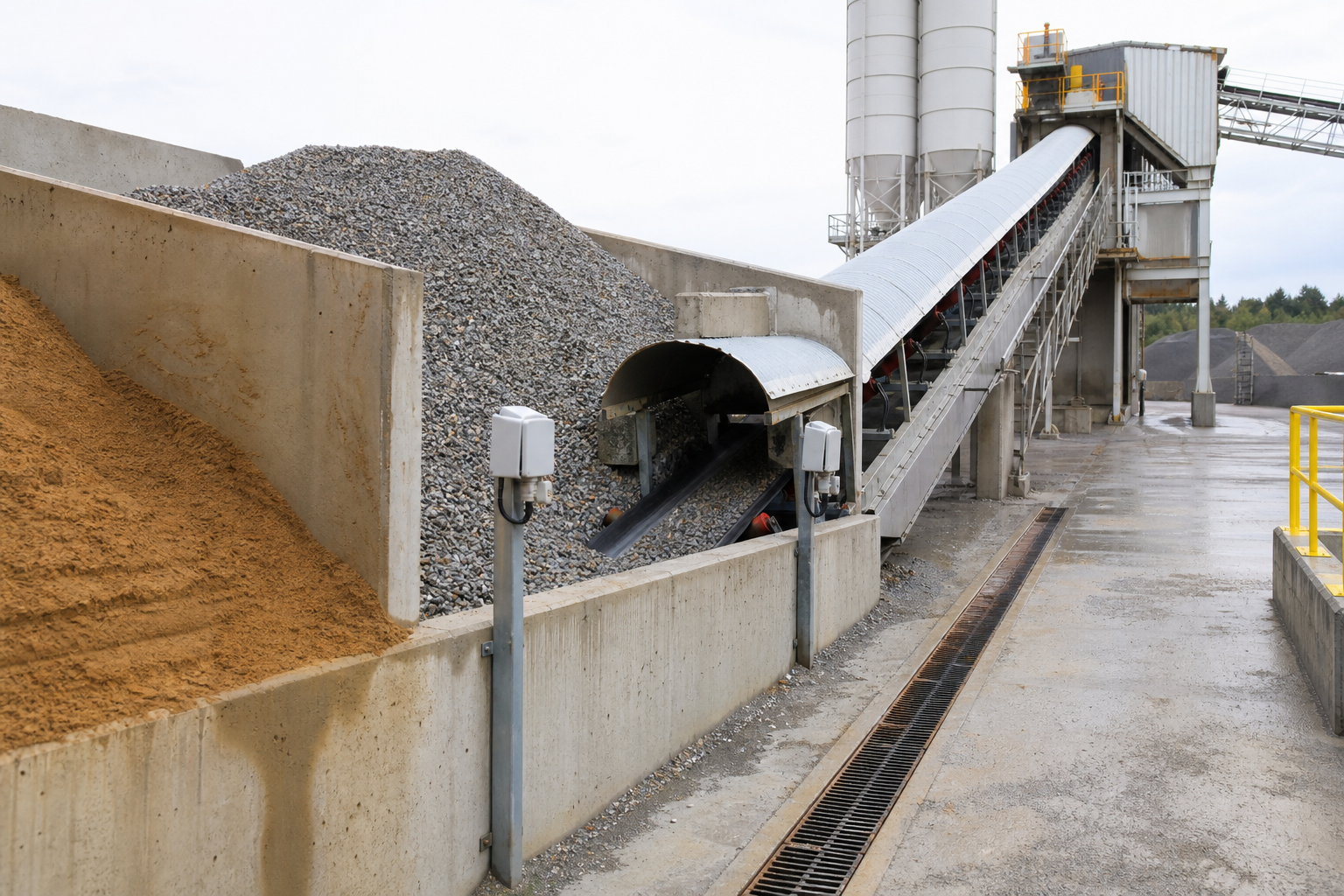
Conveyors, transfer points, hoppers, and weighing systems need practical access for inspection and cleaning. A conveyor that is efficient on paper can become a maintenance problem if service points are blocked by stockpiles or if spilled material cannot be removed safely. Access platforms, drainage, guard clearance, and clean working space should be reviewed with the same care as the mixer and silo arrangement.
The concrete mixer also depends on consistent feed. If aggregate flow is irregular, the mixer may receive material at a rhythm that makes batching less smooth. Plant teams should review hopper loading, belt speed, material carryback, dust control, and cleaning access before production demand increases.
Planning should include drainage and housekeeping
Drainage and housekeeping are sometimes seen as civil work rather than equipment planning, but they influence daily plant reliability. Water collecting near aggregate piles can change material condition. Muddy loader routes can slow feeding work. Poorly placed drains can make cleaning harder. A simple drainage and cleaning plan can reduce repeated downtime around the aggregate system.
Buyers can use the product center to review plant and equipment families, then discuss how aggregate storage, feed routes, conveyor access, service space, and site preparation connect with equipment configuration. hengyuan Concrete Machines can also review service requirements with project teams before a plant layout is finalized.
Practical checklist for aggregate feed route planning
- Separate sand and stone storage clearly to reduce cross-contamination.
- Review whether covered aggregate bays are useful for local rainfall and production needs.
- Plan loader routes before finalizing plant position, truck loading points, and stockpile areas.
- Keep conveyor transfer points, hoppers, weighing equipment, and belt return areas accessible for cleaning.
- Include drainage channels and water flow direction in the site layout review.
- Check whether moisture sensor placement and sampling routines match the actual feed route.
- Leave working space for routine service around conveyors, aggregate bins, mixer access, and electrical cabinets.
FAQ
What is aggregate feed route planning?
It is the process of arranging aggregate storage, loader movement, conveyor feeding, drainage, and service access so material can reach the batching plant safely and consistently.
Why does aggregate storage affect concrete batching?
Aggregate storage affects moisture, material separation, loader efficiency, feed rhythm, cleanliness, and the consistency of material entering the weighing and mixing system.
Do covered aggregate bins matter for every plant?
Not always. Covered bins are most useful where rainfall, moisture variation, or material cleanliness creates production risk. The decision should match local site conditions and concrete quality requirements.
What should buyers prepare before discussing aggregate layout?
Useful information includes plant capacity target, aggregate types, storage volume, available land, loader model, truck movement routes, drainage condition, rainfall exposure, and service access needs.
Conclusion
Aggregate feed route planning for concrete batching plants is a practical way to improve production stability before equipment is installed. Storage separation, loader access, conveyor service space, drainage, moisture control, and housekeeping should be reviewed together. Buyers can contact hengyuan Concrete Machines with project details to discuss concrete plant configuration, aggregate handling, and long-term service needs.