
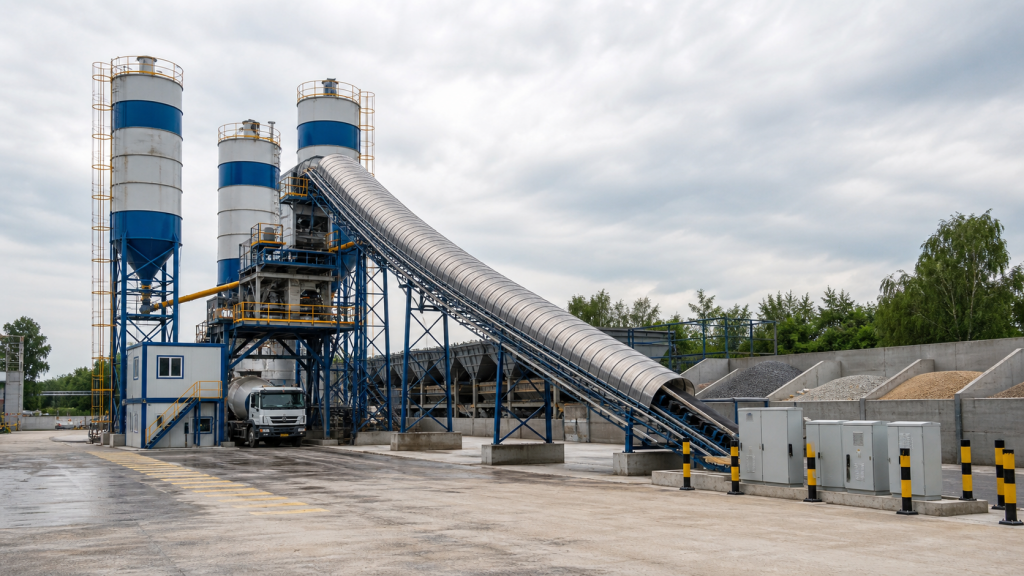
August 17, 2026 – Concrete producers, contractors, and equipment buyers are giving more attention to energy-efficient concrete batching plant material handling as they review new plant layouts, upgrade older yards, and plan equipment for longer daily operating windows. The discussion is practical rather than theoretical: aggregate movement, conveyor routing, motor access, idle time, mixer loading rhythm, and cleaning routes all influence how much energy and labor a plant needs to produce consistent concrete.
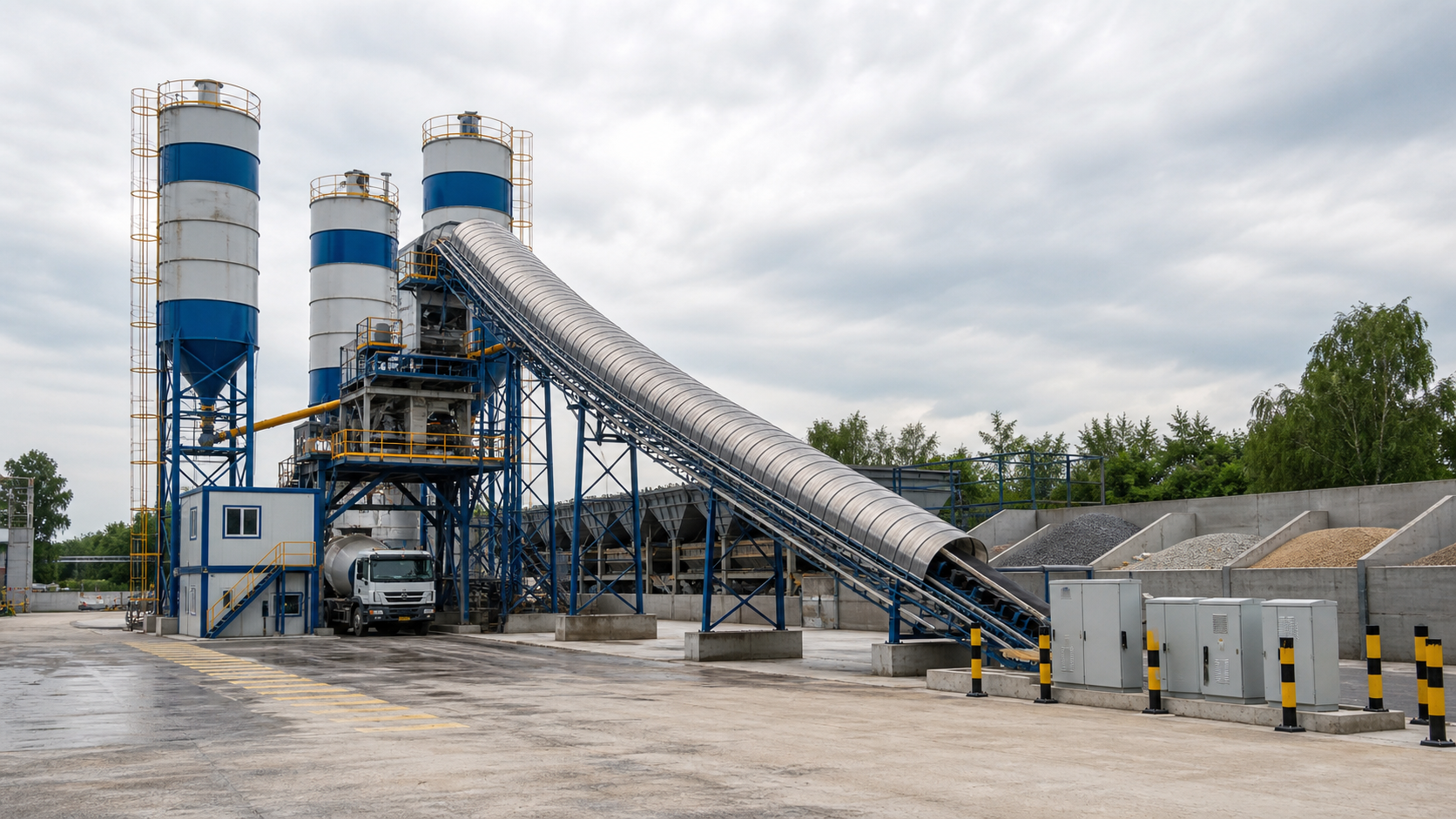
This article is an original industry analysis for ready-mix producers, contractors, plant owners, and project teams. It does not rely on specific third-party company announcements, customer cases, regulations, price data, or project claims. The focus is practical planning for teams that operate concrete batching plants, aggregate bins, conveyors, cement silos, mixer towers, control rooms, and related concrete delivery equipment.
Why energy planning is moving into layout discussions
A stationary concrete batching plant or mobile concrete batching plant is often selected by rated output, mixer model, aggregate bin volume, cement silo quantity, weighing system, control system, and installation footprint. Those specifications remain important, but the plant’s daily efficiency also depends on how material moves from storage to weighing, from conveyor to mixer, and from mixer to truck or jobsite delivery equipment.
When energy and material-flow planning are handled late, the plant may still run, but small losses can repeat every shift. A conveyor may run longer than needed because feed timing is unclear. A transfer point may require extra cleanup. A motor or reducer may be installed where inspection is slow. Trucks may wait because loading and batching signals are not coordinated. Each issue may look minor alone, but together they can reduce the value of a well-specified plant.
Material flow should be short, clear, and serviceable
Efficient material handling starts with a clear route. Aggregate should move from stockpile to bin, from bin to weighing, and from weighing to mixer with as few unnecessary direction changes as practical. Conveyor length, belt angle, transfer height, chute shape, and access platforms should be reviewed together. A compact route can reduce idle movement, but it should not create a tight layout that blocks inspection, cleaning, or future maintenance.
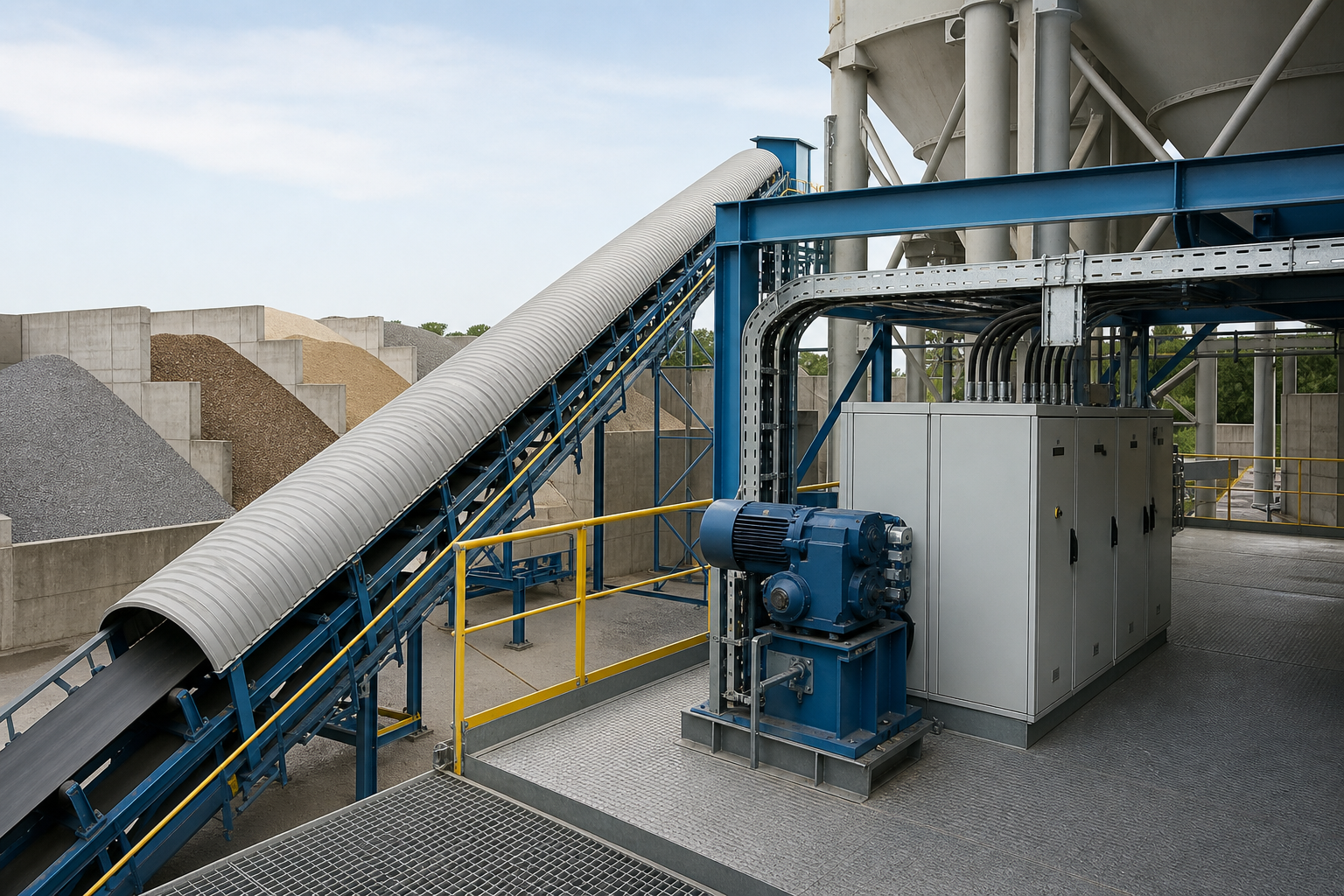
Equipment buyers should avoid treating conveyors as simple connecting pieces. The conveyor route affects support steel, transfer-point wear, belt cleaning, motor load, access space, and operator visibility. A covered belt conveyor may support cleaner operation, but it should also include sensible inspection doors, clear walkways, guardrails, and enough room around drive components. Efficient design depends on hardware and daily workflow working together.
Drive components need practical access
Conveyor motors, reducers, bearings, belt cleaners, sensors, limit switches, and electrical cabinets should be placed where operators can inspect them without disrupting production. A motor that is difficult to reach may still perform during commissioning, but it can become a recurring maintenance delay after the plant enters full operation. The same is true for cable trays, junction boxes, and control cabinets that are placed without enough service clearance.
For a compact mobile plant, the priority may be quick setup, short cable runs, simple conveyor checks, and clear operator routines. For a larger ready-mix yard, the focus may include multiple aggregate bins, longer conveyors, more silo connections, separate traffic lanes, and detailed maintenance platforms. In both cases, maintainability should be reviewed before final equipment placement.
Idle time is part of the energy equation
Energy efficiency is not only about selecting a motor or a control cabinet. Idle time matters. Conveyors, screw feeders, air compressors, dust collectors, mixers, water pumps, and auxiliary systems should run according to the production sequence instead of staying active without a clear purpose. Good control logic can reduce unnecessary running time while keeping the plant ready for the next batch.
The concrete mixer also benefits from predictable feeding. If aggregate and cement arrive in a smooth sequence, operators can maintain a steadier batching rhythm. If feed timing is irregular, the mixer may wait, the truck may wait, or operators may adjust the sequence manually. Buyers should review conveyor start-stop logic, weighing-bin discharge timing, mixer loading rhythm, and truck positioning before production demand rises.
Aggregate storage affects both energy and labor
Aggregate storage remains central to efficient plant operation. Clear bay separation, suitable bin volume, stable loader routes, and practical drainage can reduce unnecessary machine movement. If the loader must travel across a crowded yard for every feed cycle, the plant may lose time and fuel before the batching system even begins its work. If feed bins are easy to fill and monitor, the control system receives a more predictable supply.
Buyers can use the product center to review plant and equipment families, then discuss how aggregate storage, conveyor routing, cement silo configuration, service space, and site preparation connect with equipment selection. hengyuan Concrete Machines can also review service requirements with project teams before a plant layout is finalized.
Concrete pumps and truck movement should be included
Material handling does not stop at the batching tower. Mixer truck loading, washout areas, concrete pump receiving points, and internal traffic routes all shape the plant’s operating efficiency. If trucks queue in the wrong place, the plant may stop and start more often than necessary. If a concrete pump is supplied directly from a project plant, receiving access, queue space, and communication with the batching operator should be included in the site plan.
For project teams, the practical question is simple: can equipment, trucks, loaders, service crews, and cleaning routines work without blocking each other? If the answer is uncertain, the layout should be reviewed before installation.
Practical checklist for efficient material handling
- Map aggregate, cement, water, admixture, and mixer feed routes before finalizing the plant footprint.
- Keep conveyor routes as direct as practical while preserving inspection and cleaning access.
- Place motors, reducers, sensors, belt cleaners, and electrical cabinets where service crews can reach them.
- Review conveyor start-stop logic, weighing-bin discharge timing, mixer loading rhythm, and truck positioning together.
- Plan loader routes, aggregate bin filling, truck loading lanes, washout areas, and concrete pump access as one workflow.
- Track idle time, unusual motor noise, belt carryback, recurring cleanup points, and delayed truck loading events.
- Train operators to connect control-room records with real material movement in the yard.
FAQ
What does energy-efficient material handling mean for a concrete batching plant?
It means planning aggregate movement, conveyor routing, motor access, control logic, mixer feeding, and truck loading so material moves smoothly with less unnecessary idle time, cleanup, and operator intervention.
Does every plant need the shortest possible conveyor route?
Not always. A shorter route can help, but it should not create poor service access, unsafe cleaning conditions, or difficult truck movement. The best route balances compactness, maintenance, and daily operation.
Why is motor and reducer access important?
Drive components need inspection, lubrication checks, alignment review, cleaning, and occasional service. Poor access can turn a simple maintenance task into avoidable downtime.
What should buyers prepare before discussing an efficient plant layout?
Useful information includes plant capacity target, aggregate types, loader model, site footprint, stockpile plan, truck routes, concrete pump requirements, power supply condition, cleaning routines, and service access requirements.
Conclusion
Energy-efficient concrete batching plant material handling is becoming a practical planning focus because efficiency depends on more than rated capacity. A useful plan connects aggregate storage, conveyor routing, drive access, control logic, mixer feeding, truck movement, cleaning routines, and long-term maintenance. Buyers can contact hengyuan Concrete Machines with project details to discuss concrete plant configuration, material handling, and service needs.