
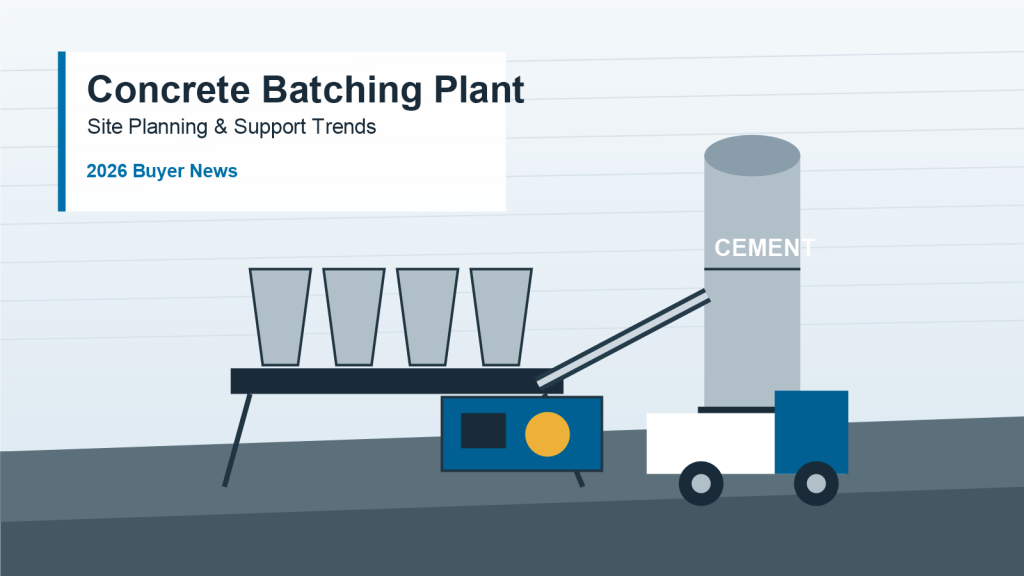
July 20, 2026 – Overseas contractors, ready-mix producers, and construction companies are paying closer attention to site planning before choosing a concrete batching plant. Instead of comparing equipment only by model name, buyers are reviewing how the plant layout, raw material supply, concrete delivery method, commissioning process, and after-sales support work together on the jobsite.
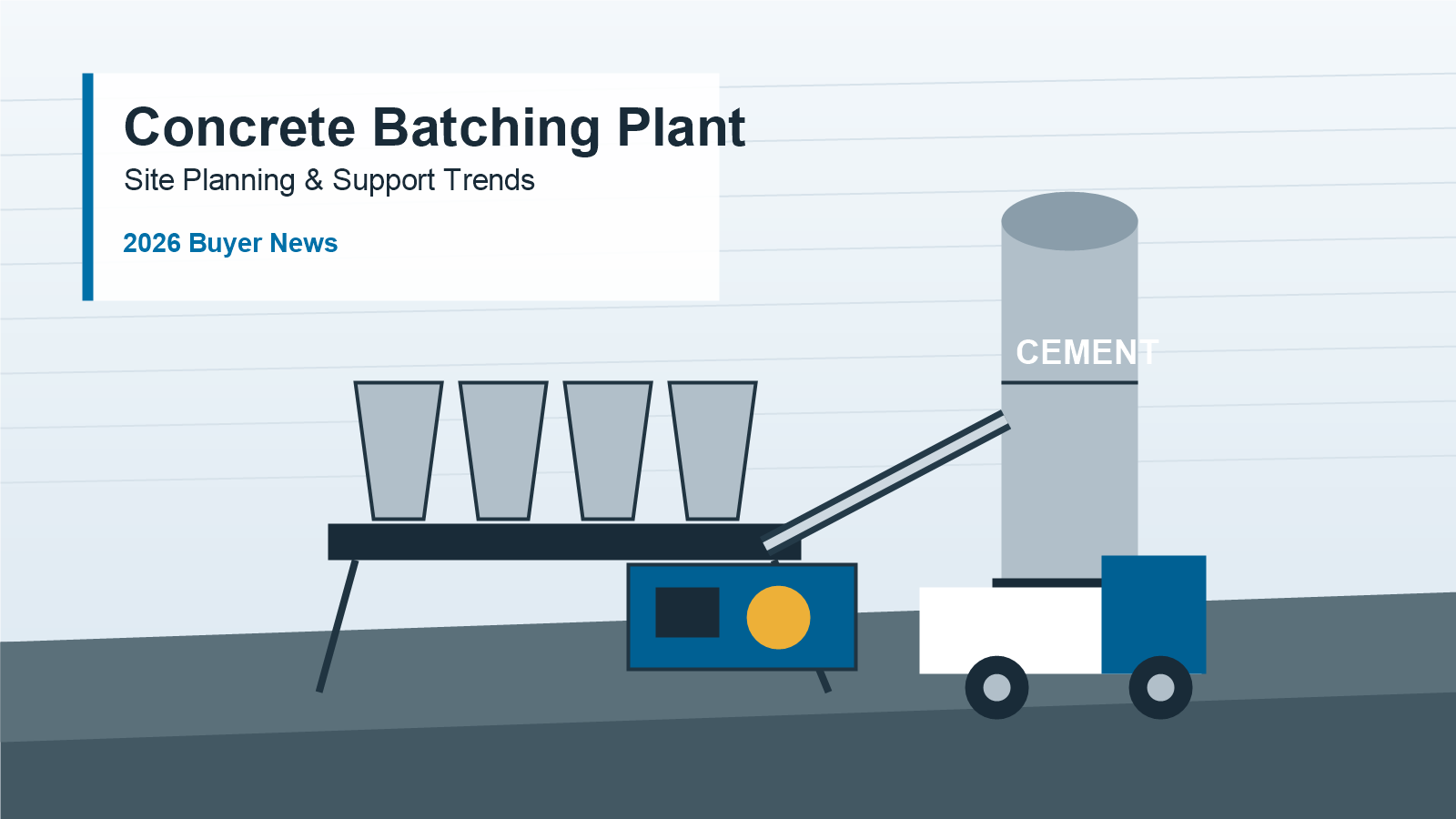
This buying trend is practical. A batching plant may have a suitable theoretical capacity, but daily production also depends on aggregate loading, cement storage, mixer performance, control system reliability, truck access, and the service response available after installation. For project owners, these details can affect concrete quality, operating cost, and downtime risk.
Site planning is becoming part of equipment selection
Before selecting a plant, buyers should review the available land, foundation conditions, power supply, truck movement route, aggregate storage method, cement delivery route, and discharge position. A compact site may require a different layout from a long-term commercial concrete production yard.
A stationary concrete batching plant is often selected for stable long-term production at a fixed site. A mobile concrete batching plant may be more suitable when the project needs quicker installation, relocation flexibility, or concrete production closer to changing work areas. The right choice depends on output demand, site space, project duration, and future equipment use.
Core equipment should be reviewed as one system
A concrete production line is not only the main plant frame. Buyers should also confirm the concrete mixer, aggregate batching machine, cement silo, screw conveyor, water system, additive system, air system, and electrical control system. These parts should match the required concrete type, aggregate size, production rhythm, and site operation method.
The mixer is especially important because it affects concrete consistency. Buyers comparing concrete mixer options should check whether the selected mixer is suitable for the expected concrete grade, mixing time, aggregate condition, and daily workload. Cement storage and material conveying should also be planned together through equipment such as a cement silo and screw conveyor.
Concrete delivery also affects the plant decision
Some projects need concrete to be placed at a distance from the batching area. In these cases, a concrete pump or mixer pump may become part of the full production plan. Buyers should review pumping distance, site access, concrete mix requirements, power conditions, and pouring schedule before confirming equipment.
For projects with limited truck access, elevated pouring points, or remote work areas, matching the batching plant with the right concrete pump can improve workflow and reduce handling pressure on site teams.
After-sales support is a buying factor, not an afterthought
Installation guidance, commissioning support, operator training, spare parts supply, and troubleshooting communication are important after the equipment arrives. For international buyers, clear technical communication before shipment and during installation can reduce avoidable delays.
Henan Hengyuan provides concrete equipment options for different project conditions. Buyers can review the product center, check successful cases, and compare service information before discussing a configuration.
Buyer checklist for 2026 projects
- Confirm expected hourly and daily concrete output.
- Review whether the site is better suited to a stationary or mobile concrete batching plant.
- Check aggregate feeding, cement storage, screw conveyor position, and truck access.
- Confirm mixer type, weighing accuracy, control system, and power conditions.
- Decide whether a concrete pump is needed for concrete placement.
- Review installation, commissioning, operator training, spare parts, and after-sales support.
- Use actual site conditions instead of model names alone when finalizing the plant layout.
FAQ
Why should site planning come before buying a concrete batching plant?
Site planning helps buyers confirm whether the equipment layout, foundation, material flow, truck route, and power supply can support stable daily production.
When is a mobile concrete batching plant suitable?
A mobile concrete batching plant is suitable when a project needs a compact layout, faster installation, or equipment that can be relocated for different jobsites.
What equipment should be planned with the batching plant?
Buyers should review the mixer, aggregate batching machine, cement silo, screw conveyor, water and additive systems, control system, and concrete delivery method together.
Does every project need a concrete pump?
No. A concrete pump is useful when concrete must be delivered to a distant, elevated, narrow, or difficult-to-access pouring area. The need depends on site layout and construction method.
What after-sales details should buyers confirm?
Buyers should confirm installation guidance, commissioning support, operator training, spare parts supply, and troubleshooting communication before regular production starts.
Conclusion
For 2026 concrete production projects, buyers are giving more attention to practical site planning and service support. A suitable concrete batching plant should match the project layout, material supply, mixer configuration, concrete delivery method, and long-term support needs. Buyers can contact Henan Hengyuan with site details to discuss a suitable equipment configuration.