
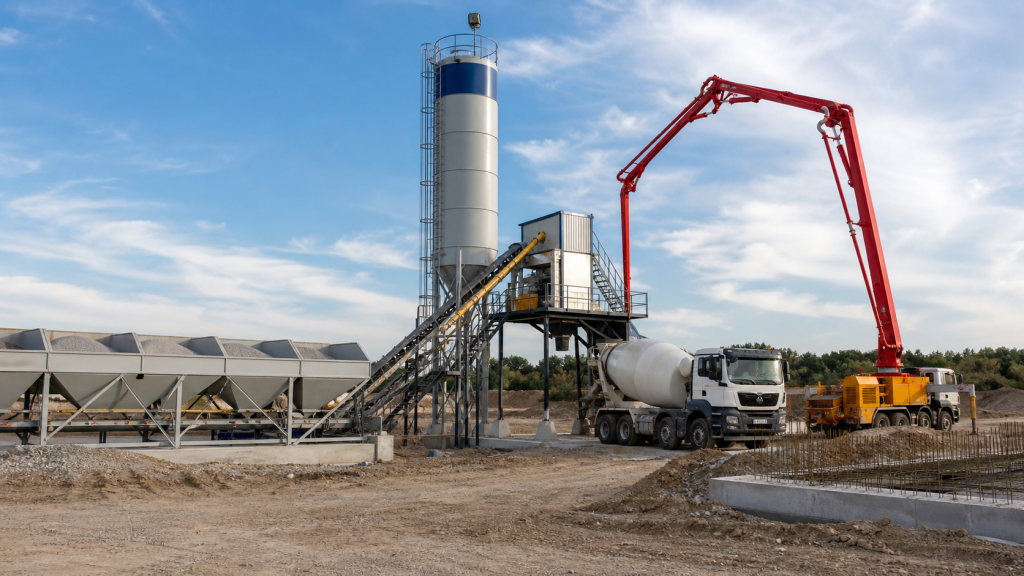
July 24, 2026 – Contractors comparing concrete production equipment are paying closer attention to concrete pump integration during batching plant planning. For many projects, the real production result depends not only on the rated output of the plant, but also on how the mixer truck, concrete pump, discharge point, site access, and pouring schedule work together.
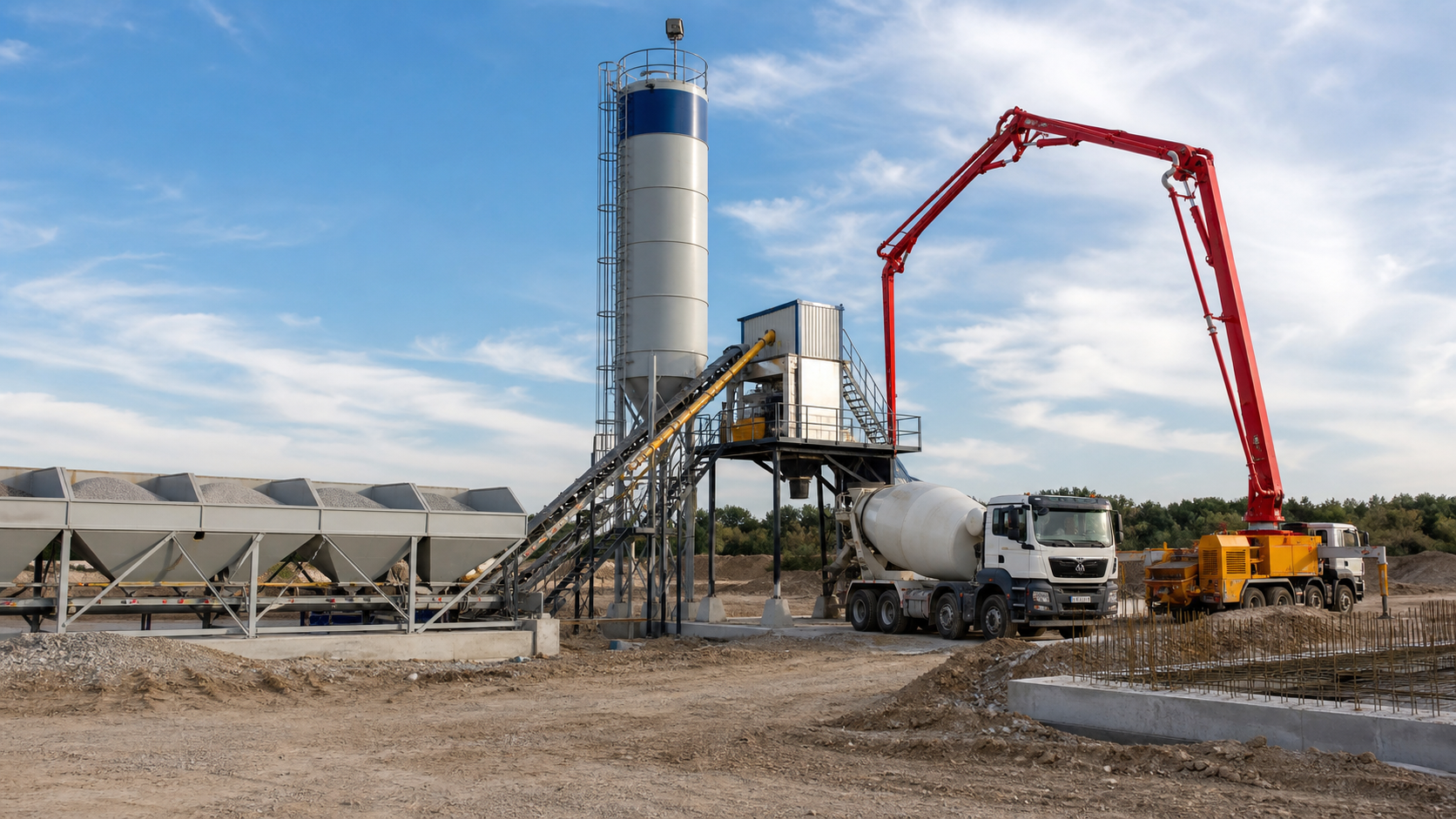
This article is an original industry analysis for contractors, ready-mix producers, and construction equipment buyers. It does not rely on specific third-party company announcements, customer cases, regulations, price data, or project claims. The focus is practical equipment coordination for teams that need stable concrete batching and efficient concrete placement on real jobsites.
Why pump integration matters earlier in the purchase process
A concrete batching plant can produce consistent concrete only when the surrounding delivery workflow supports it. If mixer trucks wait too long, the pump location is poorly planned, or the discharge path is difficult to manage, a plant with suitable capacity can still struggle to keep the construction rhythm steady.
Reviewing the concrete pump together with the batching plant helps buyers think through pumping distance, vertical height, concrete mix requirements, truck circulation, and operator communication before equipment reaches the site. This is especially useful when the project has limited space, multiple pouring zones, or a schedule that leaves little room for repeated layout changes.
Batching capacity should match placement capacity
Hourly plant output is an important selection point, but it should be compared with the placement capacity of the pump and the actual jobsite cycle. A fast plant may not improve productivity if trucks cannot approach the discharge area smoothly or if the pump cannot place concrete at the required pace.
When preparing an inquiry, project teams should describe expected hourly and daily output, concrete grade, aggregate size, available installation area, mixer truck route, pumping distance, placement height, power conditions, and whether the equipment will serve one fixed site or move between projects. These details help the manufacturer recommend a more accurate configuration from the product center.
Mix design and pumping method should be reviewed together
The concrete mixer, weighing system, aggregate condition, water metering, and additive dosing all influence concrete consistency. Pumping adds another layer of review because the concrete must be workable enough for the selected pump while still meeting the project requirement.
Buyers should discuss the expected concrete grade, aggregate size, slump target, delivery distance, and pumping method before finalizing the plant and pump combination. This helps avoid choosing equipment in separate steps and then discovering that the complete system is difficult to operate efficiently.
Truck movement can decide whether the system works smoothly
Mixer truck movement is often one of the most practical limits on production. The site needs enough room for truck approach, loading, waiting, turning, and exiting. If the batching plant, pump, and truck queue are placed without a clear route, the equipment can interfere with other construction work.
For a mobile concrete batching plant, truck and pump coordination is still important. Mobility can reduce setup pressure, but each new site needs a practical layout review for aggregate loading, cement supply, water access, pump placement, and discharge direction.
Control, communication, and service support reduce startup risk
Concrete production and pumping require coordination between plant operators, mixer truck drivers, pump operators, and site supervisors. Clear communication procedures can reduce waiting time and make it easier to adjust production rhythm during the pouring process.
Installation guidance, commissioning support, operator training, spare parts supply, and troubleshooting communication are also part of the buying decision. Project teams can review service information and share site details with Hy Concrete Machines before confirming the final plant and pump layout.
Buyer checklist
- Confirm hourly and daily concrete output requirements.
- Review concrete grade, aggregate size, slump target, and additive needs.
- Compare plant output with pump capacity and expected placement rhythm.
- Check mixer truck approach, waiting area, turning route, and exit path.
- Confirm pump placement, pumping distance, vertical height, and boom or pipeline layout.
- Review cement supply, aggregate loading, water access, and power conditions.
- Confirm installation, commissioning, training, spare parts, and remote support.
FAQ
Why should a concrete pump be reviewed when choosing a batching plant?
The pump affects concrete placement speed, truck circulation, mix requirements, and site layout. Reviewing it early helps buyers select a plant configuration that supports the full concrete delivery workflow.
Does every batching plant project need a concrete pump?
No. Some sites can use direct truck discharge. A pump is usually considered when the pouring point is distant, elevated, narrow, or difficult for mixer trucks to reach.
What site information helps with pump and plant selection?
Useful details include concrete output demand, placement distance, height, aggregate size, concrete grade, site space, truck route, power supply, and whether the plant will remain fixed or move between jobsites.
Can mobile batching plants work with concrete pumps?
Yes. The plant, mixer truck, and pump should be reviewed as one workflow so the mobile setup can support reliable batching, transport, and placement at each project location.
Conclusion
Concrete pump integration is becoming a practical part of batching plant planning because it connects production capacity with real placement conditions. A suitable equipment plan should match the plant, mixer truck route, pump location, concrete mix, site access, and service support. Buyers can contact Hengyuan Concrete Machines with project details to discuss a coordinated concrete production and delivery solution.