
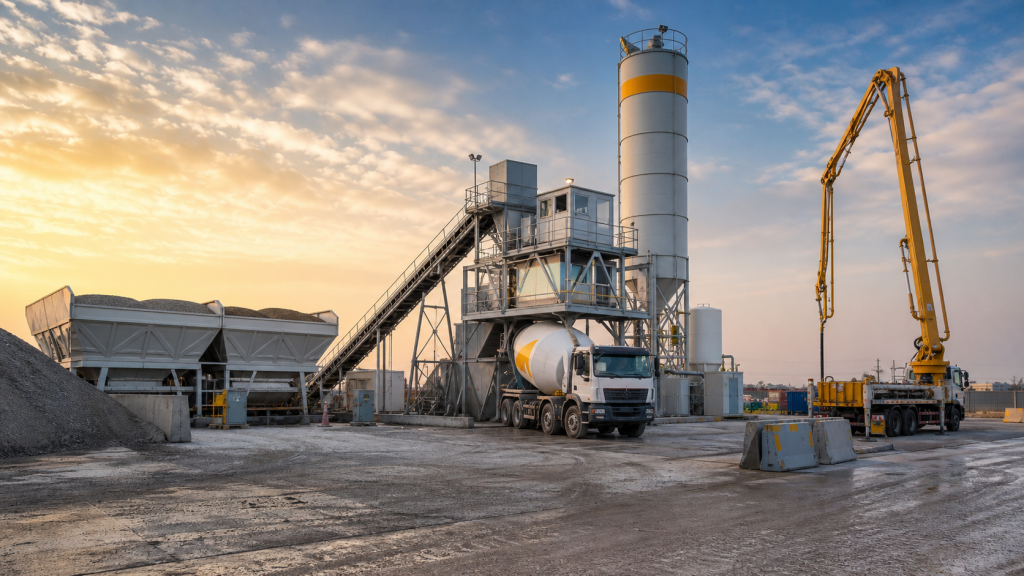
2026-07-22 – Concrete producers and contractors are giving more attention to the modular concrete batching plant as project schedules become more changeable and jobsites put more pressure on material control. The trend is not only about plant capacity. Buyers are also reviewing how aggregate storage, weighing, mixing, truck loading, pumping, and service access work together as one production system.
This article is an original industry analysis for Hy Concrete Machines. It does not cite third-party company announcements, customer cases, regulations, price data, or time-sensitive market statistics. The focus is practical equipment planning that concrete equipment buyers can use when comparing plant configurations.
Why modular planning is becoming more important
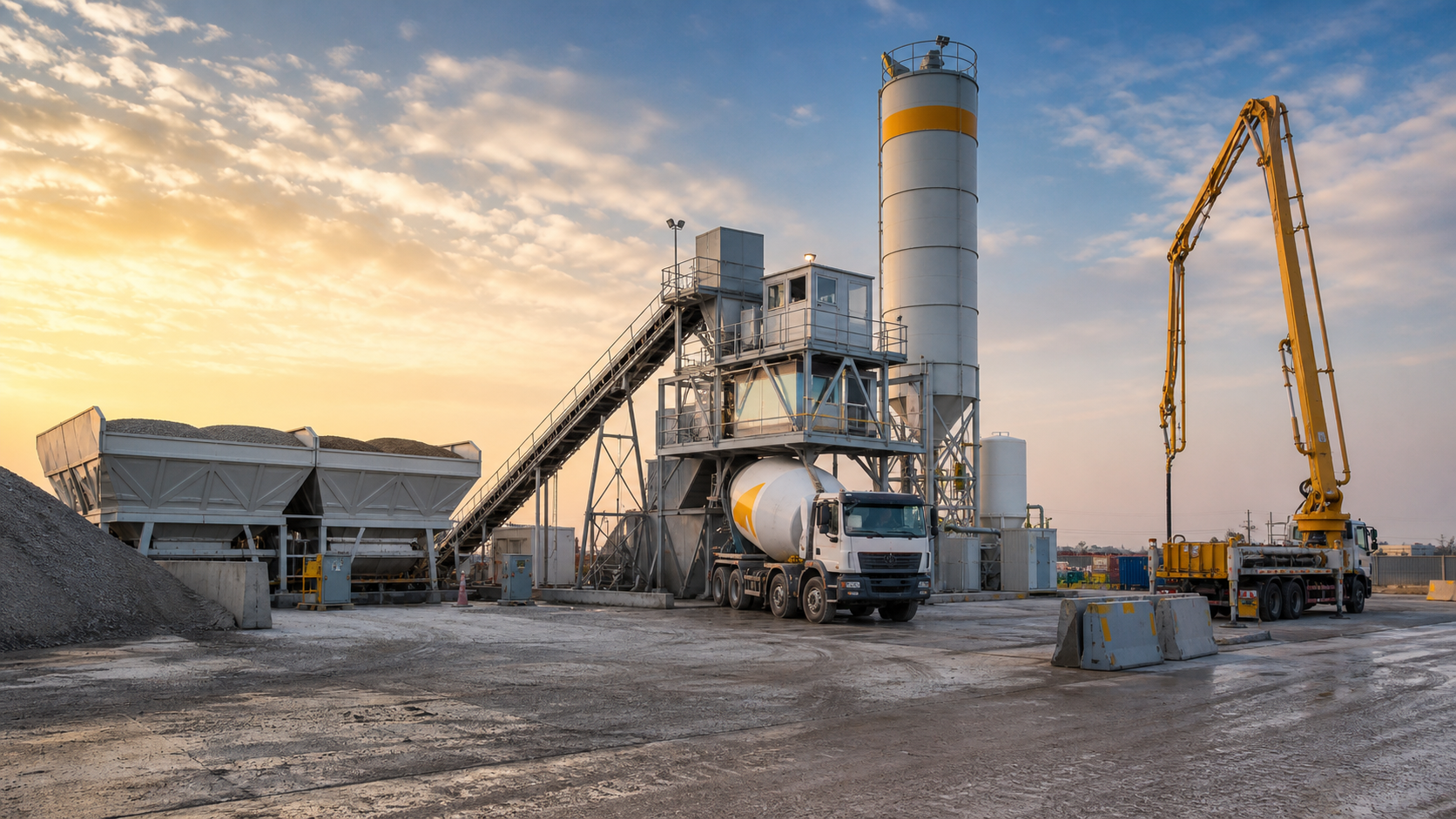
A modular plant layout can help project teams review each part of concrete production before equipment is shipped. Aggregate bins, belt conveyors, cement silos, screw conveyors, weighing units, the concrete mixer, water supply, additive dosing, and the control system all affect the final production rhythm.
For projects with stable long-term demand, a stationary concrete batching plant may provide a durable base. For contractors that need easier relocation or a smaller installation footprint, a mobile concrete batching plant may be more practical. Modular thinking helps compare both options by workflow instead of judging only by model name.
Lower waste starts with better material flow
Waste in concrete production often comes from planning gaps: poor aggregate loading access, inconsistent weighing, long truck waiting time, unsuitable mixer selection, or concrete delivery equipment that does not match the pouring area. A cleaner plant layout can reduce unnecessary handling and make production easier for operators to control.
Buyers should review the available installation area, aggregate pile position, loader movement, cement delivery route, mixer truck access, water drainage, and maintenance space. A compact footprint is useful only when it still leaves enough room for safe loading, inspection, and routine service.
Capacity should match the actual project rhythm
Rated output is an important reference, but real productivity depends on the whole site rhythm. Mixer cycle time, weighing speed, aggregate moisture, truck availability, concrete transport distance, and pumping requirements can all limit the final result. The most suitable plant is the one that matches daily demand with stable operation, not simply the highest nominal capacity.
Before selecting equipment from the product center, project teams should prepare basic information such as required concrete output, aggregate size, cement storage needs, available power supply, installation space, relocation plans, and expected concrete delivery method.
Batching plant and pump selection should be reviewed together
Some projects only need mixer truck delivery from the batching plant. Others need a concrete pump because the pouring point is distant, elevated, narrow, or difficult for trucks to reach. Reviewing pumping at the same time as plant selection can prevent mismatches between concrete production and placement.
When the pump is part of the workflow, buyers should confirm concrete mix requirements, pumping distance, pipeline route, site access, power or diesel needs, and cleaning arrangements. This helps the plant and pump operate as one system during peak construction periods.
Service access is part of the equipment decision
Modular equipment is easier to manage when the layout includes maintenance access from the start. Operators need practical access to belts, mixers, weighing units, control cabinets, pneumatic systems, sensors, and wear parts. Installation guidance, commissioning support, operator training, spare parts, and remote troubleshooting also reduce startup risk.
Hy Concrete Machines can review project conditions, plant layout, and support needs before the final configuration is confirmed. Buyers can also review service information before sending an inquiry.
Buyer checklist for modular plant planning
- Confirm hourly output and realistic daily concrete demand.
- Review available installation space, truck route, and aggregate loading access.
- Compare stationary, compact, and mobile batching plant layouts.
- Check mixer type, weighing system, cement storage, water supply, and additive dosing.
- Decide whether mixer truck delivery, pumping, or both are needed.
- Reserve enough space for operation, cleaning, maintenance, and parts replacement.
- Confirm installation guidance, commissioning, operator training, and spare parts support.
FAQ
What is a modular concrete batching plant?
It is a concrete production system designed around separate functional modules such as aggregate storage, conveying, weighing, mixing, cement storage, control, and delivery. The modular approach helps buyers plan layout, transport, installation, and future service.
Does a modular plant always mean a mobile plant?
No. Modular planning can apply to stationary, compact, and mobile batching plants. The right choice depends on output demand, available land, relocation needs, foundation conditions, and project duration.
How can plant layout reduce concrete production waste?
A better layout can reduce unnecessary material handling, truck waiting, inaccurate batching, cleaning pressure, and mismatches between production and concrete placement. The plant should be planned as a complete workflow.
When should a concrete pump be considered with the batching plant?
A pump should be reviewed when the pouring point is far from truck access, above ground level, inside a narrow work area, or when the construction schedule requires faster placement than truck discharge alone can support.
Conclusion
As concrete projects become more demanding, modular batching plant planning gives buyers a clearer way to compare equipment. The best configuration should match output demand, material flow, mixer performance, truck access, concrete placement, and long-term service support. Project teams can contact Hengyuan Concrete Machines with site details to discuss a suitable concrete batching plant and pumping solution.