
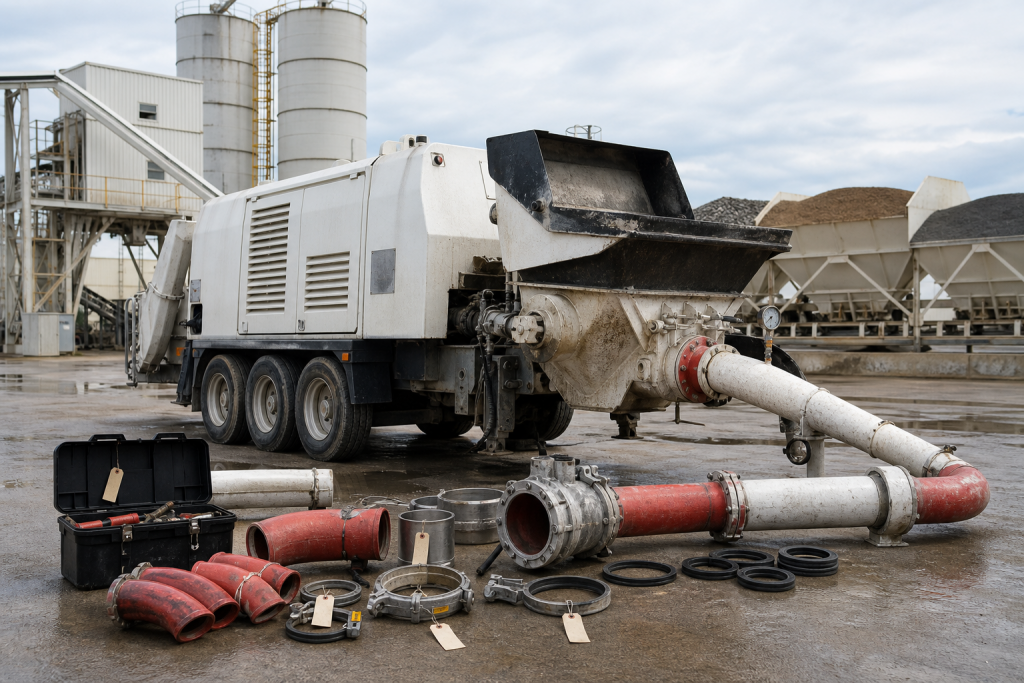
August 28, 2026 – Contractors, ready-mix producers, and equipment managers are giving earlier attention to concrete pump pipeline wear checks when planning pumping equipment, spare parts, and jobsite maintenance routines. The topic is practical: delivery pipe sections, elbows, clamps, seals, reducers, and cleaning access can all influence pumping reliability before the first concrete pour begins.
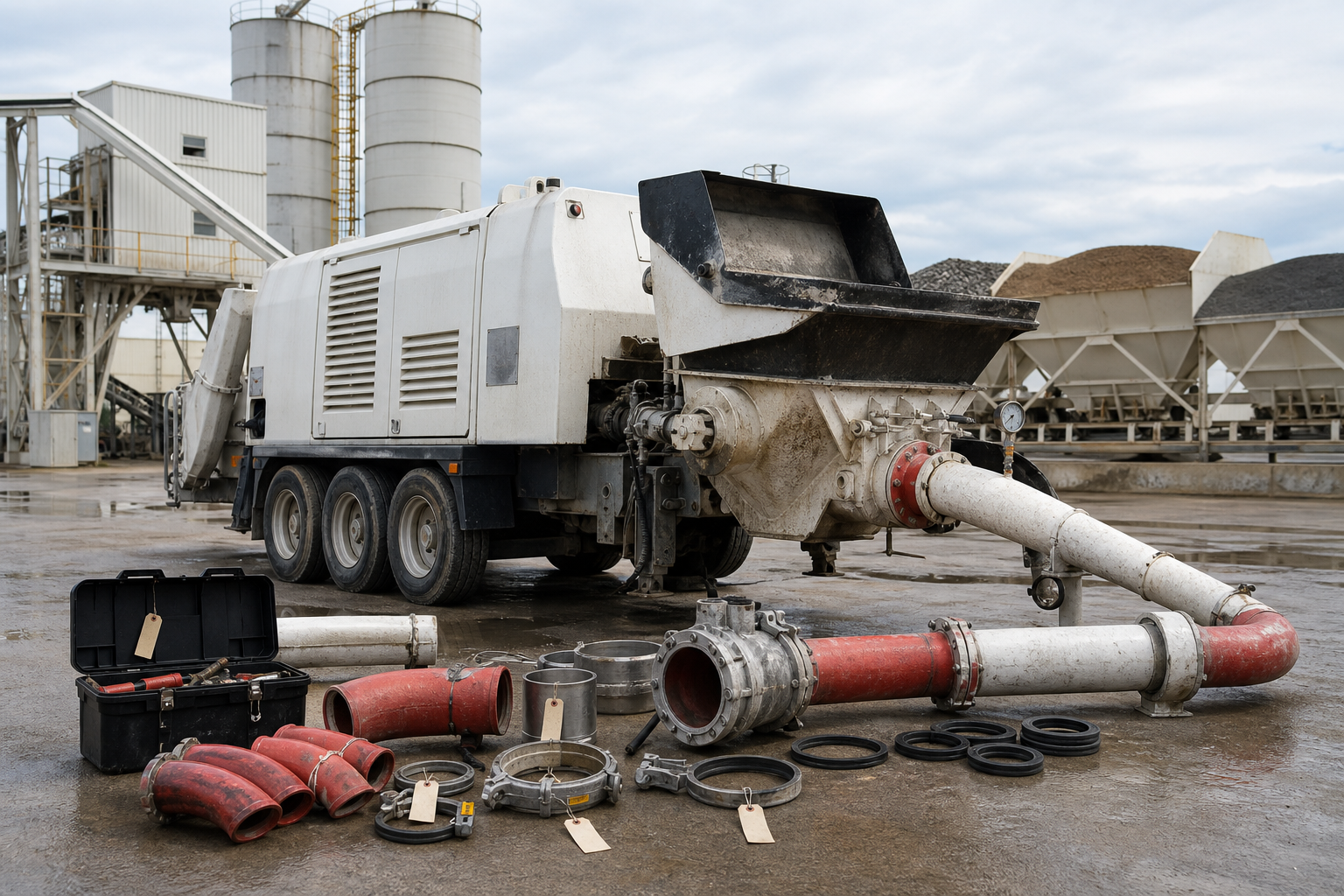
This article is an original industry analysis for construction contractors, concrete producers, plant managers, and equipment buyers. It does not rely on specific third-party company announcements, customer cases, regulations, price data, or project claims. The focus is practical planning for concrete pumps, delivery pipelines, elbows, wear parts, cleaning routes, and maintenance records.
Why pipeline checks are moving up the checklist
Quick Answer: Why Check Concrete Pump Pipeline Wear Early?
Concrete pump pipeline wear should be checked early because worn pipes, elbows, clamps, and hoses increase the risk of leakage, blockage, bursting, and unplanned downtime. Pipeline condition directly affects pumping safety, concrete flow, and jobsite productivity.
Contractors should inspect high-wear bends, reducer sections, vertical lines, couplings, seals, pipe wall thickness, and cleaning condition before major pours or long pumping runs.
Concrete Pump Pipeline Wear Check Table
| Pipeline Part | Inspection Focus |
|---|---|
| Straight pipes | Check wall thickness, dents, corrosion, internal wear, and connection condition. |
| Elbows and bends | Inspect more frequently because bends often wear faster under high-pressure concrete flow. |
| Clamps and seals | Confirm locking condition, seal wear, leakage signs, and correct installation. |
| Hoses | Look for cracks, abrasion, soft spots, bulging, and end fitting damage. |
| Spare parts | Prepare pipes, elbows, clamps, seals, and hoses before long pours or remote projects. |
A concrete pump is often discussed in terms of pumping distance, output, power type, and site mobility. Those points matter, but the delivery line deserves the same early review. Pipe diameter, line length, elbow count, clamp condition, seal selection, cleaning access, and spare pipe availability can shape how smoothly the equipment is used during daily work.
Early checks do not mean replacing normal operator judgment. They mean giving the site team a clearer list before dispatch, installation, commissioning, and scheduled pours. When the delivery line is treated as part of the equipment system, maintenance planning becomes less reactive and easier to document.
Wear often concentrates where concrete changes direction
Concrete delivery lines carry abrasive material under pressure. Straight pipe sections are important, but elbows, reducers, bends, and transfer points usually receive closer attention because material changes direction in these areas. A practical inspection routine looks at wall wear, coupling faces, gasket seating, clamp fit, pipe alignment, and signs of hardened concrete build-up.
The goal is not to assign every component a complicated tracking system. A clear visual check, a simple replacement threshold, and organized spare parts can already help the team avoid uncertainty when a worn elbow, loose clamp, or damaged seal is found before a pour.
Spare parts planning supports jobsite scheduling
Pipeline maintenance affects more than the pump itself. If a site has replacement elbows but no matching clamps, or seals without the right pipe sections, the team may still lose time. Spare parts planning should connect pipe diameter, planned line route, concrete mix characteristics, cleaning method, expected work rhythm, and transport distance from storage to the pump location.
For many buyers, this makes the parts discussion more specific. Instead of ordering a loose list of accessories, teams can review which elbows, straight pipe sections, reducers, seals, clamps, wear plates, cutting rings, lubrication items, and cleaning tools are most relevant to the site layout and pump model.
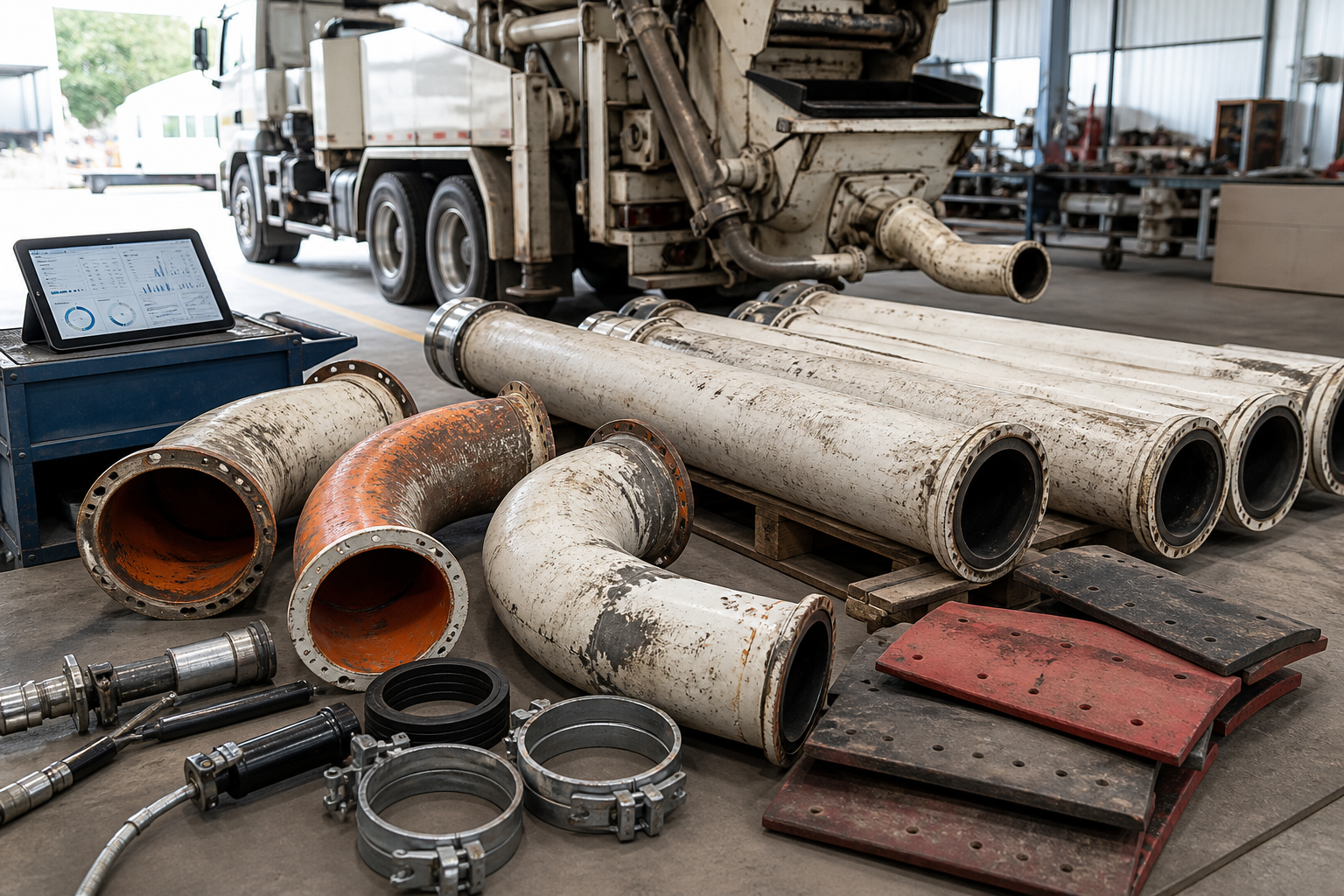
Cleaning access should be planned with the pipeline route
A concrete delivery line is only as practical as its cleaning route. Operators need room to disconnect sections, manage washout, inspect clamps, handle reducers, and store parts without blocking trucks, aggregate movement, or plant service access. Cleaning access is especially important when pumping work is close to a stationary concrete batching plant, temporary mixer truck route, or tight construction entrance.
Cleaning planning also supports safer organization. Pipe sections can be heavy, dirty, and awkward to move. A defined storage area, stable support points, drainage awareness, and clear access for tools help the team keep inspection and cleanup work orderly.
Pump planning should connect with batching rhythm
Pumping reliability is connected to upstream production. If a concrete mixer, truck loading point, and pump setup are planned separately, the site may miss basic coordination details such as truck approach direction, waiting space, washout route, communication between the batch plant and pump operator, and line cleaning timing.
Earlier pipeline checks give the operations team a better view of possible interruptions. A worn bend, limited spare pipe stock, difficult clamp access, or poor cleaning route can affect the pour even when the pump engine, hydraulic system, and batching equipment are otherwise ready.
Maintenance records make repeat problems visible
A simple record can be enough for many teams. Useful fields include pump model, pipe diameter, line route, elbow position, inspection date, observed wear, cleaned sections, replaced clamps, changed seals, and parts remaining in stock. Over time, these notes help managers see whether the same position is wearing faster than expected.
Records also help when multiple crews use the same equipment. If the next team can see which pipeline sections were cleaned, checked, or replaced, there is less guesswork before setup. This is especially useful when trailer pumps, mixer pumps, placing lines, and batching equipment move between sites.
Practical checklist for concrete pump pipeline planning
- Confirm pump type, pipe diameter, planned line length, vertical lift, horizontal distance, and expected pouring rhythm.
- Review elbows, reducers, straight pipe sections, clamps, rubber seals, wear plates, cutting rings, and lubrication items.
- Plan access for pipe connection, disconnection, cleaning, inspection, drainage, and spare parts handling.
- Check whether the pump route conflicts with mixer truck movement, batch plant loading, aggregate handling, or site traffic.
- Keep critical spare parts organized by diameter, connection type, and pump model so crews can find them quickly.
- Record inspection results, replaced parts, cleaning observations, and repeated wear points after demanding pours.
- Include pipeline condition checks in commissioning, routine maintenance, and pre-pour preparation.
FAQ
Why are concrete pump pipeline wear checks important?
They help the site team identify worn pipe sections, elbows, clamps, seals, reducers, and cleaning issues before the delivery line becomes a source of downtime.
Does pipeline inspection replace normal pump maintenance?
No. Pipeline inspection supports routine pump maintenance, but teams should still follow equipment manuals, operator checks, lubrication routines, cleaning procedures, and service schedules.
Which parts should be reviewed before a concrete pumping job?
Useful items include straight pipes, elbows, reducers, clamps, rubber seals, gaskets, hose sections, wear plates, cutting rings, cleaning balls, lubrication supplies, and support brackets.
What information should buyers prepare before discussing pumping equipment?
Useful details include concrete output needs, site distance, vertical height, pipeline route, mixer truck access, power preference, pump mobility, cleaning area, spare parts expectations, and maintenance capacity.
Conclusion
Concrete pump pipeline wear checks are moving earlier in equipment planning because they affect pouring reliability, spare parts readiness, cleaning access, maintenance records, and coordination with batching plant output. A useful setup connects pump selection, pipe routing, elbow inspection, clamp and seal condition, spare parts storage, and site cleaning plans. Buyers can contact hengyuan Concrete Machines with project details to discuss concrete pump configuration, pipeline planning, batching plant coordination, and equipment support.
Our Whatsapp: +86 199 3949 4756