
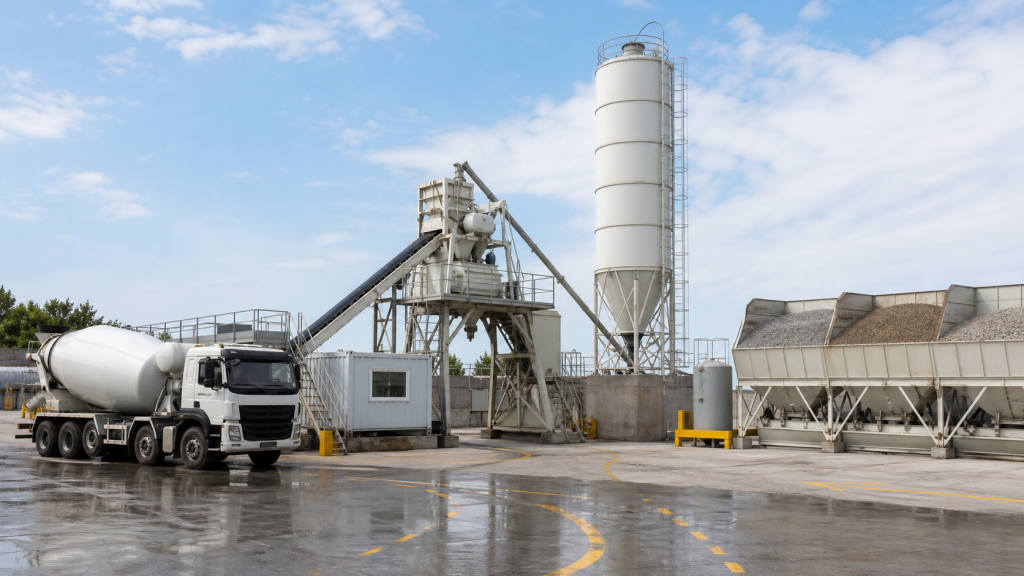
July 27, 2026 – Contractors and ready-mix buyers are paying closer attention to modular concrete batching plant layout during early project planning. The discussion is practical: a plant that is easier to position, feed, access, clean, and commission can reduce avoidable delays before regular concrete production begins.
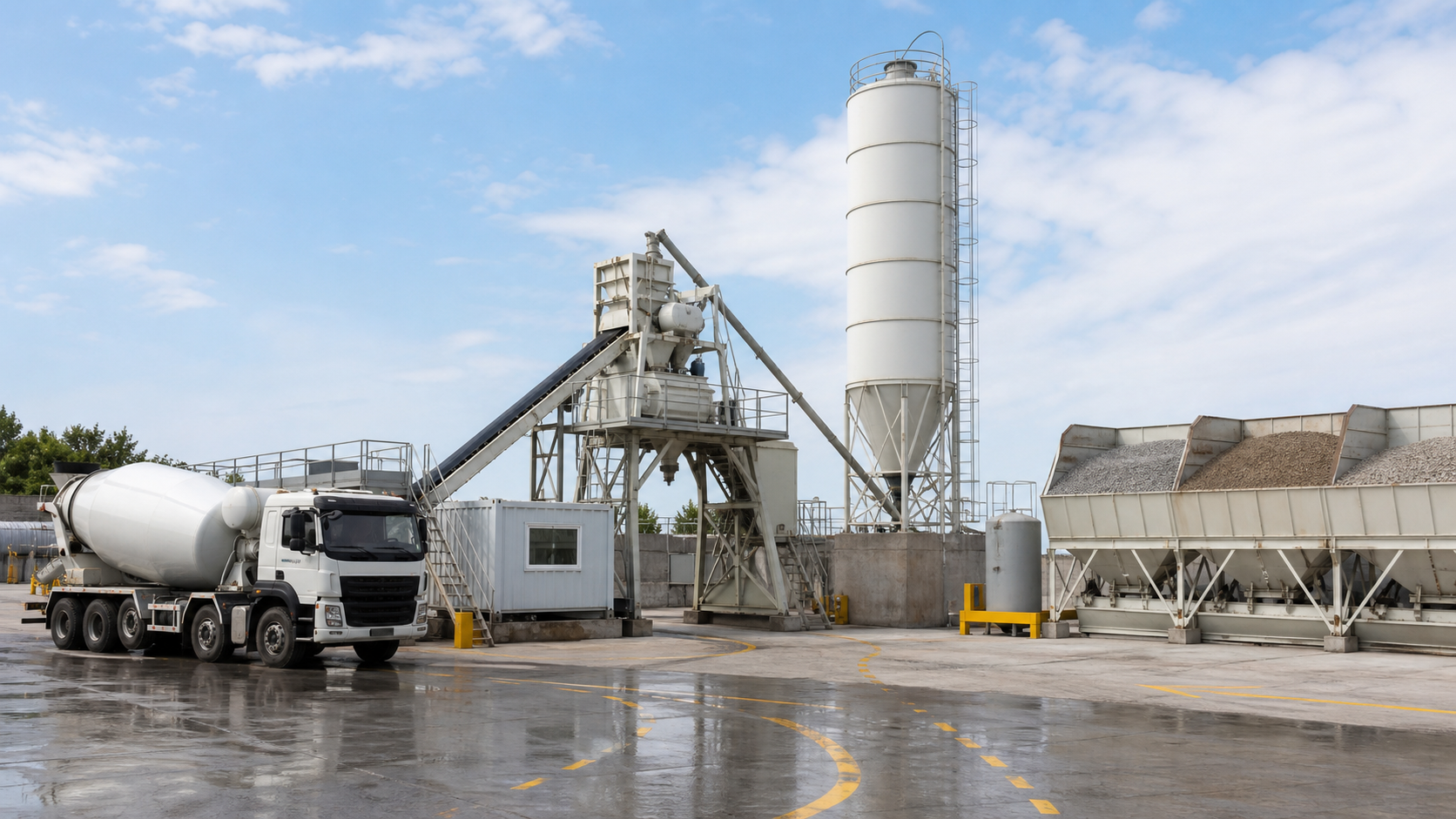
This article is an original industry analysis for contractors, ready-mix producers, and construction equipment buyers. It does not rely on specific third-party company announcements, customer cases, regulations, price data, or project claims. The focus is practical layout planning for teams comparing concrete batching equipment for fixed or temporary jobsites.
Why layout planning is moving earlier
A concrete batching plant is often compared by rated capacity, mixer model, silo size, and automation level. Those points matter, but the surrounding layout can decide how quickly the equipment becomes useful on site. Aggregate feeding, cement delivery, water access, truck approach, control room visibility, and maintenance space all affect the working result.
Modular planning gives buyers a clearer way to discuss how the main plant frame, aggregate bins, belt or skip feeding system, cement silo, screw conveyor, water tank, admixture system, and control cabin will fit together. It also helps the manufacturer review transport limits, foundation needs, and installation sequence before equipment reaches the jobsite.
Truck circulation should be designed, not assumed
Mixer truck movement is one of the most common layout constraints. The truck needs a clear route to approach the discharge point, wait safely when needed, receive concrete, and leave without blocking aggregate loading or cement supply. A simple drawing of the truck path can reveal problems that are not obvious from equipment specifications alone.
When preparing an inquiry, project teams should describe expected hourly and daily output, concrete grade, available installation area, aggregate loading method, cement supply route, truck turning space, power conditions, and whether the plant will stay at one site or move between projects. These details help the manufacturer recommend a more accurate configuration from the product center.
Modular does not mean one-size-fits-all
A modular plant can simplify transport and installation, but it still needs to match the project. A compact site may need careful bin placement and truck route control. A higher-output ready-mix yard may need more attention to aggregate storage, cement silo arrangement, weighing speed, and future expansion space. The right layout depends on the actual production plan.
The concrete mixer, batching machine, cement silo, screw conveyor, water system, and control system should be reviewed as one production unit. If one part is difficult to access or maintain, the whole plant can lose efficiency even when the main equipment capacity appears suitable.
Mobile and stationary plants need different layout questions
A mobile concrete batching plant is usually selected when relocation speed and installation flexibility are important. Layout planning should focus on transport dimensions, quick setup, aggregate loading access, water connection, power connection, and the truck route at each new site.
A stationary plant usually deserves a broader review because it may support longer-term production. Buyers should consider foundation layout, silo capacity, aggregate yard planning, loading equipment, spare parts storage, drainage, operator visibility, and future upgrades. In both cases, layout planning should start before purchase decisions are finalized.
Commissioning access is part of the buying decision
Installation and commissioning are easier when the equipment layout leaves enough room for cranes, forklifts, maintenance teams, electrical work, and safe inspection. Buyers should avoid judging a layout only by whether the plant physically fits in the available space. It also needs enough working area for setup, adjustment, cleaning, and later service.
Installation guidance, commissioning support, operator training, spare parts supply, and troubleshooting communication are also part of the buying decision. Project teams can review service information and share site drawings or basic measurements with Hy Concrete Machines before confirming the final plant arrangement.
Buyer checklist
- Confirm hourly and daily concrete output requirements.
- Review concrete grade, aggregate size, slump target, and admixture needs.
- Check aggregate bin position, loading route, and loader working space.
- Plan mixer truck approach, waiting area, turning route, and exit path.
- Confirm cement silo location, screw conveyor direction, and delivery access.
- Review water supply, drainage, power conditions, and control room visibility.
- Confirm installation, commissioning, training, spare parts, and remote support.
FAQ
Why should layout be discussed before choosing a batching plant?
Layout affects truck movement, aggregate feeding, cement delivery, installation access, maintenance, and daily operation. Early review helps buyers avoid selecting equipment that is difficult to arrange on the actual site.
Does a modular batching plant always save installation time?
It can reduce setup complexity, but the result still depends on transport access, foundation preparation, crane or forklift availability, utility connections, and whether the site leaves enough room for commissioning.
What site information helps with layout planning?
Useful details include site dimensions, production target, aggregate loading method, truck route, cement supply method, power and water access, foundation conditions, and whether the plant will be moved later.
Should mobile batching plants and stationary plants use the same planning checklist?
Some questions overlap, but mobile plants need more attention to relocation and quick setup, while stationary plants usually need deeper review of foundation layout, long-term material flow, and future expansion.
Conclusion
Modular concrete batching plant layout is becoming a key planning topic because it connects equipment capacity with real site conditions. A suitable plan should match the plant structure, aggregate feeding, cement supply, mixer truck route, installation access, and service support. Buyers can contact Hy Concrete Machines with project details to discuss a practical concrete production layout.