
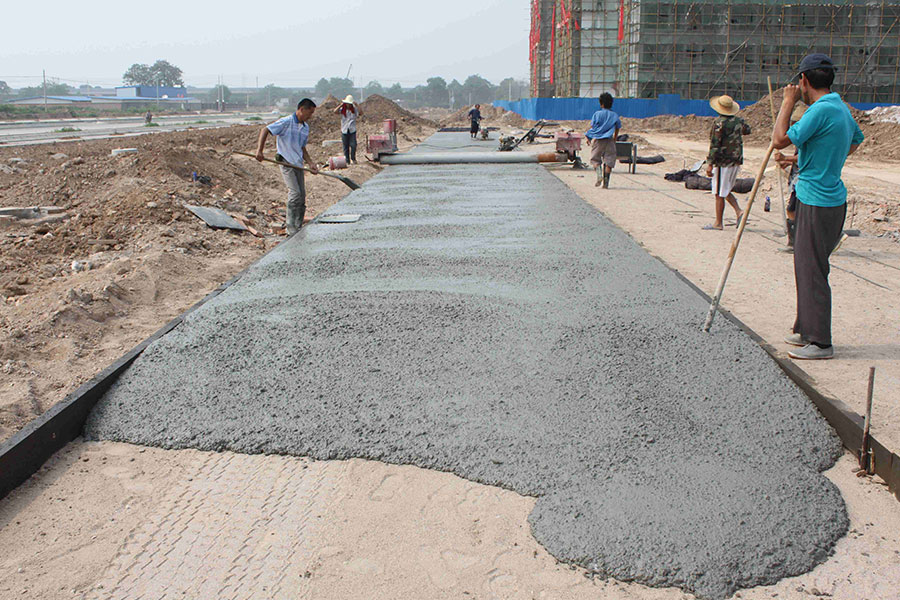
What is concrete grade?
Concrete grade describes the designed compressive strength and performance level of concrete. It helps engineers, contractors, and batching plant operators choose the correct mix for foundations, slabs, beams, columns, roads, bridges, precast products, and other construction elements. Selecting the right concrete grade is essential for safety, durability, and cost control.
Why concrete grade matters
A low-grade mix may not provide enough structural strength, while an unnecessarily high-grade mix can increase cement consumption and project cost. Concrete grade affects load-bearing capacity, crack resistance, durability, workability, and service life. It should be chosen according to engineering design, exposure environment, construction method, and local standards.
Common application examples
Lower strength concrete may be used for leveling layers, temporary works, small non-structural components, or light-duty site applications. Medium grades are commonly used for residential floors, foundations, beams, columns, and general building structures. Higher grades are used in bridges, high-rise buildings, heavy-duty industrial floors, precast components, and projects that require higher durability or load capacity.
The exact grade naming system can differ by country or project specification. Buyers and contractors should follow the engineering drawings and local code requirements rather than selecting a grade only by habit.
How batching plants help control concrete grade
Concrete grade depends on accurate material proportioning. A concrete batching plant controls aggregate, cement, water, admixture, and mixing time according to the recipe. Stable weighing accuracy helps reduce batch variation and supports consistent strength results. Moisture changes in sand and aggregate should also be considered because they affect the real water-cement ratio.
For ready-mix and precast production, automatic recipe management is helpful when switching between different grades. Operators can store mix designs, check weighing records, and reduce manual input errors during busy production periods.
Buyer and contractor checklist
Before production, confirm the required concrete grade, slump, aggregate size, cement type, admixture requirement, environmental exposure, and delivery distance. If the concrete must be pumped, the mix should also match the pumping distance, pipe diameter, and placement method. Henan Hengyuan can configure batching plants and pumping equipment to support different concrete grades for building, road, bridge, and precast projects.
Concrete grade and equipment configuration
Different concrete grades place different demands on production equipment. For ordinary building concrete, stable aggregate weighing and water control may be enough for daily production. For higher-strength concrete, the plant may need more precise admixture metering, better moisture control, stronger mixing performance, and stricter production records. The mixer should produce uniform concrete without leaving unmixed powder or aggregate pockets.
Pumping requirements also affect the mix. Concrete that is suitable for direct discharge may not always be suitable for long-distance pumping. Pumped concrete needs proper workability, aggregate gradation, and slump control so it can move through pipelines without segregation or blockage. This is why batching plant selection and concrete pump selection should be considered together for many projects.
Good quality control includes checking raw material consistency, calibrating weighing systems, adjusting for aggregate moisture, and keeping clear batch records. These steps help the produced concrete meet the intended grade and reduce disputes between suppliers, contractors, and project owners.
Concrete grade questions from buyers
Buyers often ask whether one batching plant can produce several concrete grades. In most cases, the answer is yes, as long as the plant has accurate weighing, suitable mixer performance, and a control system that can store different recipes. Operators must still follow the approved mix design and adjust for aggregate moisture and site requirements.
Another common question is whether higher grade concrete always needs a larger plant. The plant size mainly affects output, while concrete grade depends more on mix design, weighing accuracy, raw materials, admixture control, and mixing uniformity. A smaller plant can produce higher grade concrete if it is configured and operated correctly, but production speed must match the project schedule.
Concrete grade control summary
Stable concrete grade depends on good raw materials, accurate batching, suitable mixing time, and consistent operation. A reliable batching plant helps contractors reduce quality variation and meet project requirements more consistently.