
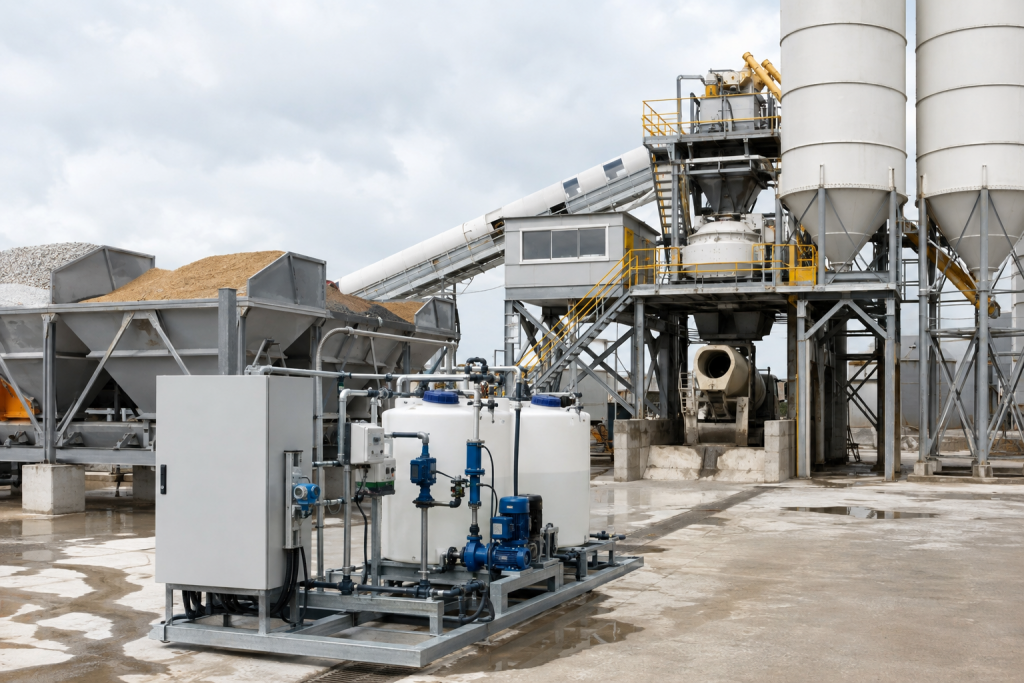
September 7, 2026 – Contractors, ready-mix producers, and concrete equipment buyers are reviewing admixture dosing accuracy earlier in concrete batching plant planning as project teams look for steadier mix performance, clearer quality records, and fewer avoidable production interruptions. The topic is not limited to choosing a pump. It includes water metering, calibration access, admixture tank placement, pipe routing, mixer charging, batch records, and the daily maintenance routines that keep a plant predictable.
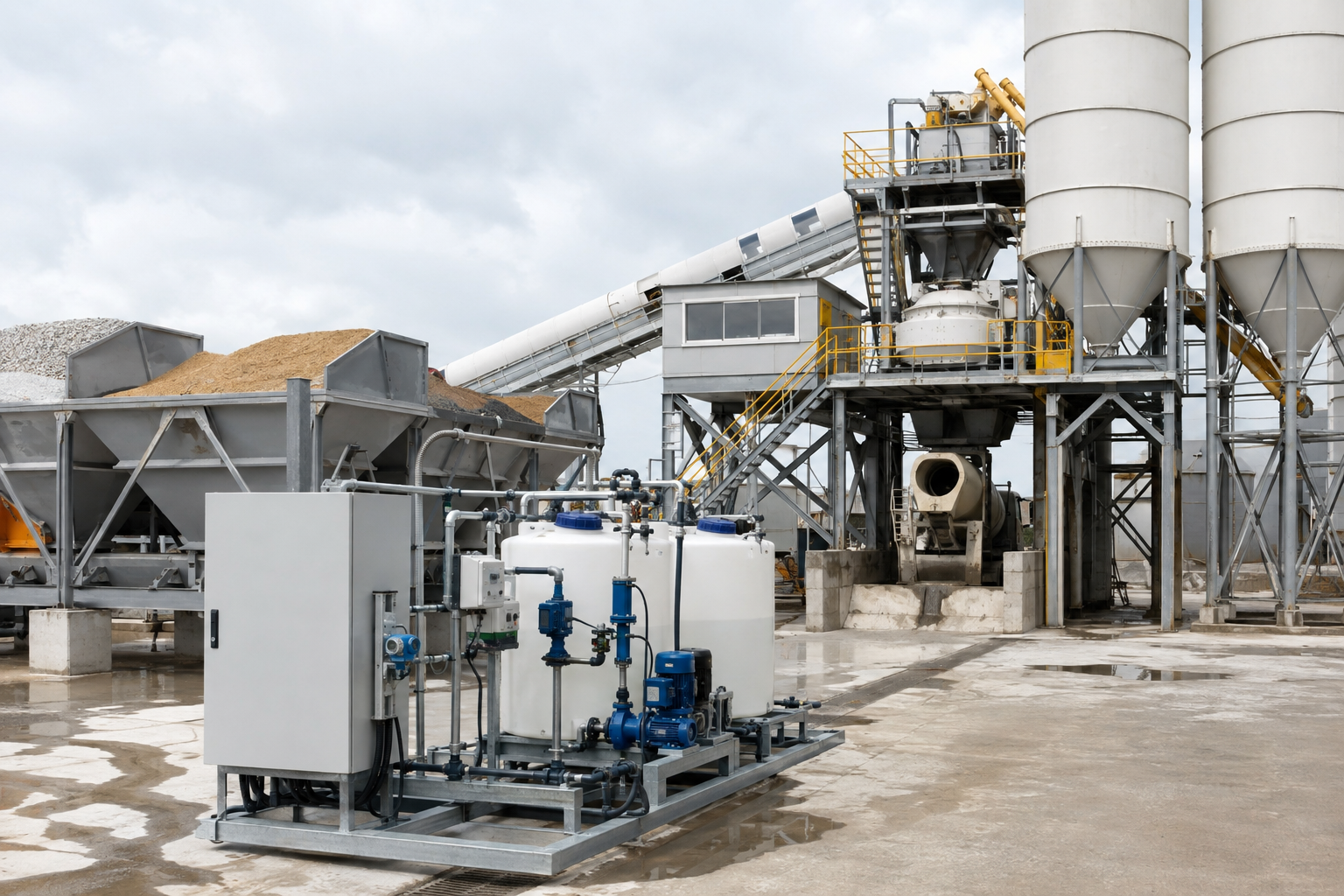
This article is an original industry analysis for construction contractors, ready-mix producers, plant managers, and concrete equipment buyers. It does not rely on specific third-party company announcements, customer cases, price data, regulations, pricing, or project claims. The focus is practical planning for concrete admixture dosing, water metering, batching plant automation, maintenance access, and production consistency.
Why dosing accuracy is moving into early plant discussions
A stationary concrete batching plant or mobile system is often selected by rated output, aggregate bin layout, mixer model, cement silo capacity, weighing accuracy, and automation level. Those specifications still matter, but they do not fully describe how liquids are measured, introduced, checked, and recorded during production. A plant can have adequate mixer capacity and still face quality pressure if water and admixture dosing are difficult to calibrate or monitor.
Early review does not mean every plant needs the same dosing package. It means the liquid system should be reviewed with the same care as aggregate bins, conveyor angle, cement silo layout, mixer discharge height, truck loading access, electrical routing, and control room layout. A compact project plant, a mobile concrete batching plant, and a permanent ready-mix yard may all need different tank capacity, pump type, pipe routing, and control display arrangements.
Water and admixture checks should support the recipe workflow
Admixture dosing accuracy is most useful when it supports the way the plant actually batches concrete. Plant teams can review recipe selection, aggregate moisture correction, cement weighing, water metering, admixture dosing, mixer charging, mixing time, slump adjustment, batch records, and dispatch timing as one operating sequence. This helps managers understand whether variation is tied to material condition, calibration practice, pump response, operator visibility, or recipe control.
The control room may show batch count, aggregate weights, cement target weight, actual water, admixture dosage, mixer timing, and alarm history. A clear dosing system gives operators another layer of visibility. If mix adjustments become frequent, if dosing pumps need repeated attention, or if water correction is not easy to review, the team can examine measurement and calibration before assuming that a larger equipment change is required.
The dosing area needs clear inspection access
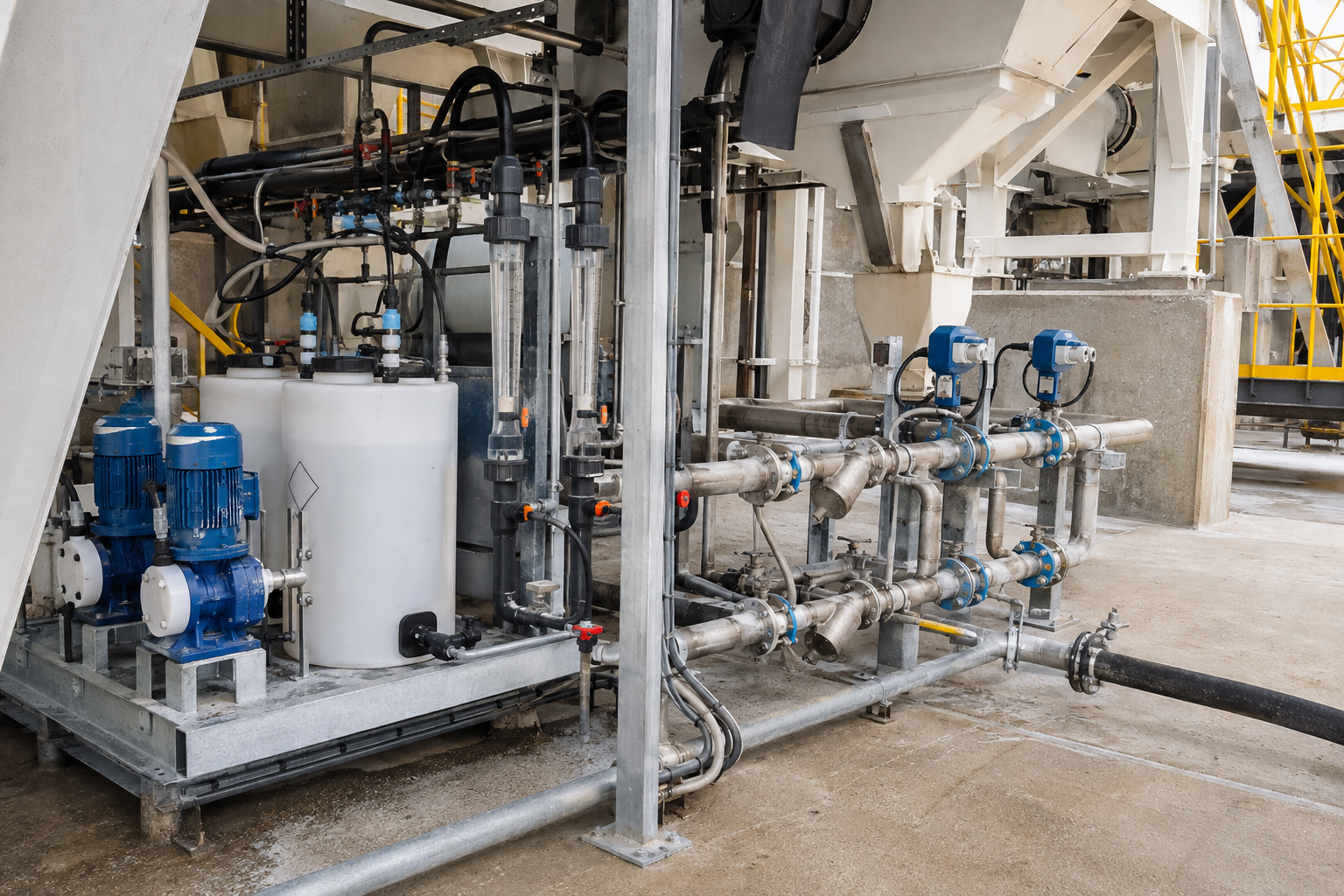
The dosing area is one of the most important service zones in a concrete batching plant. Admixture tanks, pump skids, calibration cylinders, flow meters, water valves, strainers, hoses, pipe supports, electrical cabinets, and cable routes should remain reachable for inspection. Access should be reviewed before the plant is installed, especially where the dosing skid sits under a mixer platform or beside a busy truck loading lane.
Inspection access should not be treated as a late detail. A calibration tube that is hard to see, a pump that is difficult to remove, or a valve that is blocked by surrounding steelwork may receive less attention during routine checks. For temporary plants, the review may focus on fast installation and relocation. For permanent ready-mix yards, it may include multiple admixture tanks, separate dosing lines, weather protection, drainage, spare pump planning, and enough clearance for regular maintenance.
Calibration routines can reduce avoidable quality disputes
Concrete quality discussions often focus on mix design, cement source, aggregate grading, moisture condition, and jobsite handling. Plant equipment still has an important role. A practical calibration routine helps teams confirm that water meters, admixture pumps, flow sensors, and control settings are behaving as expected. This is especially useful when production includes several recipes, different admixture products, or changing ambient conditions.
The concrete mixer should be reviewed together with the liquid dosing system. Mixer charging behavior, cement dosage, water correction, aggregate moisture adjustment, admixture introduction point, and batch timing all influence consistency. A plant that can measure and record liquid inputs clearly is better positioned to keep the mixer working at a stable rhythm.
Tank placement and pipe routing affect daily operation
Admixture tanks should be placed where filling, inspection, cleaning, and replacement are practical. Pipe routes should be protected from damage, easy to trace, and arranged so that service work does not interfere with aggregate feeding, cement transfer, truck loading, or mixer maintenance. For cold, hot, or dusty sites, the layout may also need weather protection, drainage, and simple access for line checks.
Good routing also helps operators understand which line serves each product and where to check if a fault appears. The goal is not to make the system complex. It is to make normal checks straightforward: tank level, pump condition, valve position, calibration reading, water meter behavior, pipe leakage, and control room records.
Batch data should connect dosing and production decisions
Batching plant automation can help connect dosing planning with production decisions. Useful records may include batch count, recipe selection, aggregate moisture correction, cement target weight, actual water, admixture target quantity, actual admixture quantity, mixer time, alarm history, and operator notes. These records are not a replacement for inspection, but they can help plant teams see whether liquid measurement, weighing accuracy, or production rhythm is changing over time.
Dosing data should also be coordinated with dispatch and jobsite supply. If concrete is supplied to a concrete pump, workability, batching time, mixer truck loading rhythm, travel time, and pump receiving access all influence delivery reliability. A smooth dosing and batching workflow cannot solve every jobsite delay, but it can reduce avoidable production-side uncertainty.
Practical checklist for plant teams
- Review admixture tank location, filling access, pump skid position, calibration visibility, and pipe routing before finalizing the plant layout.
- Keep dosing pumps, calibration cylinders, water meters, strainers, valves, hoses, and control cabinets reachable for inspection.
- Check whether calibration intervals, line flushing, spare pump planning, and alarm response are clearly assigned.
- Compare target water, actual water, target admixture quantity, actual admixture quantity, batch timing, and operator notes by shift.
- Review the admixture introduction point, mixer charging sequence, aggregate moisture correction, and water correction settings together.
- Coordinate liquid dosing with cement weighing, aggregate feeding, mixer timing, truck loading, dispatch plans, and concrete pump supply.
- Train operators to treat repeated dosage alarms, pump noise, inconsistent calibration readings, visible leakage, and unusual mix adjustment frequency as inspection triggers.
FAQ
What does admixture dosing accuracy include?
It can include pump performance, calibration checks, flow meter behavior, pipe condition, valve position, control settings, recipe targets, actual dosage records, water correction, and service access.
Does every concrete batching plant need the same dosing setup?
No. A mobile plant, compact project plant, and permanent ready-mix plant may need different tank capacity, pump type, metering method, control display, pipe routing, weather protection, and maintenance access.
Why should water metering be reviewed with admixture dosing?
Water and admixture inputs both affect workability and mix consistency. Reviewing them together helps teams understand recipe control, moisture correction, mixer charging, and batch record quality.
What information should buyers prepare before discussing plant configuration?
Useful details include production capacity, plant type, mix range, admixture products, tank number and size, water supply arrangement, mixer model, automation needs, concrete pump use, service access, and spare parts support needs.
Conclusion
Admixture dosing accuracy is becoming an earlier planning topic because reliable concrete production depends on more than rated output. A useful review connects tank placement, pump selection, water metering, calibration access, recipe control, batch records, mixer timing, concrete pump coordination, and maintenance routines. Buyers can review the product center or contact hengyuan Concrete Machines with project details to discuss concrete batching plant configuration and support needs.