

September 8, 2026 – Concrete batching plant buyers and ready-mix operators are paying closer attention to concrete mixer liner and blade wear before equipment is installed. The discussion is practical rather than dramatic: liner plates, blade arms, bolts, service hatches, inspection lighting, spare parts storage, and maintenance records all influence whether a mixer can keep a steady production rhythm after the plant enters daily operation.
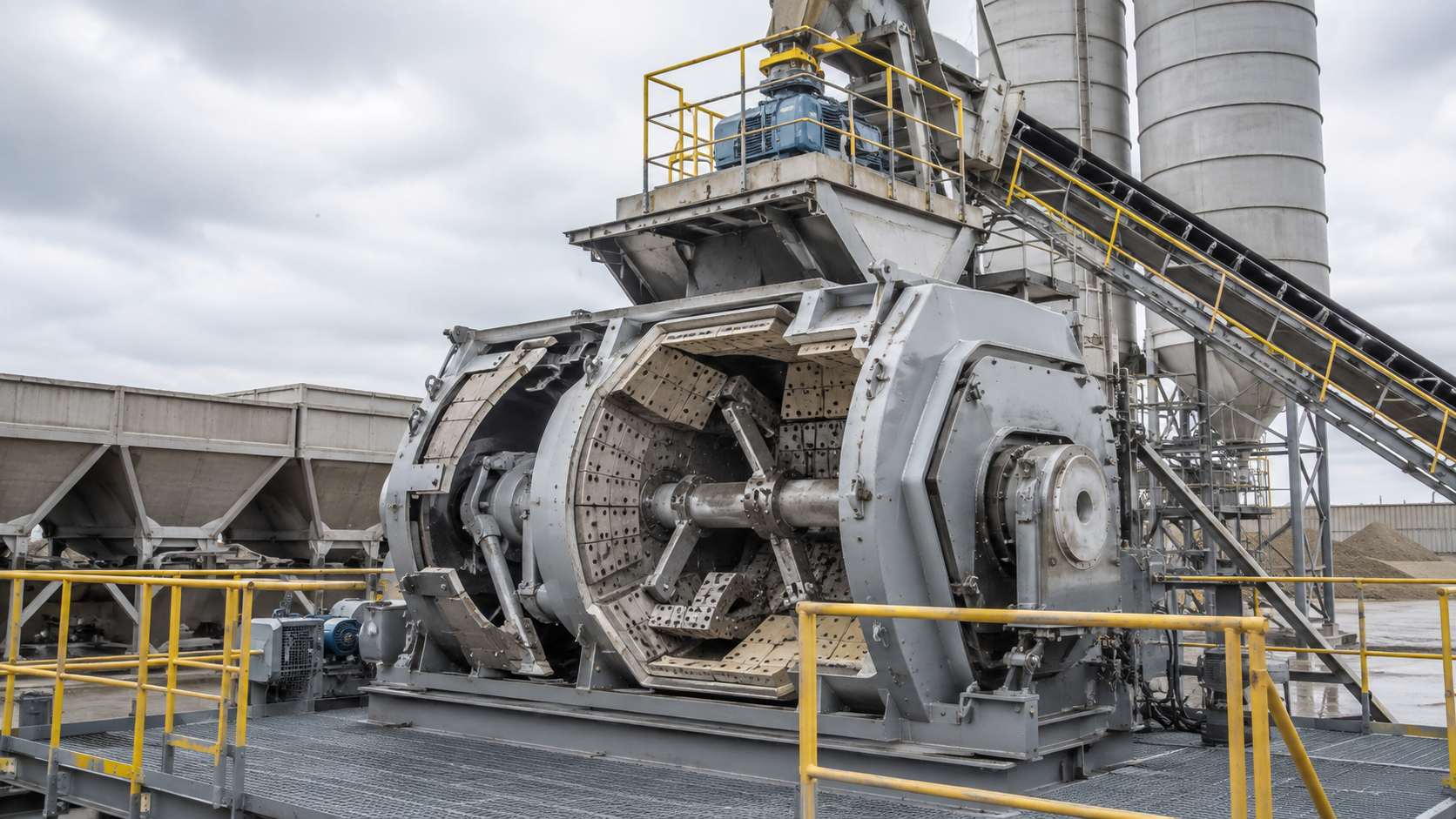
This article is an original industry analysis for contractors, concrete producers, plant managers, and construction equipment buyers. It does not rely on specific third-party company announcements, customer cases, price data, regulations, or project claims. The focus is equipment planning for concrete mixer inspection, batching plant uptime, wear part access, and long-term maintenance discipline.
Why mixer wear checks belong in early plant planning
A stationary concrete batching plant or mobile project plant is often compared by output capacity, aggregate storage, weighing system, cement silo layout, control system, and truck loading arrangement. These specifications remain important, but they do not show how easily the mixer can be inspected once the plant is operating. A mixer may be correctly sized for production yet still create downtime if liner plates, mixing arms, discharge gates, or access covers are difficult to inspect and service.
Early planning helps avoid treating wear inspection as an afterthought. Plant teams can review mixer location, platform height, guardrail layout, service clearance, lighting, lifting access, spare liner handling, and washout routine before civil work and steel installation are finalized. This is especially useful when a compact batching plant must fit into a tight site or when a ready-mix yard needs dependable daily output across multiple shifts.
Liners and blades affect mixing consistency
Concrete mixer liners and blades are wear components because they work directly with aggregate, cement, water, and admixtures. Their condition can influence material movement inside the mixer, charging behavior, discharge cleanliness, and the repeatability of each batch. Wear does not always appear as a single obvious failure. It can show up as slower discharge, more frequent cleanout, unusual vibration, uneven material movement, or repeated operator adjustments.
For buyers, the useful question is not only which mixer model is selected. The review should also cover how the mixer will be inspected, how liner wear will be tracked, which spare parts should be stocked, and how maintenance tasks will be scheduled around production. A concrete mixer should be considered part of the plant workflow, not a standalone machine hidden inside the structure.
Service access can decide how well maintenance happens
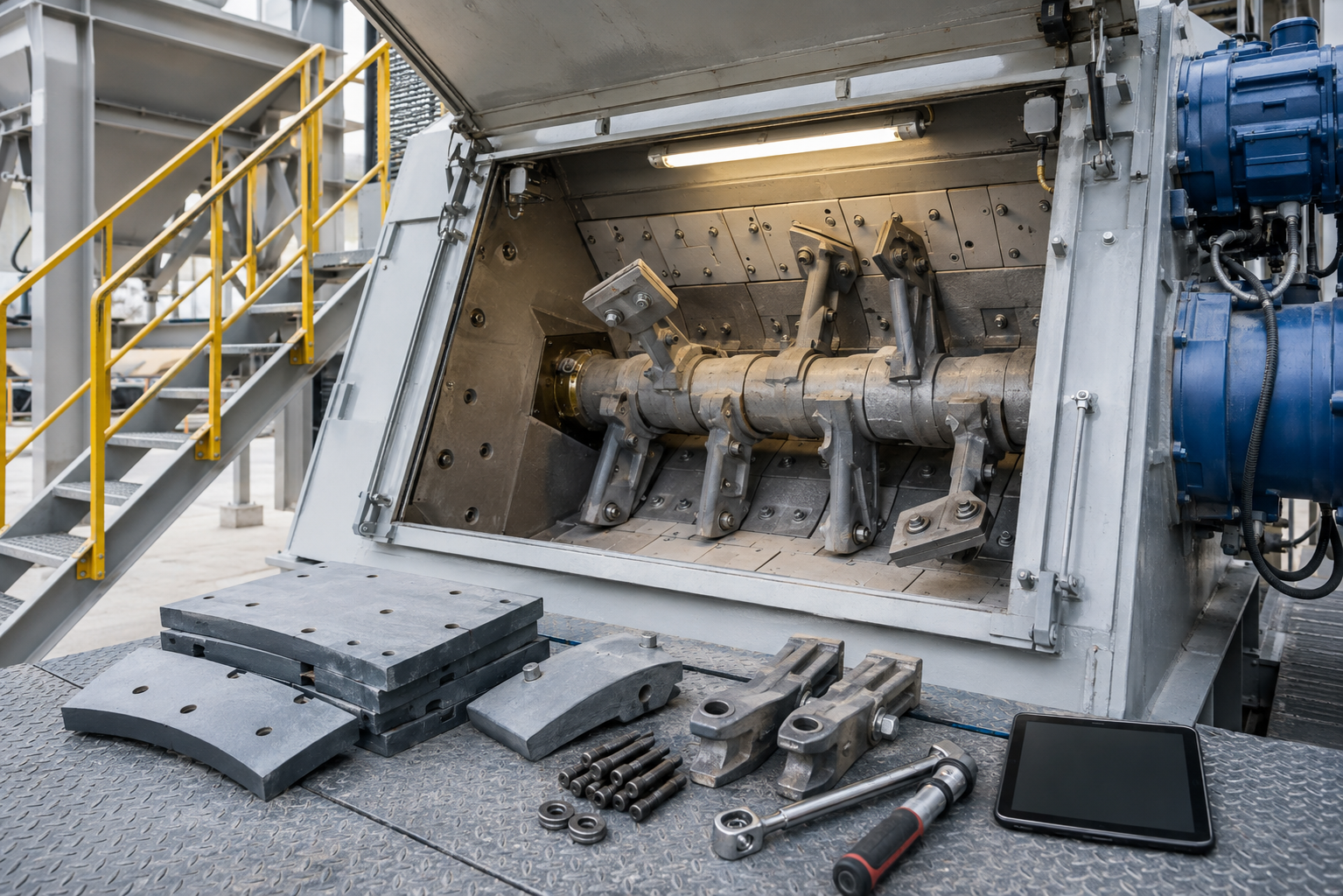
Maintenance routines are more likely to be followed when the work area is clear, visible, and safe to reach. Mixer service hatches, inspection covers, walkways, platforms, stairs, lighting, lockout points, and nearby tool storage should be reviewed before installation. If technicians cannot reach bolts, liner plates, blade arms, seals, gearbox areas, or discharge gate components without awkward movement, inspections may take longer than planned.
The access plan should match the type of plant. A mobile concrete batching plant may prioritize fast setup, compact equipment arrangement, and simple relocation. A permanent ready-mix plant may need more generous inspection platforms, spare part shelves, lifting clearance, drainage, and defined cleaning zones. In both cases, service access supports the same operating goal: finding wear early enough to plan work instead of reacting to unexpected downtime.
Maintenance records make wear easier to manage
Wear inspection becomes more useful when it is recorded consistently. Plant teams can track mixer running hours, batch count, aggregate type, visible liner condition, blade arm condition, bolt checks, discharge gate behavior, washout observations, and parts replaced. These records help managers decide whether wear is normal for the production pattern or whether a change in material handling, cleaning practice, or inspection interval should be reviewed.
Batching plant automation can support this process when production records, alarm history, maintenance notes, and spare parts usage are reviewed together. Digital records do not replace hands-on inspection, but they give plant managers a better basis for planning downtime, ordering parts, and discussing service needs with equipment suppliers.
Spare parts planning reduces avoidable delays
Liner plates, mixing blades, blade arms, bolts, seals, wear shoes, discharge gate parts, lubrication items, and common sensors should be reviewed as part of the spare parts plan. The correct list depends on mixer model, expected production hours, aggregate abrasiveness, cleaning routine, site location, and how quickly replacement parts can be delivered. A plant that waits until visible wear becomes severe may face a longer interruption than necessary.
Spare parts planning also helps purchasing teams compare equipment proposals more clearly. Beyond the initial plant price, buyers can ask how wear parts are identified, how replacement intervals are estimated, how service access is arranged, and what records are useful for future support. These questions are relevant for both project-based contractors and commercial ready-mix producers.
Concrete pump supply depends on steady batching rhythm
When a batching plant supplies a concrete pump, production rhythm matters. Mixer condition, discharge speed, truck loading timing, mix consistency, dispatch planning, and jobsite receiving conditions all influence whether pumping can continue smoothly. Mixer liner and blade wear inspection cannot solve every jobsite delay, but it can reduce one important source of production uncertainty.
For pump-fed projects, teams can review concrete production rate, mixer discharge access, truck loading clearance, washout area, batch records, and communication between the plant and the placement crew. The goal is a predictable process from aggregate feeding to mixing, discharge, transport, and pumping.
Practical checklist for plant teams
- Review mixer inspection panels, walkways, stairs, guardrails, lighting, and tool access before final plant layout approval.
- Check liner plates, blade arms, bolts, seals, discharge gate components, and gearbox access as part of routine maintenance planning.
- Record mixer running hours, batch count, visible wear, unusual noise, cleanout time, and parts replacement history.
- Plan spare liner plates, mixing blades, bolts, seals, lubrication items, and service tools based on production intensity and site conditions.
- Coordinate mixer inspection with aggregate feeding, cement weighing, water and admixture dosing, truck loading, and concrete pump supply.
- Keep inspection areas clean enough that wear, loose fasteners, leakage, and abnormal buildup can be noticed early.
FAQ
Why do concrete mixer liners and blades need regular checks?
They work directly with abrasive materials and influence mixing movement, discharge behavior, cleaning time, and batch consistency. Regular checks help teams plan replacement before wear creates avoidable downtime.
Should buyers review mixer service access before installation?
Yes. Service hatches, platforms, stairs, lighting, lifting clearance, and spare parts handling should be reviewed before the plant structure is fixed, because poor access can make routine inspection slower and less consistent.
Does this apply to mobile concrete batching plants?
Yes. Mobile plants may have tighter layouts, so inspection access, spare parts storage, washout arrangement, and relocation needs should be reviewed together.
What information helps when discussing mixer maintenance with a supplier?
Useful details include mixer model, expected output, aggregate type, shift pattern, cleaning routine, spare parts availability, service access limits, and whether the plant will supply concrete pumps or multiple truck routes.
Conclusion
Concrete mixer liner and blade wear checks are moving earlier in plant planning because reliable output depends on more than rated capacity. A practical review connects mixer access, liner plates, mixing blades, spare parts, maintenance records, batching automation, truck loading, and concrete pump coordination. Buyers can review the product center or contact hengyuan Concrete Machines with project details to discuss batching plant configuration and service planning.