

September 9, 2026 – Concrete batching plant buyers, ready-mix producers, and project contractors are reviewing batching plant electrical cabinet cooling and cable routing earlier in automation planning. The discussion is practical: control cabinets, cable trays, sensor wiring, cooling fans, ventilation paths, dust protection, and service access all affect whether the plant control system remains easy to inspect during daily production.
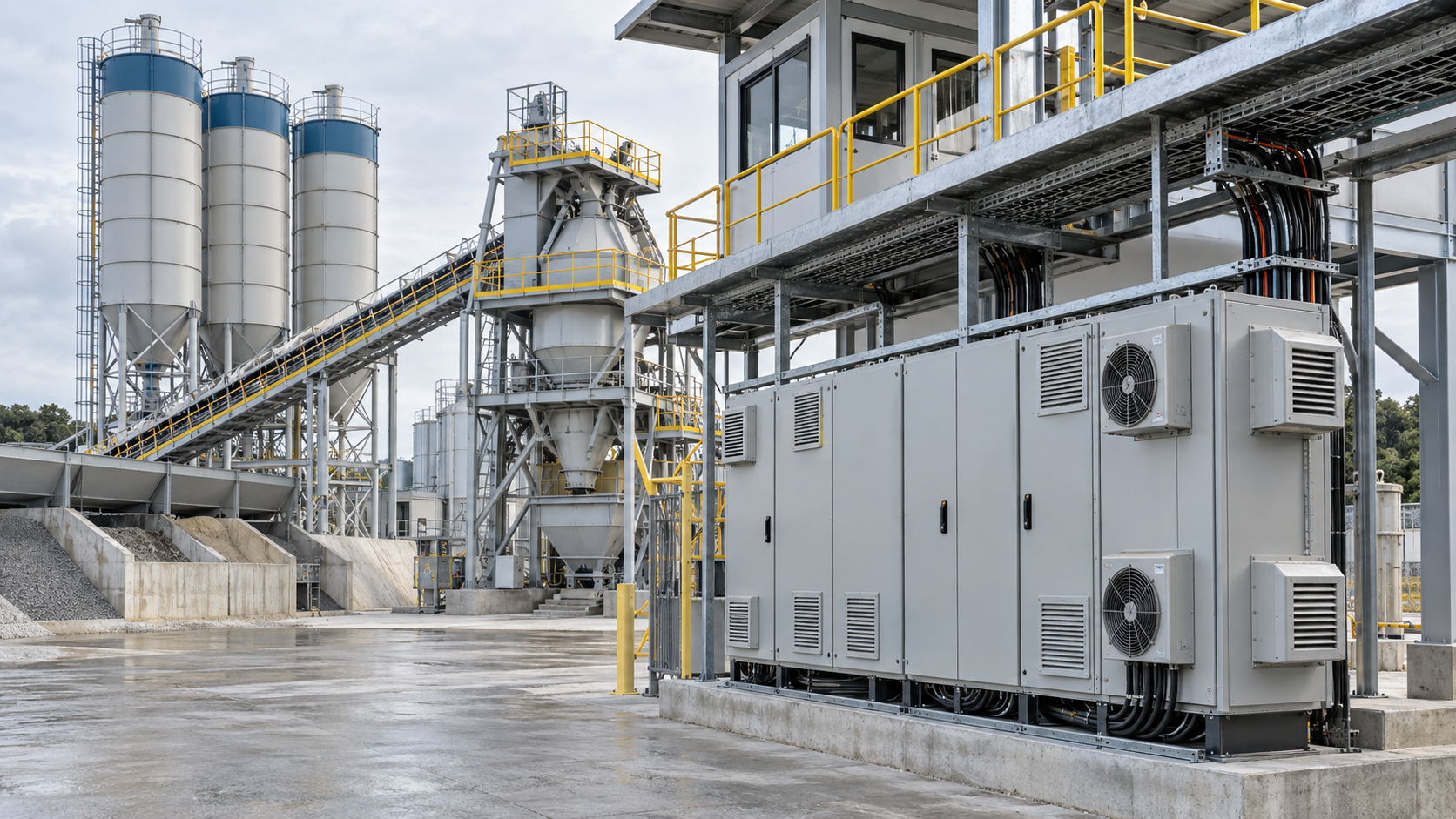
This article is an original industry analysis for concrete producers, contractors, plant managers, and construction equipment buyers. It does not rely on specific third-party company announcements, customer cases, price data, regulations, or project claims. The focus is planning for batching plant automation, electrical cabinet cooling, cable routing, sensor wiring, maintenance access, and production reliability.
Why electrical planning belongs in the first layout review
A stationary concrete batching plant or mobile project plant is often compared by output capacity, aggregate bin volume, mixer model, cement silo arrangement, weighing accuracy, and truck loading flow. Those specifications remain important, but the electrical layout determines how clearly operators and maintenance teams can see, protect, and service the control system after installation.
Early planning helps avoid treating cabinet position and cable routing as late installation details. Plant teams can review control room location, cabinet placement, cable tray elevation, conduit entry points, weighing sensor routes, motor cable separation, ventilation clearance, and service platform access before civil work and steelwork are fixed. This is especially useful where a compact plant must fit into a tight yard or a project plant must be installed quickly.
Cooling is part of automation reliability
Electrical cabinets protect control components that support weighing, conveying, mixing, discharging, water metering, admixture dosing, and alarm handling. If cabinets are exposed to excess heat, dust buildup, blocked ventilation, poor cable entry, or difficult cleaning access, routine checks may become slower and less consistent. Cooling fans, filtered vents, cabinet spacing, sun exposure, and dust protection should be reviewed as part of the automation package, not only as accessories.
Cooling design should match the site and the operating rhythm. A plant working in a dusty aggregate yard may need easier filter inspection and cabinet cleaning. A plant with long shifts may need clearer temperature monitoring and spare fan planning. A control cabinet mounted near the mixer platform may need extra attention to cement dust, vibration, cable bend radius, and safe service clearance.
Cable routing affects troubleshooting speed
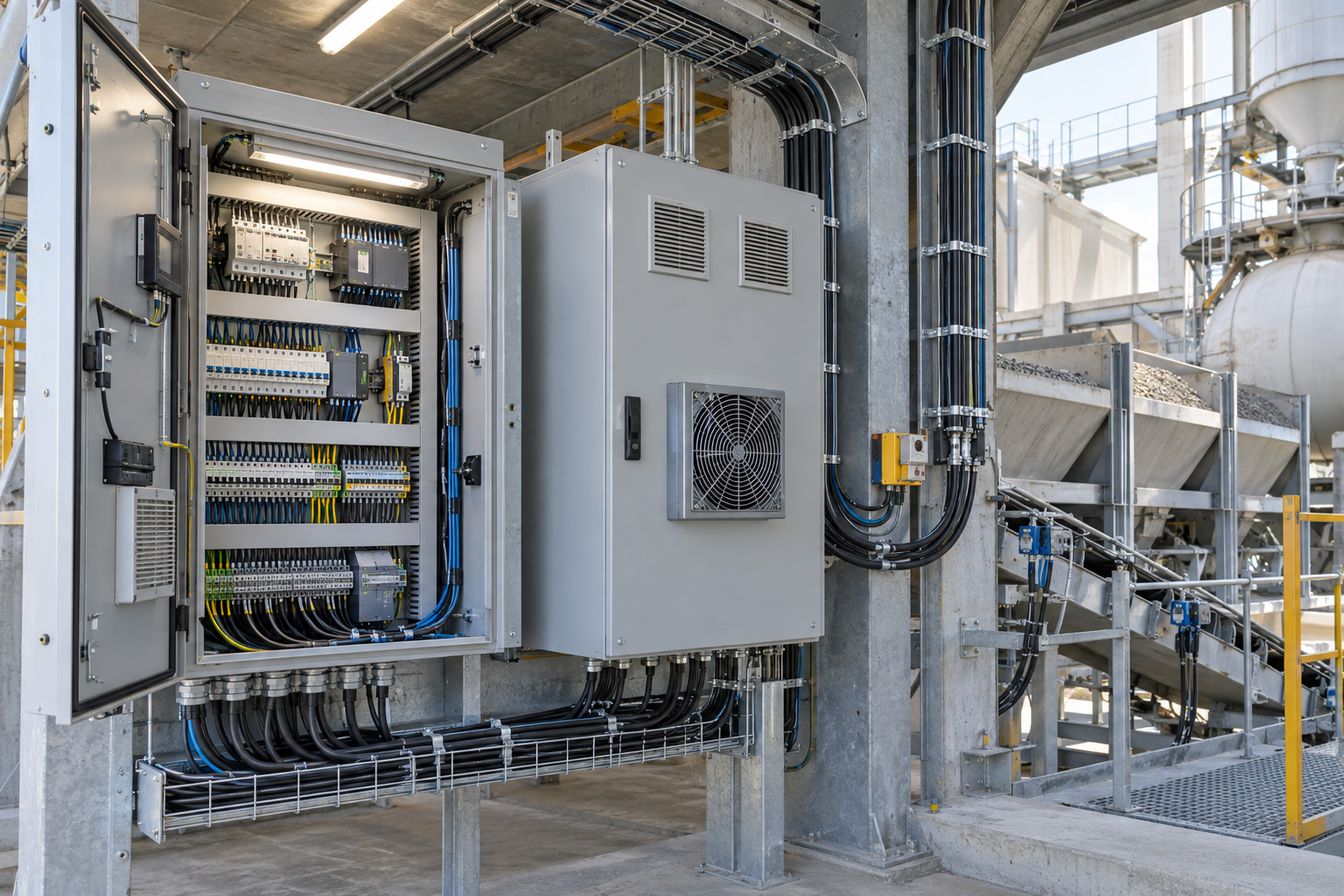
Concrete batching plants combine many signal and power paths: aggregate weighing sensors, cement scale wiring, water meter signals, admixture pump controls, mixer motor cables, conveyor drive wiring, silo accessories, air compressor controls, and control room communication lines. Clear cable routing makes these systems easier to trace when a fault appears. It also supports cleaner installation, better protection from mechanical damage, and more predictable maintenance records.
Good routing does not mean adding complexity. It means cables are supported, separated where appropriate, protected from truck movement and aggregate handling, and arranged so inspection does not require unnecessary disassembly. Cable trays, conduit bends, gland plates, junction boxes, and labeling practices should be discussed with the plant layout, not left until site installation pressure is already high.
Control room visibility should connect with field access
The control room may show batch count, aggregate weights, cement weight, mixer timing, water and admixture values, motor status, and alarm history. These digital records are most useful when the physical equipment is also easy to inspect. If an alarm points to a scale signal, valve, motor, fan, or sensor, technicians should be able to reach the relevant cabinet, junction point, or cable route without searching through a crowded structure.
For buyers, this links automation planning with maintenance planning. The control system should support production, but it should also help teams understand what changed when a fault occurs. Clear cabinet organization, practical cable routing, and readable maintenance notes can reduce unnecessary downtime by making checks more direct.
Electrical access should match the plant type
A mobile concrete batching plant may prioritize fast setup, protected plug connections, compact cabinet placement, and cable routes that can handle relocation. A permanent ready-mix yard may need larger control cabinets, more cable trays, spare conduit capacity, clearer service aisles, and cabinet cooling that fits longer production schedules. In both cases, the electrical design should support predictable operation rather than only meeting the first installation need.
The concrete mixer also affects electrical planning. Mixer motor controls, discharge gate sensors, lubrication signals, safety interlocks, water dosing, and admixture timing all connect the mixer to the automation system. Cabinet and cable access near the mixer area should be reviewed together with cleaning, washout, inspection, and service platform layout.
Stable batching supports concrete pump supply
When a batching plant supplies a concrete pump, stable production rhythm matters. Automation faults, unclear alarm response, cable damage, or overheated cabinets can interrupt dispatch timing and truck loading. Electrical cabinet cooling and cable routing cannot solve every jobsite delay, but they can reduce one avoidable source of plant-side uncertainty.
For pump-fed projects, teams can review batching rate, mixer discharge timing, truck loading clearance, control room alarms, spare parts, service access, and communication between the plant and placement crew. The goal is a predictable process from aggregate feeding to weighing, mixing, discharge, transport, and pumping.
Practical checklist for plant teams
- Review cabinet location, ventilation clearance, cooling fan access, filter inspection, and sun or dust exposure before final layout approval.
- Plan cable trays, conduit routes, junction boxes, and cabinet entry points with aggregate feeding, cement weighing, mixer access, and truck loading flow.
- Keep sensor wiring, motor power cables, communication lines, and air or water control wiring easy to trace during maintenance.
- Record cabinet temperature checks, fan condition, filter cleaning, cable damage, loose terminals, alarm history, and parts replacement.
- Stock practical electrical spares such as filters, cooling fans, terminal blocks, common sensors, relays, and protected connectors according to the plant configuration.
- Coordinate electrical inspection routines with mixer maintenance, dosing checks, conveyor service, silo equipment, and concrete pump supply planning.
FAQ
Why should electrical cabinet cooling be reviewed before installation?
Cabinet cooling helps protect control components that support weighing, conveying, mixing, dosing, alarms, and production records. Reviewing cooling access early makes inspection and filter cleaning easier after the plant is operating.
What cable routes matter most in a concrete batching plant?
Important routes can include aggregate scale sensors, cement weighing, mixer controls, water and admixture dosing, conveyor drives, silo accessories, control room communication, and safety or alarm circuits.
Does this apply to mobile concrete batching plants?
Yes. Mobile plants may need compact cabinet placement, protected connectors, organized cable routes, and service access that supports relocation as well as daily operation.
What should buyers prepare before discussing automation layout?
Useful details include plant type, expected output, site footprint, control room position, mixer model, aggregate bin layout, silo arrangement, dosing needs, pump supply plans, climate and dust conditions, and maintenance access limits.
Conclusion
Electrical cabinet cooling and cable routing are gaining attention because concrete production reliability depends on more than rated plant capacity. A practical review connects control cabinets, cooling fans, cable trays, sensor wiring, mixer controls, batching records, maintenance access, truck loading, and concrete pump coordination. Buyers can review the product center or contact hengyuan Concrete Machines with project details to discuss batching plant configuration and automation planning.